In this article
To secure an apartment door without risking your deposit, brace it from the inside with a door security bar or a door stop alarm, add a portable lock that holds even against a copied key, and put an entry alarm on it for the hours you are out. None of that needs a drill. The two screw-in upgrades, a reinforced strike plate and a door reinforcement lock, start with a short note to your landlord.
Renting comes with a quiet frustration: the door protecting everything you own is the one part of the apartment you are not allowed to rebuild. Drilling is out. So is a new deadbolt, or a different door, unless you feel like donating your deposit.
Take a breath, because the situation is far better than it feels. Some of the most effective door security available today was designed for exactly your constraints: it pressure-mounts or sticks on, and every bit of it is reversible. You can make that door dramatically harder to force tonight and still hand back the keys to a spotless frame.
Here are seven upgrades, ordered so you can start with zero-tool options and work up. Only two of them touch a screwdriver, and both come with an ask-the-landlord note attached.
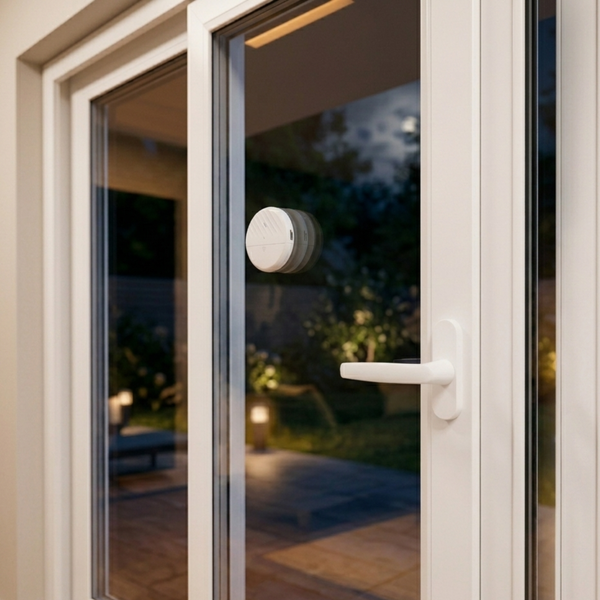
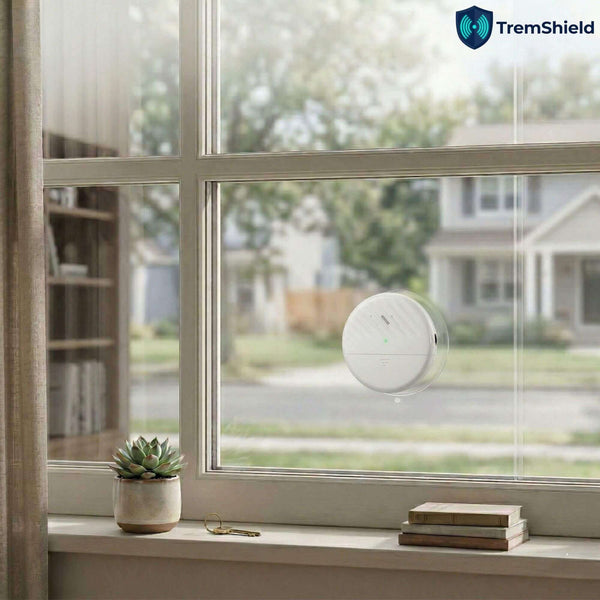
One opening the list below does not reach. If the unit has a balcony or a patio slider, that is the apartment's other door, and most of it is glass: a bar in the track stops the panel sliding and leaves the pane beside it untouched. What covers the pane is a stick-on vibration alarm, which answers a strike on the glass rather than waiting for the door to open, presses on in about a minute, and lifts off when you move.
Why apartment doors need the help
Most apartment doors are let down by tiny details rather than the door itself. Builder-grade strike plates held by short screws. Frames that have absorbed years of tenants and turnovers. Copies of keys that have passed through unknown hands before yours. And a hallway that nobody outside the building can see into.

It helps to know what you are defending against. Forced entry through an apartment door is rarely sophisticated: it is shoulders, kicks, and pry bars applied to hardware that was chosen for price rather than strength. That means you do not need to outsmart anyone. You need to make the door physically stubborn and acoustically loud, and both of those are solved problems.
The encouraging flip side: because the weaknesses are small, the fixes are small too. Reinforce a few key points, add noise where it counts, and an apartment door goes from the building's soft spot to a hard target. None of it requires permission slips, with two exceptions noted below.
How to secure an apartment door: 7 renter-safe upgrades
1. A door security bar
The single biggest upgrade per dollar for a renter. A door security bar wedges under the handle at an angle and transfers any force on the door straight into the floor. Someone pushing against it is effectively pushing against the building.
Installation is the whole appeal: there is none. Adjust the length, set it in place, done. It leaves no mark, works on most inswing doors, and folds away when guests come over. Use it whenever you are home, especially overnight.
2. A door stop alarm
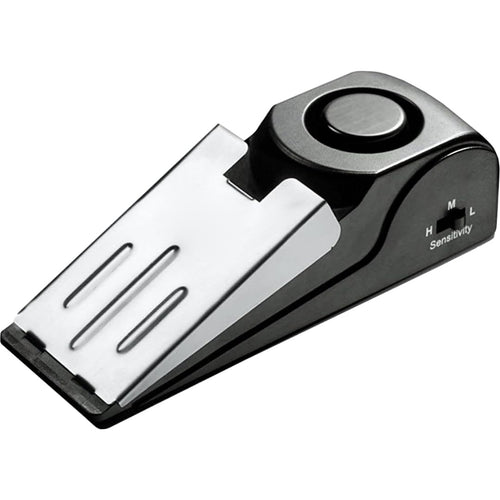
A door stop alarm looks like a humble rubber wedge, but it does two jobs at once. Physically, it jams under the opening door and resists it exactly the way a doorstop does. Electronically, the pressure trips a piercing siren the moment the door pushes against it.
So anyone who gets past the lock meets resistance and a siren in the same second, while you are still at the other end of the apartment. Battery powered, no installation, and it slips into a nightstand drawer by day.

3. A portable travel lock
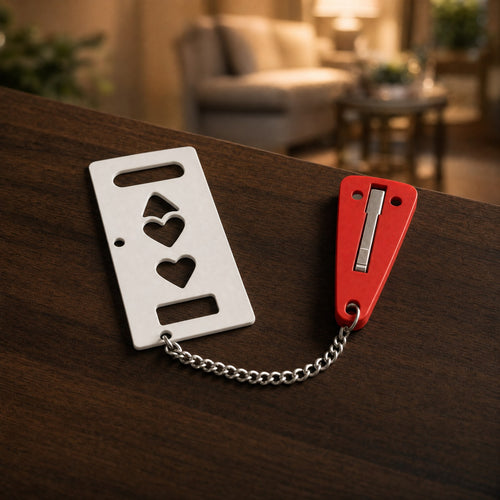
A portable travel lock adds a second lock to your door from the inside, using the existing strike plate, with no tools and no marks. It physically blocks the door from opening even for someone holding a working key.
That last part matters in a rental, where you rarely know how many key copies exist from previous tenants or where they ended up. When you move, the lock leaves with you: it works in the next apartment, and in hotel rooms in between.
4. A stronger strike plate (with your landlord's permission)
This is one of two screwdriver items on the list, and the one to ask about first. The strike plate is the small metal plate your deadbolt shoots into, and builder-grade ones are typically fixed with short screws that bite into the jamb alone. A reinforced strike plate kit with 3-inch screws anchors that point into the solid framing behind the door instead.
It is a ten-minute job, and it stiffens the door's weakest point out of all proportion to the effort. Many landlords say yes readily, since it improves their property. Get the okay in writing and keep the old plate to swap back if asked.
5. A door reinforcement lock
A door reinforcement lock mounts at the door's edge and physically blocks the door from opening, taking far more force to defeat than a chain ever could. You flip the brace down when you are home and up again on your way out, which takes a second either way.
Mounting uses a few small screws in the frame, so bundle it into the same landlord conversation as the strike plate. The two together address force at both the lock side and the opening edge.
6. Better peephole habits
Free, renter-safe, more powerful than it sounds. Use the peephole every time, not just when something feels off. If you were not expecting anyone, you are never obligated to open the door: talking through it is a complete answer, and legitimate visitors will understand. Keep the area outside your door lit if you control the fixture, and if the peephole is painted over or missing, that is a maintenance request worth filing today.
Habits cost nothing and cannot be defeated by tools. They make every device on this list work better.
7. An entry alarm on the door
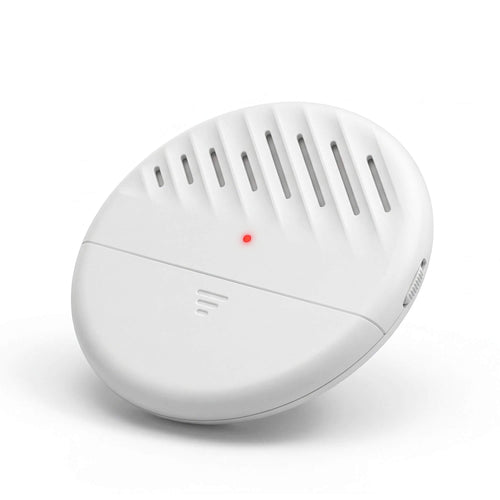
A magnetic entry alarm mounts to the door and frame with adhesive: two small pieces, and when they separate, a loud siren sounds. It arms when you leave and covers the hours the security bar cannot, since the bar only works from inside.
The 4-pack covers the front door plus windows or a balcony slider, all battery powered, with no Wi-Fi, hub, or monthly fee. Adhesive mounting means the deposit never enters the conversation, and everything peels off cleanly when you move.
Making it work as a renter, start to finish
The order that works: start tonight with the zero-tool trio (the bar, the door stop alarm, and the entry alarm), and you have force resistance plus noise on day one for well under a hundred dollars. Add the travel lock to settle the key-copy question. Then send the landlord a short, friendly note about the strike plate and reinforcement lock, framed as a free upgrade to their own door, which is what it is.
Two small notes that keep your deposit safe. First, adhesive: quality mounting tape comes off cleanly when you warm it for a few seconds with a hair dryer and peel slowly at a low angle, and any faint residue wipes away with a little rubbing alcohol. Second, paperwork: snap a photo of the door and frame before you install anything, the same way you photographed the walls at move-in. It takes a minute and settles any question before it starts.
When your lease ends, everything except those two screwed-in items goes into a box and moves with you. The bar, the wedge, the travel lock, and the alarms work exactly the same at the next address, which is an advantage renters have over homeowners: your security budget follows you instead of staying behind in someone else's door. For the rest of the apartment, our guide to renter-friendly home security applies the same no-drill thinking to windows and sliders, and the door security collection keeps most of these upgrades in one place.
If you want the deeper mechanics of why door frames fail (and the fixes that need a landlord’s blessing), our guide to door reinforcement against kick-ins goes further, and door security devices, ranked puts these same upgrades in order of what each one stops. For the braces that work from your side of the door alone, and how to get out fast with one in place, see how to secure an apartment door from the inside. And if your unit has a balcony or patio slider, here is how to secure sliding doors without touching the frame.
Apartment door questions renters ask
Can I add a lock to my apartment door without the landlord's permission?
You can add devices that do not alter the door, such as a travel lock or a bar under the handle, because they install with no tools and leave no trace. Anything that takes screws, such as a strike plate or a reinforcement lock, or anything that changes the keyway, needs a yes first, ideally in writing.
Can I secure an apartment door from the outside?
Not much, because the hallway side is shared space and the braces on this list work from inside. What covers the door while you are out is an adhesive entry alarm that sounds if the door opens, plus a reinforced strike plate, which works whether anyone is home or not.
Does a door security bar work on a door that opens outward?
No. The bar wedges between the handle and the floor, so it only holds a door that opens into the room. The portable travel lock and the door stop alarm are also made for inward-opening doors, so check which way yours swings before you order.
Which of these door devices need batteries?
The door stop alarm needs one 9V battery, bought separately. The entry alarms come with button batteries, good for roughly a year of normal use. The security bar, the travel lock, the strike plate and the reinforcement lock are mechanical, with nothing to charge.
What if there is almost no gap under my apartment door?
The door stop alarm needs about a 0.75 inch gap under the door to slide in. If yours sits tighter, use the security bar for resistance and an entry alarm for the noise instead.
The door, then the glass
Work down the seven in order and the door is handled: braced while you are home, noisy while you are out, reversible to the last screw. The slider is the surface none of those seven reaches, so if the unit has one, put the glass in the same plan. A single TremShield Vibration Alarm is $29.99, and six in one pack is $99.00, which is $16.50 a pane with Save $80.94 listed against the single price. That pack carries two free no-drill window locks, and the Home Security Guide reaches you as a PDF by email. Shipping is free to the US, Canada, the UK, Australia and New Zealand, returns are open for 30 days, and all of it peels off the glass at the end of the lease.
Back to all articles