

Door Stop Alarm (120dB)
A wedge-shaped door stop with a 120dB siren built in. Slide it under an inward-opening...
In stock · Ready to ship
$16.99
Collection
Security you carry. A loud, simple alarm for the walk to the car, the campus path, or the early run, the moments you would rather not face alone.
A wedge-shaped door stop with a 120dB siren built in. Slide it under an inward-opening...
In stock · Ready to ship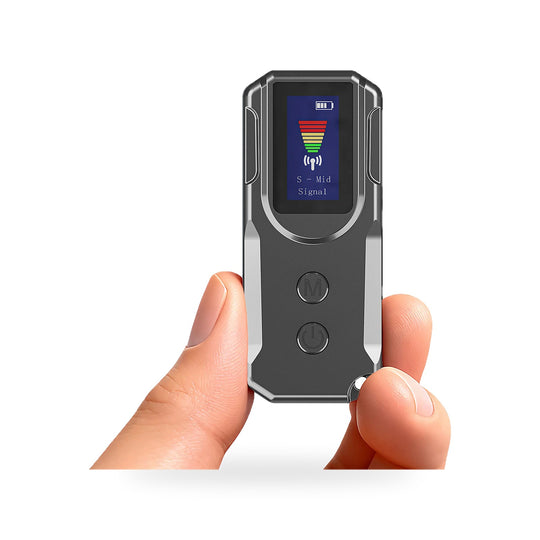
You check into a rental and the smoke detector seems to point straight at the...
In stock · Ready to ship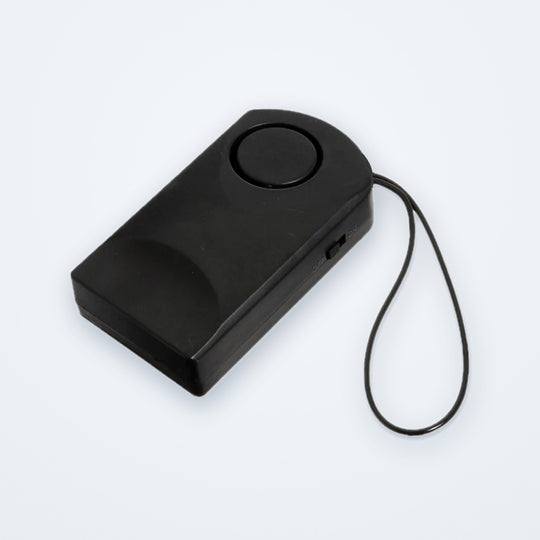
The Door Knob Touch Alarm hangs from the inside knob or lever of a door...
In stock · Ready to ship
A 130dB personal safety alarm that clips to your keys or bag. One pull of...
In stock · Ready to shipPick in 10 seconds
Personal alarms do one job: they make you impossible to ignore. A 120 to 130 dB siren makes everyone nearby turn and look, and attention is what an attacker least wants. The same idea protects a hotel room or a dorm, which is why this gear lives in a carry-on as easily as on a keychain. The full kit is in hotel, Airbnb and dorm safety.
The personal safety alarm clips to keys, a bag or a zipper. Pull the pin straight out and it sounds until you push the pin back in, so one alarm works again and again. The pin has to be pulled on purpose, so normal carrying won't set it off. It runs on a small replaceable battery, with nothing to charge and no app.
The door stop alarm slides under an inward-opening door. Push the door and the rubber wedge jams while a 120 dB siren sounds. It needs a gap of about three-quarters of an inch under the door and one 9V battery, sold separately, and it has low, medium and high sensitivity.
The door knob touch alarm hangs from the inside knob or lever by its cord. When a hand touches the handle it sounds at 120 dB, while the door is still shut. It is a touch sensor, so a plastic, rubber-coated or painted handle may not register: test it on your door the day it arrives, and send it back within 30 days if it stays quiet. In the morning, slide the switch off first.
For a lock the host never gave you, the portable travel lock rests in the existing strike plate and comes off without a trace.
An alarm only helps if you can reach it in the first second. Clip it to the outside of a bag strap, a belt loop or the keys you hold on the walk to the car. Pull the pin once at home so the motion is familiar and the sound doesn't surprise you. Check the battery twice a year, when the clocks change. None of this needs a phone with signal, so it still works in a parking garage or on a trailhead.
College students (send them off with the dorm safety kit guide), runners and dog walkers out before sunrise, night-shift workers, frequent travelers, and older family members who want a loud way to draw attention with no technology to learn. If you live alone, the living-alone security checklist puts it all into one evening of setup.
At home, the alarm that matters goes on the glass. A TremShield vibration alarm sticks to a window and sounds at 125 dB when the pane is struck or pried, before anyone is inside. Six are $99, $16.50 each, with 2 free no-drill window locks. The 60-second alarm finder matches one to each spot.
Practical home-security tips and the occasional offer, straight to your inbox.