
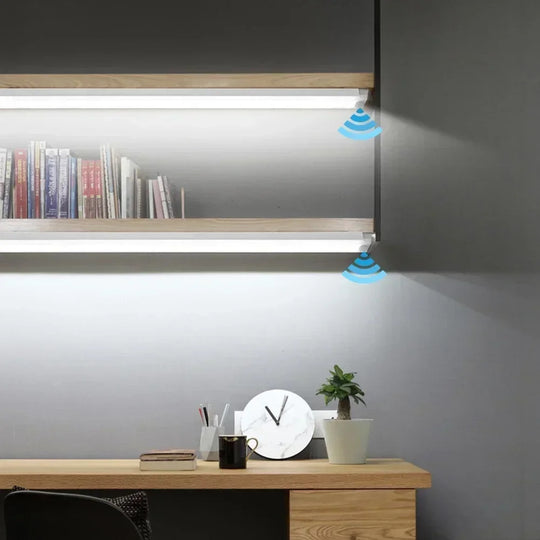
Rechargeable Motion Sensor Light Bar (2-Pack)
The noise at night usually turns out to be nothing. The hard part is the...
In stock · Ready to ship
$27.99
Collection
Light does two jobs at once. Outside, it removes the cover a burglar counts on. Inside, it means nobody has to cross a dark hallway at 2am wondering what made the noise. Neither of these needs wiring, an app or a monthly fee.
The noise at night usually turns out to be nothing. The hard part is the...
In stock · Ready to ship
The walk from the bedroom to the top of the stairs is the darkest stretch...
In stock · Ready to ship
A solar motion security light with three adjustable heads. It charges by day and lights...
In stock · Ready to shipPick in 10 seconds
Lighting earns its keep every night, whether or not anyone ever tries the door. The job is different outside and inside, so treat them separately.
A burglar picks the side of the house the street can't see. A solar motion light there means anyone standing in that spot is suddenly standing in light, visible to a neighbor or a passing car. Its sensor reaches about 15 to 20 feet across a wide arc, and each of its three heads pivots, so one mount can cover a corner, a walkway and a doorway. It charges in daylight, mounts with two screws, and has no bulb to change on a ladder in November. Winter days mean less run time, so give the panel the most direct sun you can. The evidence on motion lights is in do motion sensor lights deter burglars.
The night most homes face is not a break-in. It is a noise at 2am and a walk down a dark hallway. The motion night light lights the floor ahead of you without a switch, and without waking the house the way a ceiling light does. It picks up movement out to about 10 to 16 feet, stays on for roughly 15 to 60 seconds, and stays off in daylight. Each light takes 3 AAA batteries (not included, so nine for the pack) and sticks on with tape, so a rental wall stays a rental wall. With no app to set up, it is an easy gift for a parent who lives alone.
Neither light stops anybody. Light removes the cover and buys the attention of whoever is nearby. Noise at the point of entry is the other half, and that is the job of a TremShield vibration alarm on the glass: a thin disc that sounds at 125 dB the moment a window is struck or pried, while the person is still outside. Light outside, noise at the glass: either one alone leaves a gap.
Outside, the darkest approach, usually the side gate or the back of the garage. Inside, the top of the stairs and the hallway between the bedrooms. Our guide to feeling safe at home at night walks the whole route. Then put alarms on the panes someone could reach from that dark side: six are $99, $16.50 each, with 2 free no-drill window locks.
Practical home-security tips and the occasional offer, straight to your inbox.