In this article
Living alone is one of life's quiet luxuries. Your space, your schedule, your rules, and the deep comfort of coming home to exactly the life you have built for yourself. It is wonderful. It also comes with a small mental load that nobody really warns you about, the little checklist that runs in the back of your mind at night. Did I lock the door? What was that sound? That low hum of awareness is completely normal, and the good news is that it can be put to rest. Not with more worry, but with a few simple habits and one or two small tools that quietly handle the basics so you do not have to keep thinking about them.

This is not a fear list. There are no scary scenarios here, no statistics meant to rattle you. Just a calm, practical walk through the things that genuinely settle the mind, written the way a thoughtful locksmith might explain it over a cup of coffee. By the end, the plan is simple, the tools are small, and the worry has somewhere to go.
First, a little perspective to take the edge off
It helps to know that the feeling is often louder than the actual risk. Property crime in the US has fallen substantially over the last decade according to FBI crime data, and most break-ins are opportunistic. A widely cited University of North Carolina at Charlotte study found that the people who do try a door overwhelmingly avoid homes that look secure and occupied. In plain terms, a few simple signals do most of the work. You do not need a fortress. You need a home that quietly says, someone is here and this place is looked after, and then you need to be able to forget about it.
You do not have to be vigilant to be safe. You just have to be set up well, once, so your home can relax along with you.
The calm checklist
1. Mind the two entry points: doors and windows
Almost everything starts at the door and the windows on the ground floor. This is the highest-value place to spend a little attention, and it is genuinely quick.
- Make sure your main door actually locks the way it should, with a deadbolt that fully throws. If you rent and the lock feels loose or worn, a quick note to your landlord usually sorts it out.
- Add a simple reinforcement for ground-floor and sliding windows. A small lock or a snug dowel in the track means a window cannot be quietly slid open, and that alone is reassuring.
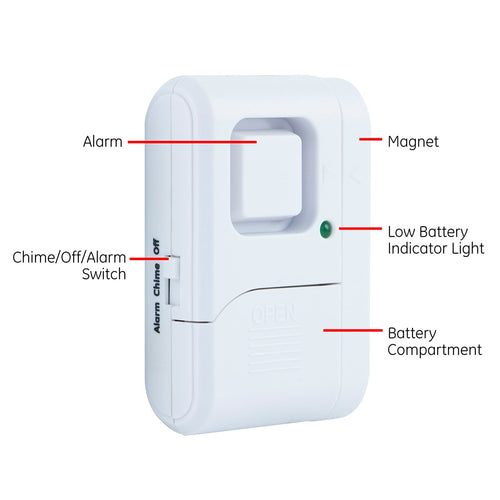
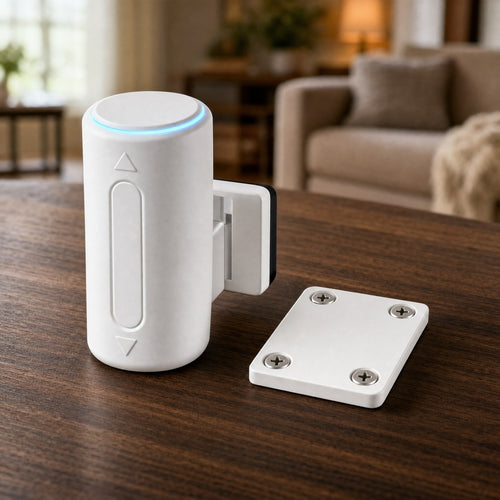
- Give your most-used entry points an alarm that simply alerts you. A stick-on TremShield Alarm mounts in about sixty seconds and sounds at around 125 decibels if the door or window it is on is disturbed. No wiring, no app, no subscription. If you want coverage across several openings at once, the Door & Window Entry Alarm 4-Pack lets you set up the front door, back door, and a couple of windows in one calm afternoon.
2. Build a thirty-second night routine that settles the mind
The bedtime spiral usually comes from uncertainty. Did I check everything? A small, fixed routine answers that question once so your brain can let it go. Walk the same short loop every night, in the same order, until it becomes as automatic as brushing your teeth.
- Front door locked and deadbolt thrown.
- Back or balcony door locked.
- Ground-floor windows latched.
- Alarms set and a phone within reach.
That is it. The point is not to be thorough every single night through willpower. The point is to make the same loop so familiar that once it is done, the question is genuinely closed and you can rest. Some people find it helps to do the loop at the same moment each night, right after they put their phone on the charger, so it attaches to a habit they already have. Within a week or two it stops feeling like a chore and starts feeling like the small, satisfying period at the end of the day.
3. Keep a personal alarm within reach for everyday peace of mind
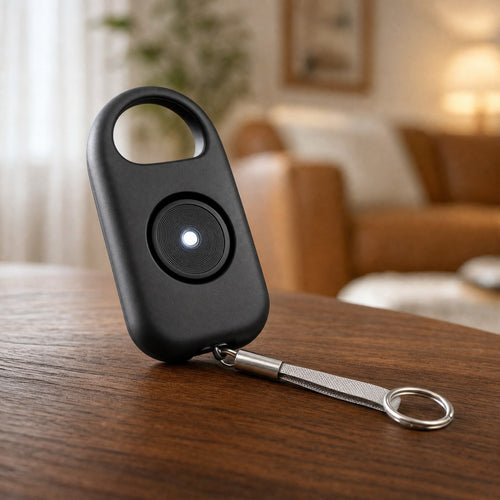
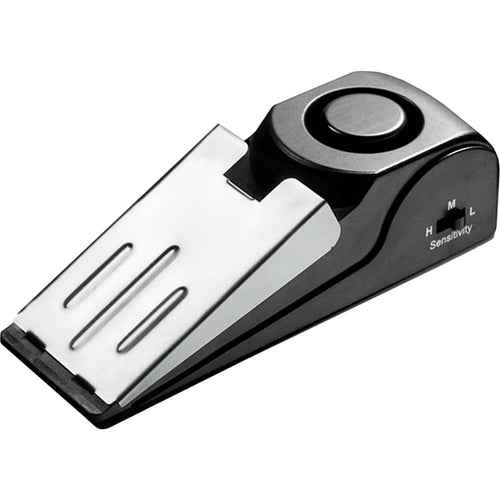
Peace of mind is not only about the perimeter. It is also the small comfort of having something simple in your hand when you want it, whether that is answering the door, taking out the trash after dark, or a late walk to the car. A Personal Safety Alarm is a tiny keychain device that sounds a loud 130-decibel tone with one pull. It is the kind of small, capable tool you barely think about, until the day you are glad it is on your keys. Many people who live alone also like a Door Stop Alarm for travel and hotel stays, so the calm comes with you when you are away from home.
4. Make the place look lived-in
Remember, simple signals do a lot of the work. A home that reads as occupied is a home that gets left alone, and this part is honestly pleasant to set up.
- Put a couple of lamps on inexpensive timers or smart plugs so the place glows in the evening whether you are in or out.
- Keep entryways tidy and well lit. A motion light by the door is a small, friendly touch.
- When you travel, pause mail and package deliveries, or have a neighbor collect them, so nothing piles up at the door.
5. Enjoy the quiet confidence of having it handled
This is the real goal. Not constant alertness, but the settled feeling of having set things up well, once, so you can stop carrying it around. When the doors and windows are covered, the routine is automatic, and a couple of small tools have your back, the background hum gets quieter on its own. You stop checking the lock three times. You sleep more easily. The home becomes, fully, a place to relax.
If you would like a simple starting point, the Protect Your Home collection brings the basics together in one place, so you can set up the essentials and get back to enjoying your space.
A few calm questions, answered
Do I really need an alarm if I live in a safe building?
Think of it less as bracing for something and more as closing the small open question in your mind. A quiet door or window alarm is mostly there so you can stop wondering and rest. Even in a secure building, that peace of mind is the whole point.
I rent and cannot drill or rewire. What can I use?
Almost everything here is renter-friendly. Stick-on alarms, a door stop alarm, a keychain personal alarm, and window dowels all install with no tools and no marks, and they come with you when you move. Nothing requires Wi-Fi, an app, or a subscription.
How long does setup actually take?
Less than an afternoon, and most of it is one-time. A single TremShield Alarm goes up in about sixty seconds. Setting up a few entry points, putting two lamps on timers, and learning your night routine is a one-evening project, and then it simply runs in the background.
Will alarms go off by accident and stress me out?
TremShield alarms are designed to respond to a real disturbance of the door or window they are mounted on, not to everyday bumps, and they switch on and off in a second. You stay fully in control, which is the opposite of stressful.
You have got this
Living alone is something to enjoy, fully and calmly. A short checklist, a steady night routine, and a couple of small tools are usually all it takes to turn that quiet background worry into quiet confidence. TremShield keeps it genuinely simple, no Wi-Fi, no app, no subscription, with a 60-second install and over 1,500 homes protected at a 4.8-star average. Set it up once, then go back to living your life in a home that finally feels as peaceful as it should.
Back to all articles