In this article
You want the door to hold, not a lock that survives while the frame lets go around it. That’s a fair ask and a cheap one, because a door fails in a set order and you can shop for that order.
This is a ranked shopping list for a front door, a back door and a patio slider. Nothing on it replaces the door. Most of it needs no drill.
Door security devices that stop a kick-in take the load off the two short strike screws: a strike plate kit with 3-inch screws first, a reinforcement lock, then a floor brace; alarms cover the glass.
We sell every device on the list, so read the ranking as a shop’s opinion. The alarm at the end is our TremShield Vibration Sensor Alarm, $29.99, which sticks to the door or to its glass and answers the first pry with a 125 dB siren. The hardware comes first.
The test behind the ranking
A kick lands near the handle. The deadbolt is thrown, so the force runs through the bolt into the strike plate, and from the plate into two short screws in a strip of pine trim, the jamb. The pine splits, the plate tears out, and the door swings in with the bolt still extended. The lock did nothing wrong. It was screwed to a thin strip of pine.
So each device gets one question: what does it do about that split? Jamb fixes first. Then devices that hold the door once the jamb is gone. Then alarms, which don’t fix the frame but make the attempt loud. The full mechanics are in why doors get kicked in. This page is the shopping list.
Door security devices, ranked
The first two are door reinforcement in the strict sense: they change what the frame can take. Everything after them works around the frame.
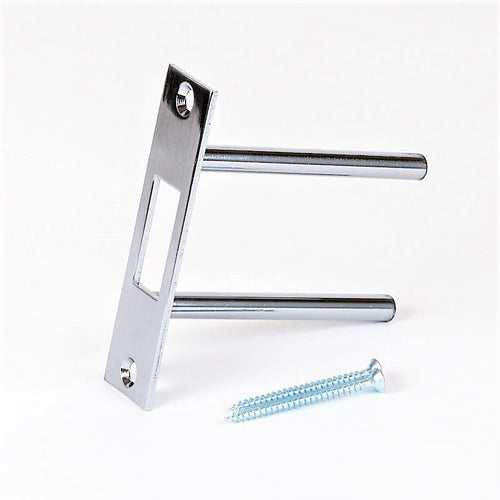
1. Door Strike Plate Kit, $24.99 (drills)
Door reinforcement starts at the strike plate, because that’s where the split starts. The Door Strike Plate Kit swaps the thin factory plate for a heavy-gauge steel one and the two short screws for six 3-inch hardened screws. Those screws pass through the jamb and the gap behind it and bite into the wall stud, so a kick has to move the framing of the house, not a strip of trim.
It fits standard residential deadbolts and frames, keeps your existing deadbolt, and installs in about ten minutes with a drill. Tonight’s version: back one screw out of your current strike plate. If it’s a short factory screw, three-quarters of an inch or so, this is your first purchase.
2. Door Reinforcement Lock, $24.99 (drills)
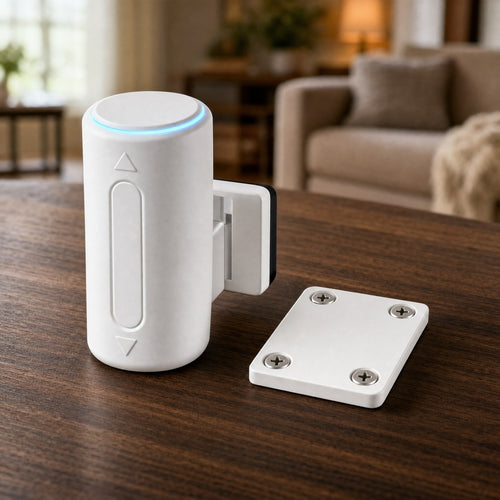
The Door Reinforcement Lock adds a second anchor that doesn’t depend on the deadbolt. It mounts on the frame side, beside your existing lock, with a wide steel plate screwed into the jamb. Flip the brace down and the door won’t open from outside: not with a bump key, not with a card on the latch, not with a shoulder. Flip it up in the morning.
It’s set from inside, so it covers the hours you’re home. It fits standard in-swinging doors, installs in about five minutes with a 1/8-inch drill bit, and leaves only small screw holes that take a dab of filler if you rent.
3. Adjustable Door Security Bar, $34.99 (no drill)
A door brace is the answer for a door you can’t drill, or won’t. The Adjustable Door Security Bar stands with its padded head under the door handle and its foot on the floor, so a shove on the door travels down the bar into the floor instead of into the strike plate. Nothing screws in. It telescopes from 17 to 50 inches and locks at length with a push pin.
It works on standard interior and exterior hinged doors. Check the swing: a floor brace needs a door that swings toward it, or it has nothing to push against. Set it before bed, lift it away in the morning. That’s the trade for not drilling: the bar is a night device, the strike plate kit is an always device.
4. The patio slider: the same bar, head off, in the track
A sliding door is held shut by one small factory latch. Take the padded head off the same bar and lay it flat in the bottom track against the closed panel. The bar fills the space the panel needs to travel, so a picked or pried latch gets nobody anywhere. It lifts out in one motion when you want the patio, and fits most aluminum and vinyl patio frames.
What a track bar can’t do is hold the panel down. Given enough clearance above the panel, someone can lift it up and out with the bar still in place. That gap belongs to the alarm on the glass.
5. French Door Lock Bar, from $24.99 (no drill)
French doors meet in the middle with no post between the leaves, and plenty of pairs swing outward, where a floor brace has nothing to push against. The French Door Lock Bar skips the floor and the frame. It’s a metal U-bracket that wraps both interior handles, with a locking body you slide in snug and lock with a key. Neither handle can turn, so neither leaf can be levered open.
Check your handles before you order: both leaves need an interior lever or knob at about the same height, or the bracket has nothing to close around. It’s set from inside and unlocks with its key in seconds. It does nothing for the glass. French doors are mostly glass.
6. The warning devices: Door Stop Alarm, $16.99, and an alarm on the glass
Everything above holds the door, none of it makes noise, and the braces only work while you’re home to set them. Two devices cover the rest.
The Door Stop Alarm is a rubber wedge with a 120 dB siren inside. Slide it under an inward-opening door (it needs about a 0.75 inch gap) and a push on the door does two things at once: the wedge digs in, and the siren goes off. It runs on one 9V battery, not included, has low, medium and high sensitivity settings, and switches off to become a plain doorstop.
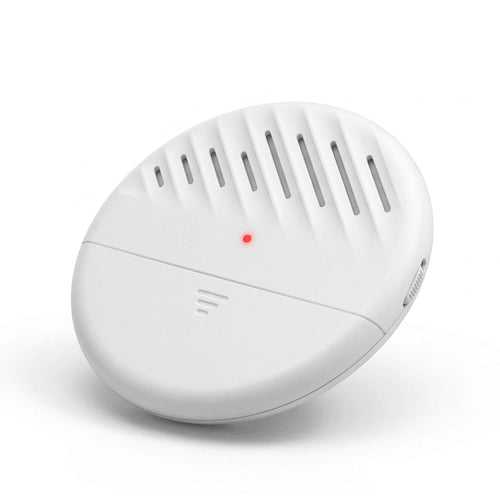
Then the glass. A pane in the door, a sidelight, a slider, a French pair: a stranger can work any of those without touching the lock, and no plate or bar notices. The TremShield Vibration Alarm sticks to the inside of the pane and answers a pry or a knock with a 125 dB siren while the person is still outside. It stays armed after you leave. A sensitivity dial lets you set it once, so a truck going past doesn’t trip it and a pry does. No app, no Wi-Fi, no monthly fee.
7. Portable Travel Door Lock, $19.99 (no drill)
Some doors aren’t yours: a hotel room, a rental, a dorm. The Portable Travel Door Lock is a flat piece of metal that slides into the strike pocket with the door open. Close the door, drop the bar, and the door is braced from inside against the frame. A key or keycard in the hallway doesn’t open it, and lifting the bar lets you out. It fits inward-swinging doors with a standard strike plate, not outward or sliding doors, and leaves no marks. Last on the list because it’s a travel tool.
Which door security device stops what?
“Drills?” means screws go into the door or the frame.
| Rank | Device | What it defeats | Drills? | Price |
|---|---|---|---|---|
| 1 | Door Strike Plate Kit: heavy-gauge steel plate, six 3-inch screws into the wall stud | The kick that splits the jamb around a locked deadbolt | Yes, about 10 minutes | $24.99 |
| 2 | Door Reinforcement Lock: steel plate on the frame beside the lock, flip-down brace | A door forced after the deadbolt is beaten, while you’re inside | Yes, about 5 minutes | $24.99 |
| 3 | Adjustable Door Security Bar, head on: floor-to-handle brace, 17 to 50 inches | A shove or kick that pushes a hinged door in toward the bar | No | $34.99 |
| 4 | Adjustable Door Security Bar, head off: laid in a patio slider’s bottom track | A slider forced after its latch is picked or pried (not a panel lifted out) | No | $34.99 |
| 5 | French Door Lock Bar: keyed U-bracket around both interior handles, notched rails set the width | A French door pair levered open, swinging in or out | No | From $24.99 |
| 6 | Door Stop Alarm: rubber wedge with a 120 dB siren, one 9V battery | A quiet push on an inward-opening door, held and made loud at once | No | $16.99 |
| 6 | TremShield Vibration Alarm: sticks to the door or to glass in or beside it, 125 dB siren, sensitivity dial | A door, pane, sidelight or slider glass worked quietly, home or away | No | $29.99, or $16.50 each in the 6-pack |
| 7 | Portable Travel Door Lock: flat plate in the strike pocket, drop-down bar | A hotel or rental door opened with a key from the hall | No | $19.99 |
The theater tier: what doesn’t change a kick-in
Three things people buy for a door that leave the kick-in where it was. Each is good for something else.
A chain lock on short screws
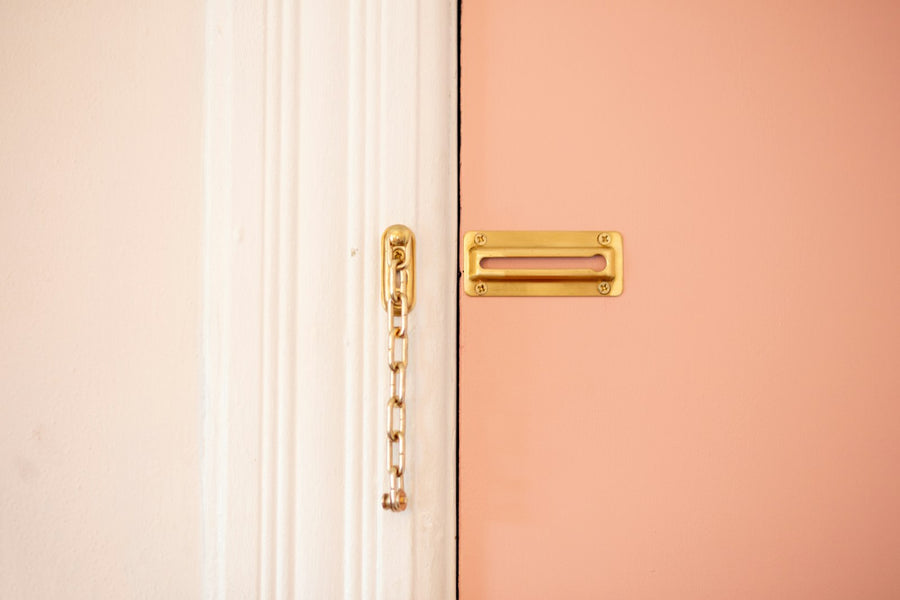
The chain’s keeper is held by short screws in the door and the trim. A shove loads the whole door onto those screws, and the trim side is the same soft wood that fails under the deadbolt, so the chain goes with it. What it’s good for: opening the door a few inches to talk to someone you didn’t expect. That’s a real job. Holding a kicked door isn’t its job.
A security sign with nothing behind it
A sign is a sentence about the house. If it’s true, it does something no device on this list can: it can be seen from the walkway before anyone touches a door. If it’s a bluff, there’s nothing behind it the first time the door is pushed. What it’s good for: put it up after the alarm is on the glass. Then it’s a description.
A deadbolt upgrade on an unreinforced frame
The bolt is the part that survives a kick-in. Buy a heavier one and mount it over the same two short screws, and you’ve upgraded the part that wasn’t failing. What it’s good for: a lock that’s worn, a key you don’t control, a bolt that doesn’t throw all the way. Do the strike plate first. Then the deadbolt has something to hold onto.
What does an anti-theft door security system look like on a real house?
An anti-theft door security system, for a normal house, is three jobs: something that fixes the frame, something that holds the door when the lock is beaten, and something that makes noise. Not every door needs all three.
- Front door. Strike plate kit, then the reinforcement lock for nights, and an alarm on the inside of the door or on a pane in or beside it. On the door itself it also hears a knock, so switch that one on for the night or when the house is empty.
- Back door. The same two, and this door gets them first if you’re staging, because the street can’t see it. The bar if you can’t drill.
- Patio slider. The bar in the track, and an alarm on the glass for the lift.
- French doors. The lock bar across the handles, and an alarm on the glass.
- Apartment door. Bar, door stop alarm and travel lock, all no-drill. The renter’s version of this list is in apartment door security.
All of it lives in the door security collection.
Fitting door hardware: the details
Is the strike plate kit the same thing as the reinforcement lock?
No. The reinforcement lock is a separate brace you flip down from inside, while the strike plate kit is not a lock at all: it replaces the factory plate and anchors it into the wall stud with six 3-inch screws. They do different jobs, and pairing them gives the frame its strongest hold.
Can I install the strike plate kit without a drill?
You can, with a hand screwdriver, but expect real effort driving 3-inch screws into framing. A drill makes it much easier, and on dense framing drill small pilot holes first so the screws don't strip.
Which French Door Lock Bar size do I need?
Measure your handle where the bar will cross it and pick the size with the larger opening: Small is about 1.0 inch, Medium about 1.3 inches and Large about 1.7 inches. The distance between the two handles doesn't matter, because the locking body slides along notched rails.
The glass is the last layer, and the 6-pack covers it
Walk to each outside door tonight and count the glass: a pane in the front door, the sidelight beside it, the slider, the French pair, and the windows within a step of each door. Once the hardware turns a stranger away from the lock, those panes are what’s left, and each one takes an alarm.
A front door with a sidelight, a slider and the windows beside them reach six fast, and at six the 6-pack at $99 is the buy: $16.50 per alarm instead of $29.99, $80.94 saved against six singles, with two free no-drill window locks in the box and the Home Security Guide as a PDF. Free shipping to the US, Canada, the UK, Australia and New Zealand, with 30-day returns. Do the strike plate this weekend, put the alarms on the glass the same afternoon, and the door is settled.
Back to all articles