
French Door Security Bar, Keyed Lock for Double Doors
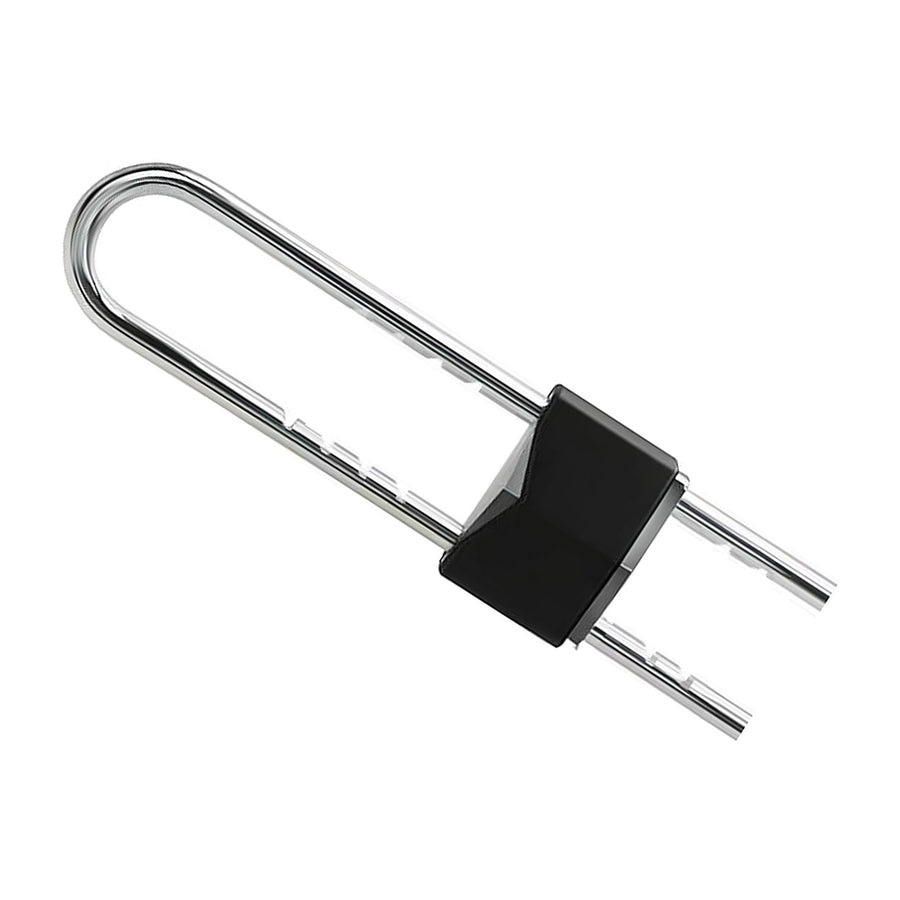
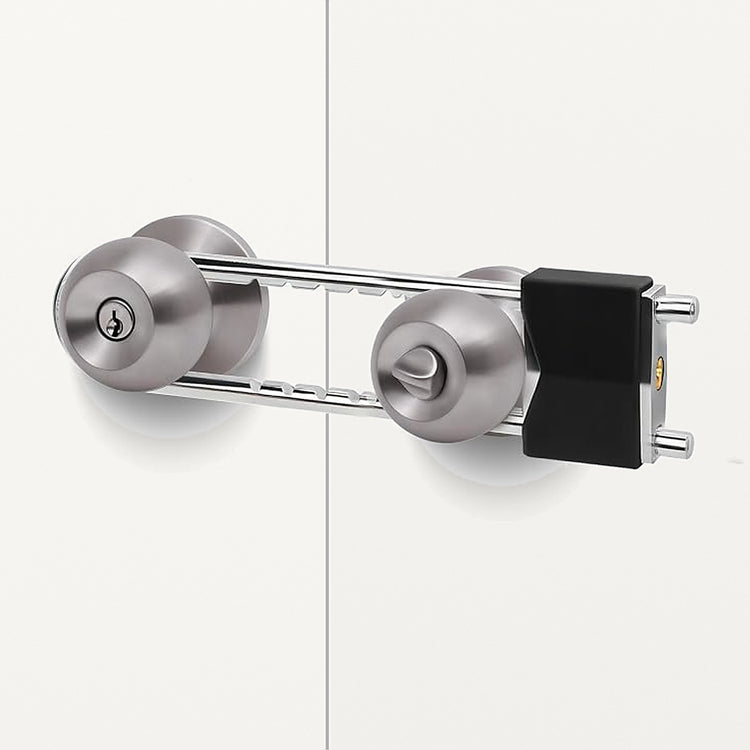
It locks both inside handles together with a key, so it works even on French doors that open outward.
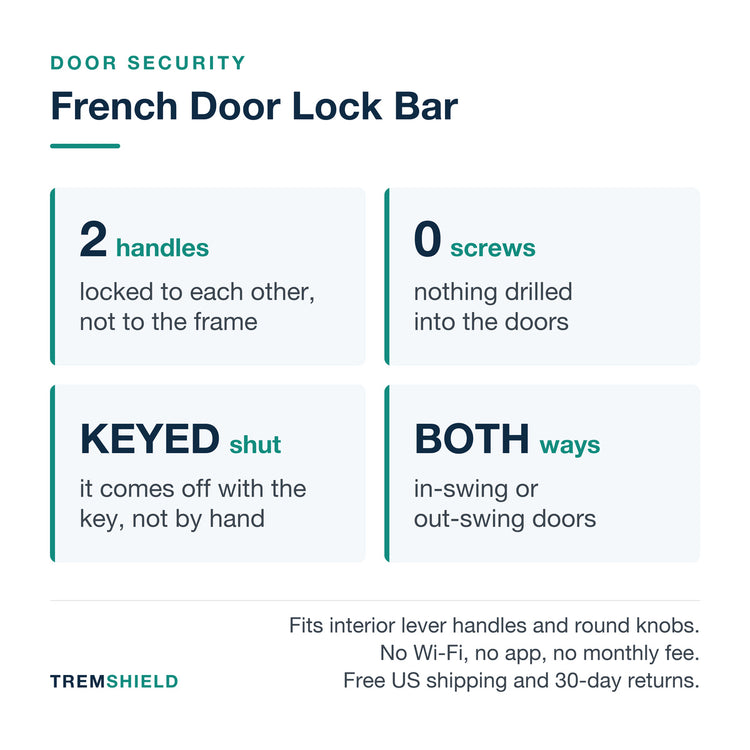
Locks the two inside handles together. Neither door opens, even if they swing out.
- No drilling
- Key in the box
- In or out-swing
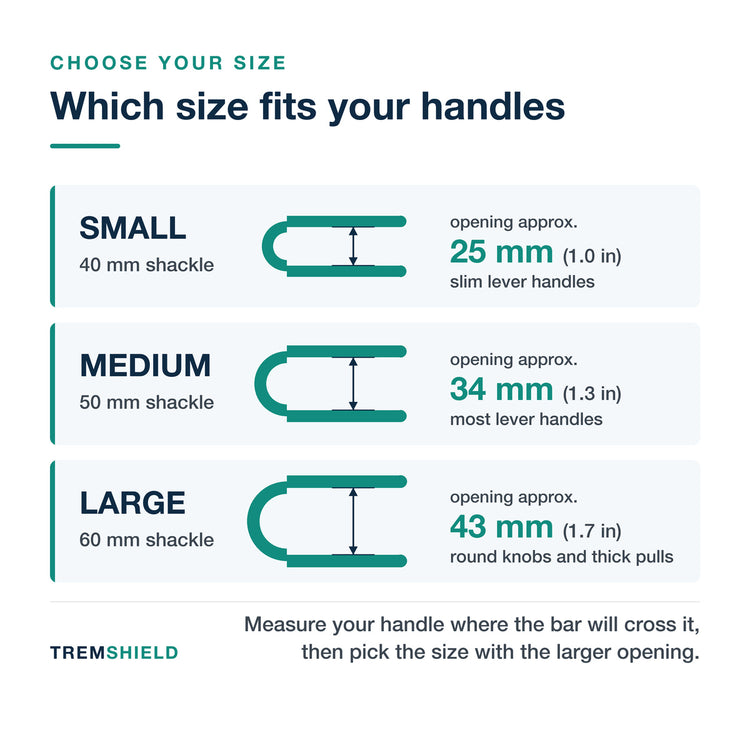
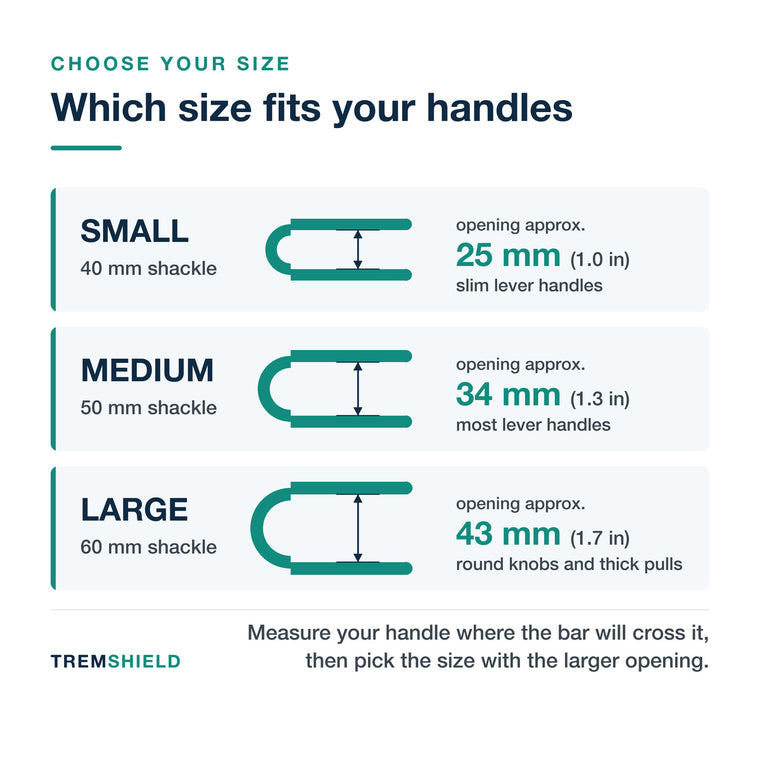
Opening the handle passes through. Full size chart in the photos.
Pick the opening that clears your handle.
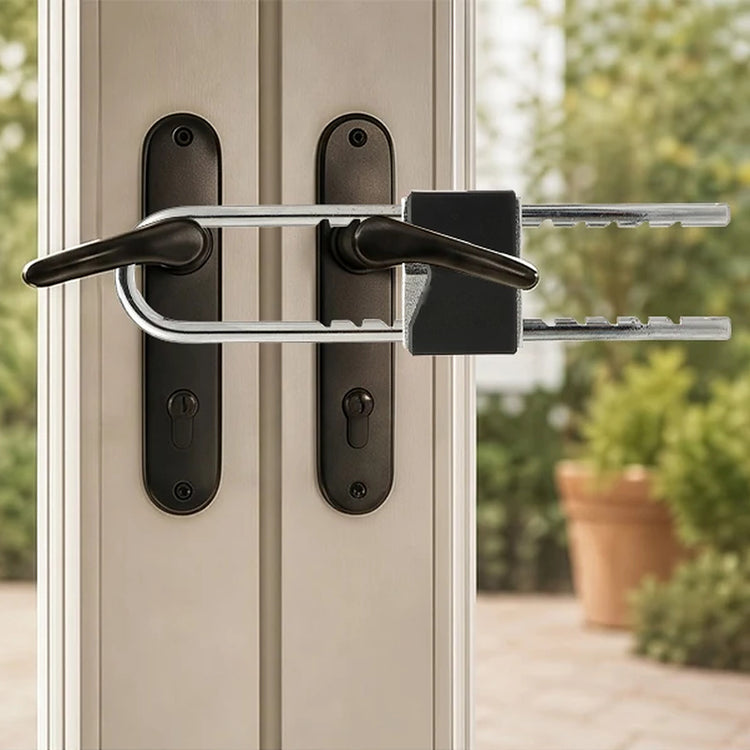
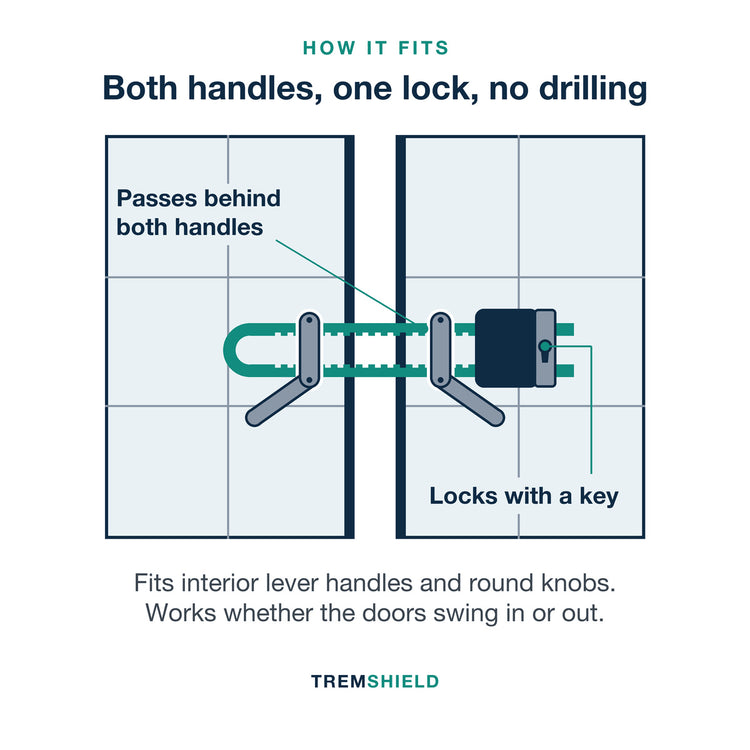
- Both handles, held togetherThe curved end goes around one interior handle and the rails lie behind both. The locking body slides in against the other one and closes the pair inside the bracket. Neither handle turns, so neither leaf opens. Lever handles and round knobs both work, as long as you pick the size whose opening clears your handle.
- Works on doors that open outIt holds the two handles to each other, so it never needs the floor or the frame. Outward-swinging French doors, where a floor brace is useless, are exactly where this one works.
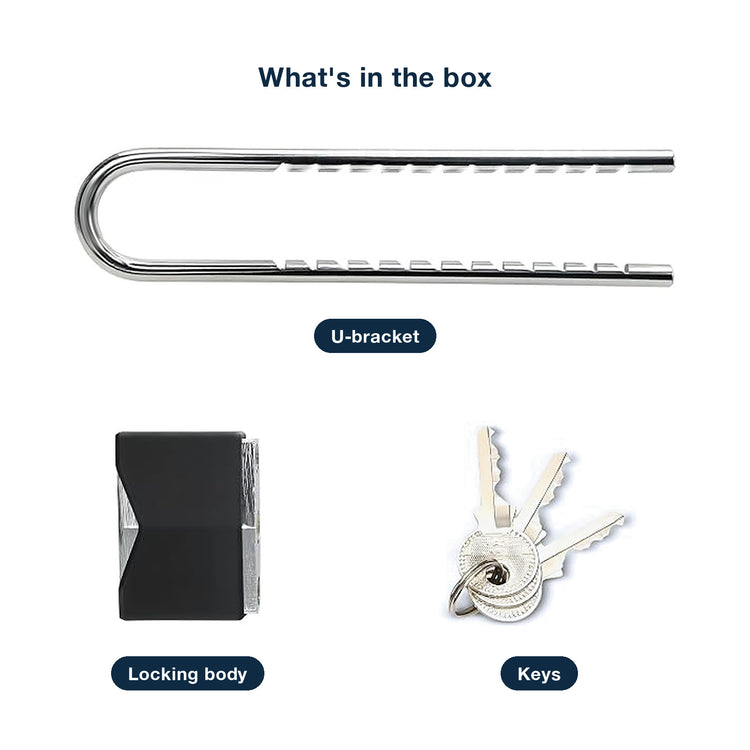
- Set by hand, held by the keyNotches along the rails let you match the bracket to your own handles, no tools. The key holds that setting, and nothing moves it back until you unlock it. Keys are in the box.
- Nothing drilled, nothing left behindIt goes on in seconds and nothing is screwed or drilled into the doors or the frame. Unlock it, lift it off, and the pair looks exactly as it did before, so a rental stays as you found it.
Why this door gets skipped
Two doors, and nothing solid in the middle.
Most door hardware assumes one door in a solid frame. A deadbolt throws into a stud. A floor brace pushes back against a shove. French doors break both assumptions: there are two leaves, they meet each other in the middle instead of a post, and on plenty of homes they swing outward, which puts the whole idea of a floor brace on the wrong side of the door. So the pair keeps the handle set it came with, and that is usually where it stays.
The useful thing about a pair of doors is that each one is standing right next to something solid. The other door. Tie the two interior handles together and neither one can rotate. A handle that cannot turn cannot pull its latch back, and a latch that never moves holds its leaf shut. That is the whole idea, and it is why a lock across the two handles does a job a floor brace cannot do on an outward-swinging pair.
Two things follow. The first is the key. The locking body slides along the bracket to match your handles, and the key is what holds it there, so nothing shifts it back until you decide to. The second is that the doors have to cooperate. Both leaves need an interior handle or knob, roughly level with each other, or there is nothing for the bracket to close around. Stand inside and look at yours before you order. That one detail decides whether this works on your doors.
Each door is standing next to something solid. The other door.
A floor brace needs the floor. This needs the other door.
Braces and bars push against something: a track, a jamb, the floor. That works on a door that opens inward. French doors that swing outward give a brace nothing to push against, because the force you want to stop is pulling the leaf toward the yard, not shoving it into the room. A lot of patio pairs are hung that way, and their owners usually find that out after the box is open.
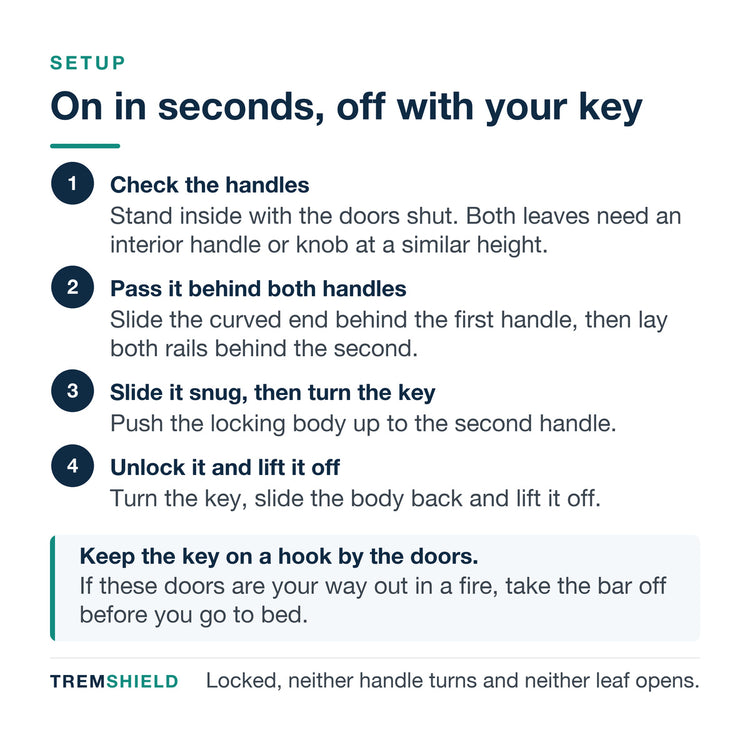
This one pushes against nothing. The curved end of the bracket goes around one interior handle, the rails lie behind both, the locking body closes in against the other one, and the key holds it there. The two leaves now hold each other, and swing direction stops mattering. It touches no part of the frame or the threshold, and one turn of the key takes the whole thing back off.
On from the inside, off with the key
Set it behind the handles
Stand inside with both doors shut. Pass the curved end of the bracket around the outside of one interior handle and lay the two rails behind both of them.
Slide the body snug
Slide the locking body along the rails until it sits against the outside of the other handle. Snug, not forced. The rails are notched, so it holds where you set it.
Lock it with the key
Turn the key in the locking body, then take the key out. The body can no longer slide, so the bracket cannot come off the handles.
Try it, then take it off
Push and pull both doors and try to turn each handle. Nothing should move. To open the doors again, unlock the body with the key, slide it back and lift the bracket off.
The back wall of the house
French doors are usually the back of the house: the patio, the deck, the garden side that nobody on the street can see. That is the side worth covering, and it is the side most people leave on factory hardware. This one goes on at night, comes off with the key in the morning, and lives in a drawer the rest of the time, so it packs for a vacation rental with a pair of patio doors just as easily. Put a vibration alarm on the glass beside it and both halves of the opening are covered: the handles cannot be turned, and the pane cannot be worked on quietly.
The bar holds the doors. The alarm covers the glass.
A pair of French doors is mostly glass, and no bar can do anything about a pane. The TremShield Alarm sticks straight to it and fires 125dB the moment someone pries or knocks on the glass, before they are through it. A back wall usually has more panes than one worth covering, which is why the 6-pack lands at $16.50 an alarm instead of $29.99.
See the alarm
Questions, answered calmly
From the security guide
How to Secure French Doors Without Ruining Them
How to secure French doors: bolt the passive door into the frame, lock the two inside handles together or brace the pair, then put film a...
Read the guide →Stay one step ahead
Real home-security tips, first looks at new gear, and the occasional subscriber-only deal. Unsubscribe anytime.