In this article
To secure French doors, anchor the passive door first with long bolts that seat deep into the frame at the top and the floor at the bottom. Then hold the pair shut with a French door security bar, which locks the two inside handles together with a key whichever way the doors swing. Finish with film and a vibration alarm on the glass, and throw every bolt each time the doors close.
French doors are usually the room's best feature, and if you have caught yourself looking at all that glass and those two swinging panels with a small knot of worry, you are noticing the right thing. They are, structurally, among the more delicate entries in a home.
The situation is better than the worry suggests: every weakness French doors have is well understood, and every fix on this list preserves exactly what you love about them. None of the fixes puts bars across the glass or drills through a panel, and no bulky hardware ends up dominating the room. Light stays in, and the doors get quietly, seriously stronger.
We will look at why these doors are vulnerable, then take the fixes in the order that gives the most strength per step. Most of an afternoon covers all of it.
Why are French doors easier to force than they look?
Understanding the weak points turns vague worry into a short, fixable list. French doors have three.

First, the meeting point. A normal door locks into a solid, framed wall. French doors lock into each other: the active panel's bolt seats into the passive panel, which is itself held only by small bolts at top and bottom. Force the passive panel and both come loose together, so the whole entry is only as strong as those two little bolts.
Second, the glass. Multiple panes mean multiple ways to reach through to a thumb-turn lock, and a glazed door can never be as rigid as a solid slab.
Third, the swing. Inswing doors can be pushed or kicked toward the house. Outswing doors resist kicks better but expose their hinges to the outside. Neither direction is bad. They just need different reinforcement, which is why a couple of the fixes below note which swing they suit. If yours open outward, our guide to French doors that open outward covers the hinge side in detail.
Start at the meeting point: real bolts for the passive panel
The highest-value fix is also the least visible. The passive panel, the one you rarely open, should be anchored to the building rather than merely latched. That is the job of flush bolts (set into the door edge, invisible when closed) or surface bolts (mounted on the interior face, available in finishes that read as period hardware rather than security gear).
What matters is not the style but the throw: the bolt should slide well into the frame above and the floor below, so the passive panel becomes, structurally, part of the wall. With that panel solid, the active door is finally locking into something that does not move. If your doors already have small factory bolts, upgrading to longer, deeper-seating ones is the quiet upgrade that matters most.
Brace the doors against force
With the passive panel anchored, the next fix resists a push or kick on the active door.
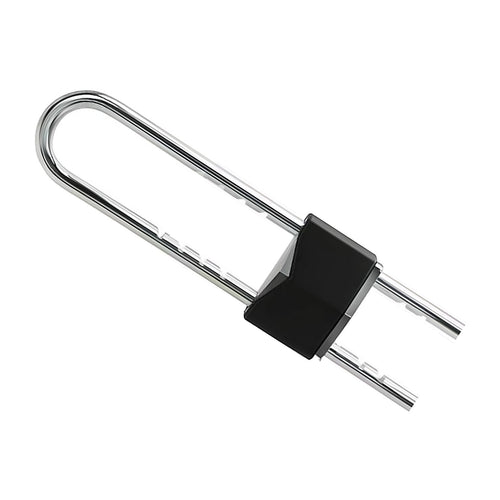
The one brace that works on every pair is a French door security bar. Its bracket sits behind both inside handles and a key locks it at their width, so neither handle turns and neither door opens. It never touches the floor or the frame, which is why it holds a pair that swings outward as well as one that swings in. Both doors need an inside lever or knob at roughly the same height. Keep the key on a hook near the doors, and if they are your way out in a fire, take the bar off at bedtime.
On inswing doors, a door security bar adds a floor brace: it props under the handle and redirects force into the floor, installs with no tools, and stores in a closet during the day or a dinner party. For another inswing fix, one that stays in place and engages whenever you are home, a door reinforcement lock mounts at the frame with a few small screws and physically blocks the door from swinging open, standing up to far more force than the latch alone.
Two smaller reinforcements round out this step. If your doors are outswing, the hinges face the world, so replace one short screw in each hinge with a long security screw that reaches the framing, and consider hinge-pin set screws so the door stays put even if a pin is pulled. And whichever way your doors swing, check the screws in the existing lock hardware: swapping factory short screws for 3-inch ones is a five-minute upgrade that borrows strength from the wall studs.
Everything in this step works without altering the doors themselves, which is the theme of the whole list: strengthen the frame, the floor, and the meeting point, and leave the woodwork alone.
How to protect French door glass: alarm plus film
You cannot make glass unbreakable. What you can do is make breaking it loud, slow, and unrewarding, which changes the decision for the person outside.
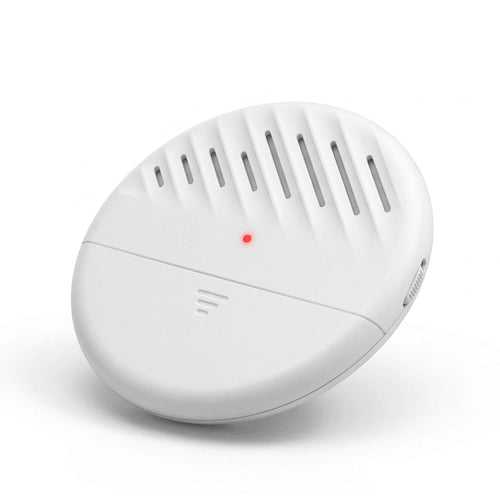
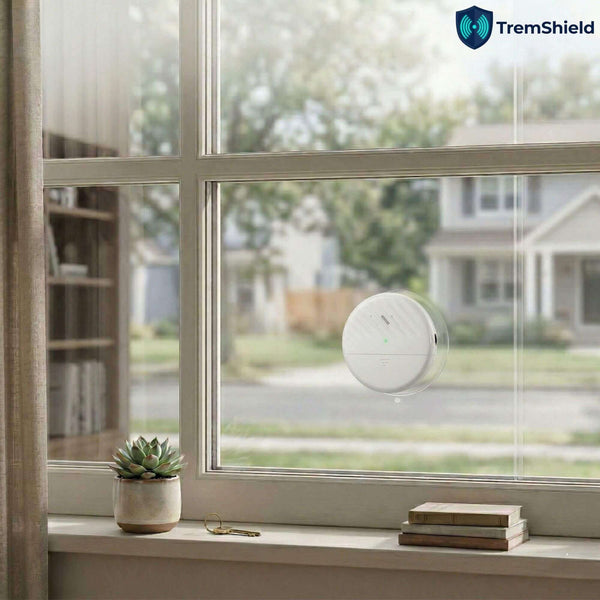
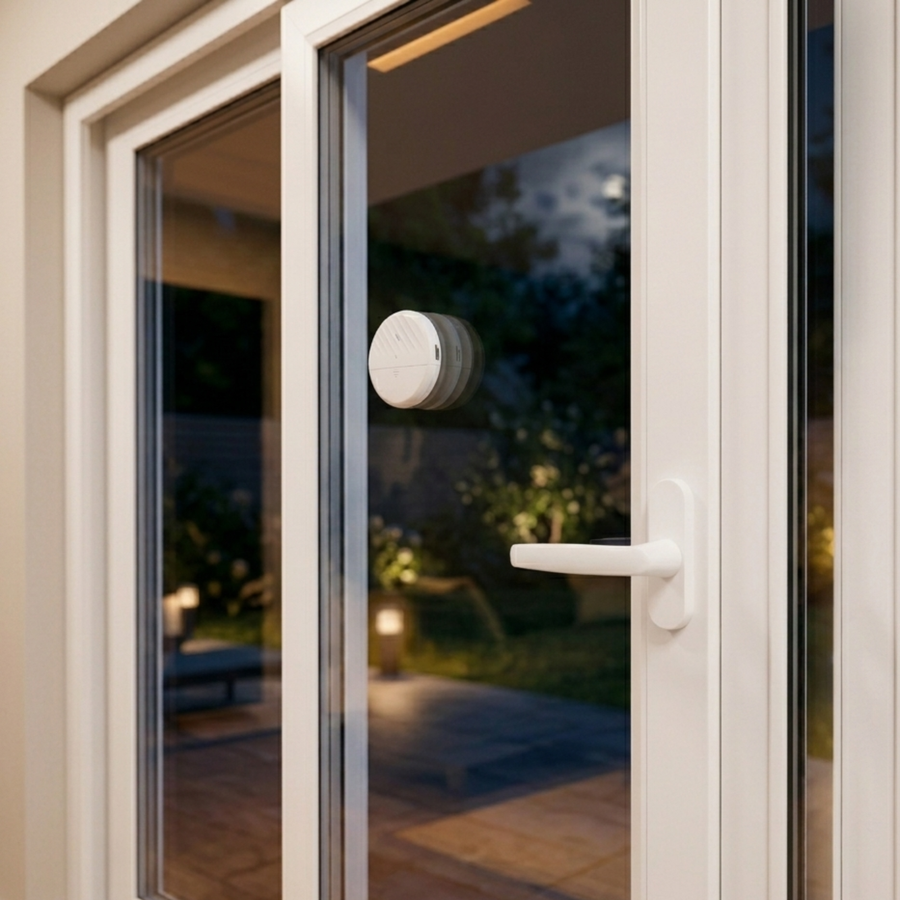
The loud part is a vibration sensor alarm stuck directly to the pane. It reacts to impact and prying with a 125-decibel siren while the person is still outside, peel-and-stick, battery powered, no wiring near your beautiful doors and no monthly fee. One unit per panel covers both doors, and the low-profile design disappears into a corner of the glass.

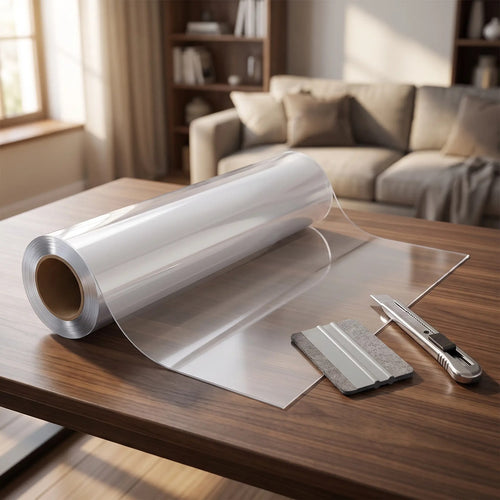
The slow part is window security film, an optically clear sheet on the inside face of each pane. It does not stop a determined strike, but it holds shattered glass together so a quick punch-through near the handle becomes a prolonged, noisy struggle. Film and alarm are a natural pair: the film buys seconds, the alarm fills them with sound. If you want open-door awareness as well, a slim entry alarm on each panel sounds the moment a door swings without you.
Finish with sightlines and daily habits
The last step costs almost nothing. Glass doors show the room to anyone outside, so let curtains or sheers do quiet work: sheer panels keep your light while blurring the view of electronics, purses, and keys, and drawn curtains at night remove the free preview entirely. Rearranging tempting items out of the direct line of sight takes five minutes.
Then the habits. Throw the flush bolts every time the doors close, not just at bedtime, since an unanchored passive panel undoes the whole system. Keep keys away from the glass, never in the lock, because a key visible through a pane is an invitation to try that pane first. If the doors open onto a patio, treat the patio like part of the entry: a light with a motion sensor, furniture that does not double as a step stool, and gates that latch.
One more habit worth naming: use all of the doors' locking hardware. Many households close French doors with just the center latch for months at a time because the bolts feel like a formality. They are the opposite of a formality. Ten extra seconds at closing time is what turns two glass panels into a locked wall.
And if your French doors share the back of the house with a slider, our guide to securing sliding glass doors covers that neighboring problem with the same no-damage philosophy.
Done in this order, French doors stop being the soft spot. The panels anchor to the building, force meets the floor, and the glass answers any attempt with a siren. All of it reversible, none of it visible from the sofa. Much of this hardware lives in our door security collection, so you can work through the layers at your own pace.
French door fit, rental and odd-handle questions
What if one of the French doors has no handle?
Skip the handle-to-handle lock bar, because it needs an inside lever or knob on both doors at about the same height. Anchor the passive door with long bolts into the frame above and the floor below, then, if the pair swings inward, brace the active door with a door security bar under its handle.
Which size French door security bar do I need?
Check how thick your handle is at the spot the bar crosses, and choose the size with the bigger opening: Small clears about 1.0 in (25 mm), Medium about 1.3 in (34 mm), Large about 1.7 in (43 mm). The gap between the two handles does not matter, since the rails adjust to it.
Can I secure French doors in a rental?
Mostly, yes. The French door security bar and the vibration alarm go on with nothing drilled, and a door security bar on an inswing pair needs no tools. Longer bolts on the passive door mean new screws, so check with the landlord before swapping those.
How do you secure double doors?
The same way as French doors, because any pair that latches into itself has its weak point in the middle. Anchor the passive door with long bolts top and bottom, lock or brace the active one, and put an alarm on each door. On a solid pair with no glass, skip the film and stick the alarm to the door panel itself.
Where to start with French doors
Start with the passive panel's bolts, the fix that adds the most strength per step. Next, if both doors have an inside handle, lock them together with a French door security bar. Then give each door its own alarm on the glass. One TremShield Vibration Alarm is $29.99, and the six-pack covers the pair plus four more windows for $99, which is $16.50 per alarm and $80.94 less than six singles. Two free no-drill window locks come in the pack, the Home Security Guide follows by email, shipping to the US, Canada, the UK, Australia and New Zealand is free, and returns are open for 30 days.
Back to all articles