In this article
You've decided your windows deserve more than a latch. Then you start comparing products and the calm evaporates: vibration alarms, shock sensors, acoustic glass-break detectors, hubs, protocols. It's a lot of vocabulary for what should be a simple decision.
Set the vocabulary aside. There are only two ways an electronic device can notice an attack on a window: feel it or hear it. Window vibration alarms feel it. Acoustic glass-break sensors hear it. Almost everything else is packaging.
This guide walks through how each one works, when each one triggers, what sets them off falsely, and what each costs to own. By the end you'll know which side of the aisle your home belongs on, and why some homes quietly use both.
How each technology works
Vibration alarms: the window's sense of touch
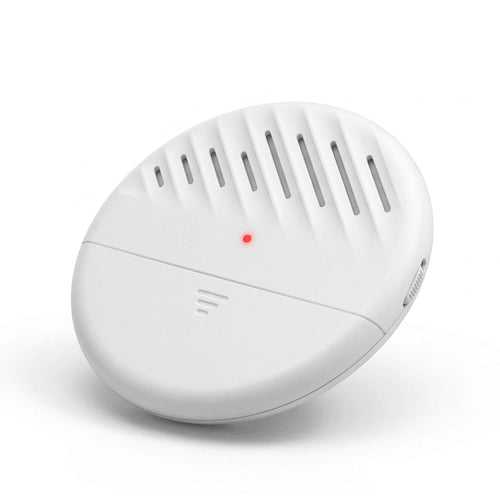
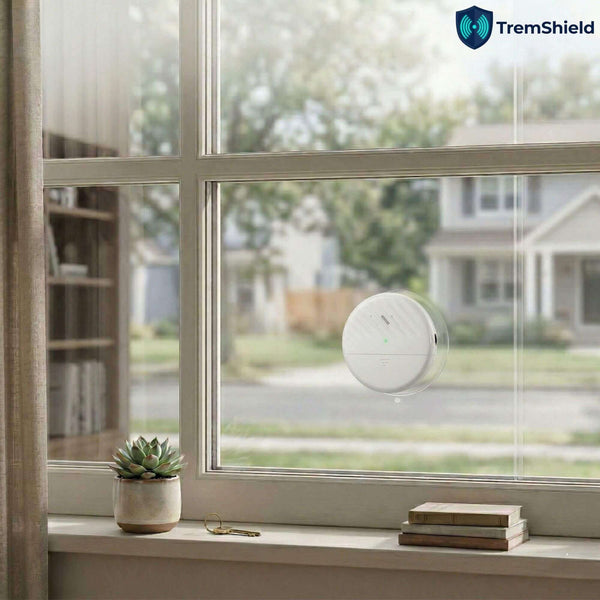
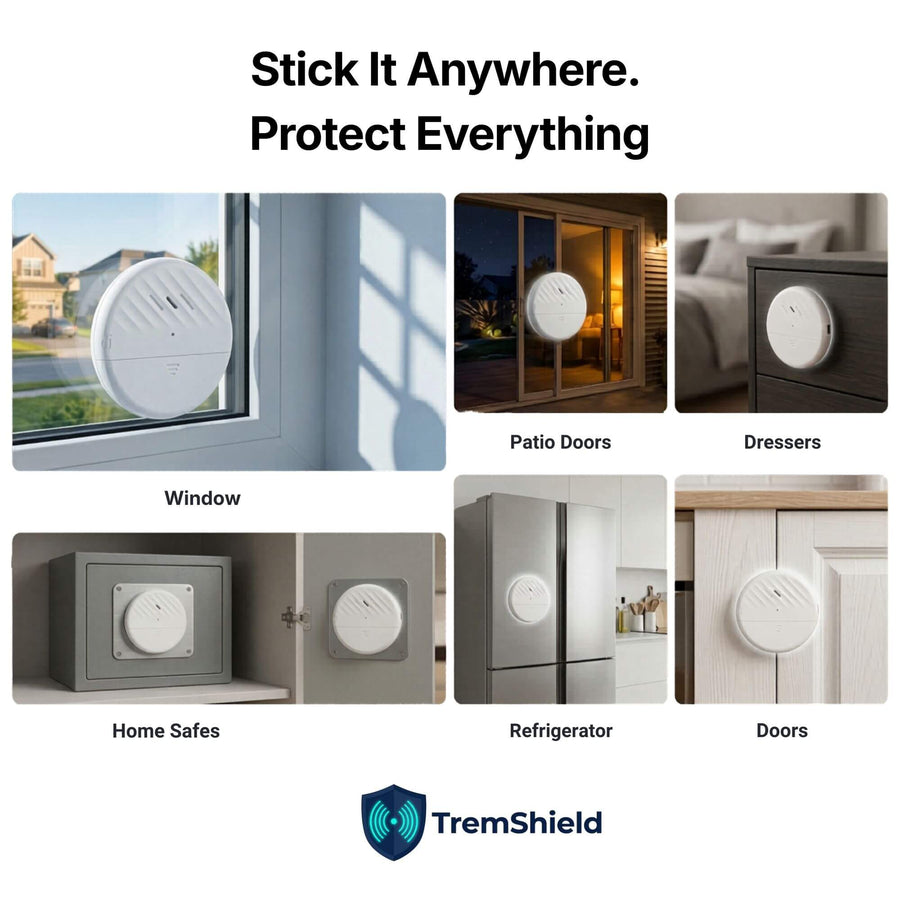
A vibration alarm, sometimes called a shock sensor, mounts directly on the glass and monitors physical movement. Inside is a small sensor that responds when the pane is jolted: a pry bar working at the window, a hand testing the glass, a blow meant to break it. When the vibration crosses the threshold you set, the siren fires. The TremShield vibration sensor alarm is this idea in its simplest form: a battery-powered unit that peels and sticks onto the glass, arms with a switch in seconds, and produces a 125 dB siren with no Wi-Fi or app, and no hub anywhere in the chain.
Acoustic glass-break sensors: the room's sense of hearing
An acoustic glass-break sensor mounts on a wall or ceiling and listens to the room. Its microphone is tuned to the sound signature of breaking glass, typically the low-frequency thump of an impact followed by the high-frequency shatter. When it hears that pattern within its range, usually somewhere around 15 to 25 feet, it signals an alarm. One sensor can cover several windows in the same open room, which is its main structural advantage.
The timing difference: before the break versus after it
This is the distinction that matters most, and it's worth slowing down for.
A vibration alarm triggers at first impact. The pry attempt, the shove, the first strike on the pane: the siren sounds while the glass is still intact. When an attack starts with a test or a pry rather than an instant smash, the alarm fires at the earliest possible moment, while the window is still locked.
An acoustic sensor triggers after the glass breaks. That's not a flaw; it's the definition of the device. It listens for shattering, so shattering has to happen first. It stays silent through a pry attack that defeats the latch without breaking glass, and it fires only once the window is already compromised.
Neither behavior is wrong. But if the goal is to interrupt the entry rather than record that it happened, earlier is better, and vibration sensing is structurally earlier.
False alarms: what sets each one off
Every sensor has a false-alarm profile, and it helps to know yours before you mount anything.
- Vibration alarms can be set off by heavy truck rumble, hail, a slammed sash, or a very determined woodpecker. The fix is sensitivity adjustment: set the threshold so a firm tap on the glass triggers it while ordinary household bumps don't. Units with adjustable sensitivity let you tune each window in a minute or two.
- Acoustic sensors can be fooled by sounds that resemble their target pattern: a dropped dish, jingling keys close to the microphone, certain movie soundtracks, some dog barks. Two-stage detection has reduced this over the years, but a microphone listening to a whole room means everything in the room is a candidate sound source.
In both cases, placement and tuning matter more than brand. A vibration alarm on a loose, rattly pane or an acoustic sensor mounted next to the kitchen will complain; the same devices thoughtfully placed run quietly for months.
Wiring, hubs, and what each costs to own
Here the two categories part ways.
Most acoustic glass-break sensors are components, not complete products. They're designed to report to a security system: a hub or panel, often with an app, and frequently with a monthly monitoring plan attached. The sensor itself might cost $30 to $60, but it usually can't make noise on its own, so the real cost is the system around it, anywhere from a one-time few hundred dollars for DIY kits to a recurring monthly fee for monitored service.
A standalone vibration alarm is the entire system in one piece. Sensor, siren, and battery live in the same small unit, so there's nothing to wire or pair, and nothing to subscribe to. The TremShield unit costs $29.99, installs with peel-and-stick adhesive, runs on replaceable batteries, and ships free to the US, Canada, the UK, Australia and New Zealand with a 30-day return window and a 1-year warranty. The lifetime cost is the sticker price plus batteries.
If you already own a hub-based system, adding its matching glass-break sensor is a reasonable move. If you don't, buying a whole ecosystem to get one listening microphone is the expensive road to a result a standalone unit delivers out of the box.
There's also the quiet question of upkeep. A hub-based sensor depends on the hub being online, the app signed in, the subscription current. A standalone unit depends on a battery you check when you change your smoke detector batteries. Fewer links in the chain mean fewer ways for the chain to break when it matters, and nothing to cancel if you move or change your mind.
The verdict: which one belongs on your windows?
For most homes without a monitored system, a standalone vibration alarm covers more ground. It triggers earlier in the attack, needs no hub or subscription, costs $29.99 once, and moves with you if you rent. Put one on each ground-floor window that worries you and the whole perimeter announces trouble at first touch. For what to add beyond sensors, our guide to burglar-proofing windows without bars is the natural next read.
If you already run a system with a panel, the answer is both rather than either-or. Let the acoustic sensor cover the open living area from the ceiling, and put vibration alarms on the specific high-risk panes: the back slider, the basement window behind the shrubs, the garage window. The two technologies fail differently, which is exactly why they stack well.
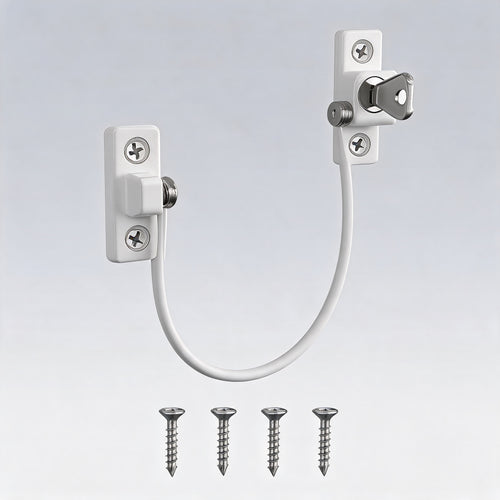
Sensors are one layer of window security, not the whole of it. A window restrictor that physically limits how far a sash can open works through power outages and dead batteries alike, and the rest of the window security collection covers the mechanical side. If you're unsure which alarm fits which opening in your home, the 60-second alarm finder will sort it out for you. For doors, the driveway and the walk to the car, our guide to five alarms and the five jobs they do picks up where this comparison stops.
Glass-break or vibration: the questions that decide it
How is a glass-break sensor different from a window contact sensor?
A contact sensor is two halves on the sash and the frame that sound when the window opens and they pull apart. A glass-break sensor listens for glass shattering. A vibration alarm feels the pane being struck or pried, so it is the one of the three that sounds while the window is still shut and in one piece.
Is a window shatter alarm the same as a glass-break sensor?
Not always, because the name is used for both kinds. Check how it detects: one that listens from the wall or ceiling only reacts after the glass breaks, and one that sticks to the pane and senses vibration reacts at the first strike or pry.
Do vibration alarms work if a burglar cuts the glass instead of breaking it?
Yes, in most cases, because cutting and working a pane sends vibration into the glass, which is exactly what the sensor watches for. An acoustic sensor listens for a shatter, so a careful cut may never set it off.
How many vibration alarms do I need?
One for each pane a person could reach from outside: ground-floor windows, basement windows, sliders and any glass hidden from the street. Most ground floors have five or six, which the 6-pack covers for $99, or $16.50 an alarm with no fees after that.
Putting vibration alarms on your windows
Start with the ground-floor glass you worry about most. One TremShield Vibration Alarm is $29.99 and covers one pane. For a home with several, six cost $99, which is $16.50 per alarm and saves $80.94, with two free no-drill window locks and the Home Security Guide included. Free shipping to the US, Canada, the UK, Australia and New Zealand, with 30-day returns.
Back to all articles