In this article
If you rent, or you just like your walls without holes in them, standard home security advice can feel like it was written for someone else. Screw in this bracket, hardwire that keypad, drill into the door frame. Meanwhile your lease says no, and your security deposit agrees.
Most of what makes a home hard to break into never required a drill in the first place, which is good news for your deposit. The parts that matter (noise, physical resistance, a visible warning) come in adhesive, tension, or freestanding forms, go on in minutes, and leave with you when you move.
Here is our shortlist: seven no-drill devices that earn their place, starting with a stick-on vibration alarm for the glass, with what each one does, how it installs, and where it belongs. Plus the one upgrade where screws really are worth it.
How no-drill security holds up
No-drill devices rely on three install methods, and knowing them makes the list below easy to navigate.

- Adhesive. Industrial peel-and-stick pads bond sensors and small hardware to glass or smooth frames. Perfect for alarms, which need contact, not structural strength.
- Tension and leverage. Bars and braces wedge against the floor or inside a track, redirecting force on the door down into the ground. The harder the push, the harder they hold.
- Freestanding. Devices that sit, wedge, or clamp where needed: door stops, portable locks, small safes.
None of these damage a surface, and every item below installs in under five minutes. For the fuller renter playbook, see our guide to renter-friendly home security.
For your windows
Windows are where no-drill security shines, because glass is already an ideal mounting surface for adhesive, and a track is a ready-made home for a clamp. Start here if your ground floor has openings a passerby could reach.
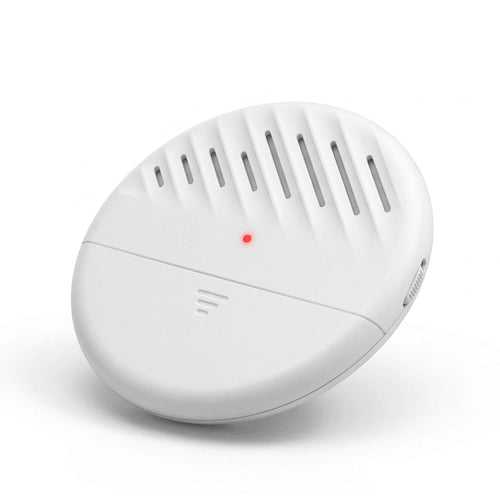
1. Vibration sensor alarm
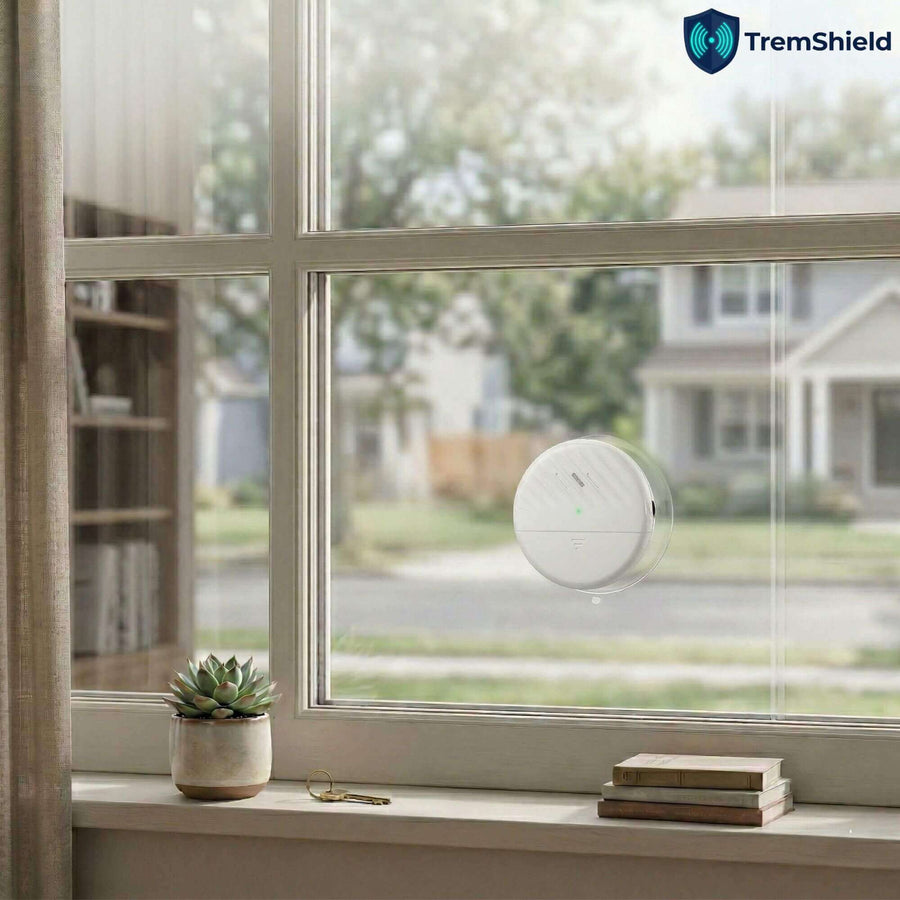
What it does: sticks to the glass and fires a 125 dB siren the instant a window is struck or pried, before the glass ever breaks. Install method: peel-and-stick adhesive; arms in seconds; battery powered with no Wi-Fi, app, or monthly fees. Best placement: every ground-floor or fire-escape window, especially panes hidden from the street. The TremShield vibration sensor alarm is $29.99 with free shipping to the US, Canada, the UK, Australia and New Zealand, 30-day returns, and a 1-year warranty, which makes covering several windows realistic.
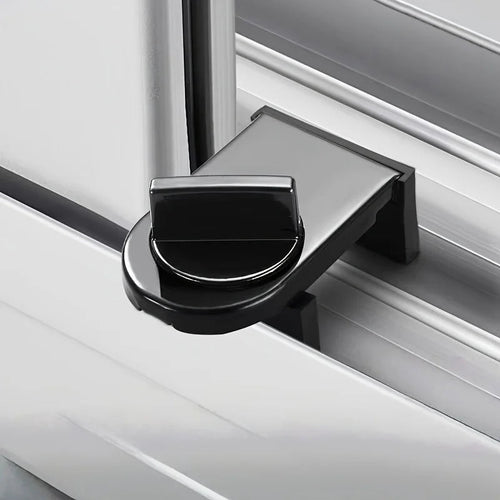
2. Window sash lock
What it does: clamps the moving sash in place so it cannot be forced open, even if someone defeats the factory latch. Install method: tightens by hand onto the frame, no tools. Best placement: ground-floor double-hung windows and any window whose factory latch feels loose; the window sash lock gives the sash a second, sturdier hold that does not rely on the original latch. For windows you crack open for air, the sliding window lock below holds a vented gap just as firmly.
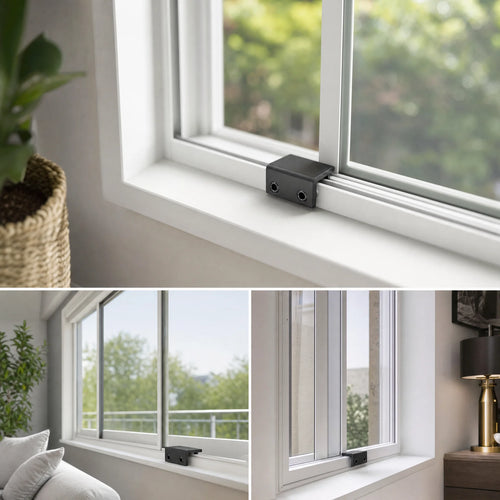
3. Sliding window lock
What it does: a compact clamp that grips the track of a sliding window so the panel cannot slide, latch or no latch. Install method: hand-tightened thumbscrew on the track, repositionable in seconds. Best placement: ground-floor sliding windows; the sliding window lock also holds a window at a vent gap you choose.
For your doors
Doors fail at the latch and the frame, not the slab, which is why leverage devices work so well: they take the frame out of the equation entirely and route force into the floor or the track instead.
4. Door security bar (hinged doors and sliding tracks)
What it does: one bar covers your two weakest doors. Head on, it braces under the doorknob at an angle to the floor, so a kick becomes a shove against the ground instead of a snap against the latch. Head off, it lies in the bottom track of a sliding glass door so the panel cannot be forced open even if the latch is popped, which is the classic slider weakness. Install method: adjustable tension, fully freestanding, nothing attached to the door or the frame. Best placement: the main entry overnight, or the patio slider, the most latch-weak door in most homes. The adjustable door security bar sets up in under a minute.
5. Door stop alarm
What it does: a wedge that jams the door if it starts to open and fires a loud siren at the same moment: resistance and alert in one piece. Install method: place it behind the door, flip the switch. Best placement: bedroom doors at night and any inward-opening door in an apartment. The door stop alarm is built for renters and travelers alike.
For travel and for the street view
The last two items round out the kit: one travels with you to wherever you sleep away from home, and one works on the sidewalk, before anyone gets close enough to touch a lock.
6. Portable travel lock
What it does: adds a temporary second lock to almost any inward-opening door, so a key or keycard held by someone else no longer opens it. Install method: slots into the existing strike plate and tightens by hand; leaves no trace. Best placement: hotels, vacation rentals, dorms, and a bedroom door at home. The portable travel lock fits in a jacket pocket.
7. Decoy camera and 24-Hour Surveillance Warning Sign
What it does: shifts the odds before anyone touches a door by making the house read as monitored. Deterrence is a numbers game: in the UNC Charlotte survey of incarcerated burglars, most said they weigh signs of security, like alarm signs and outdoor cameras, when they choose a target. Install method: indoors, the camera sticks to a smooth surface with its included adhesive pad, and outdoors it takes two screws; the metal sign zip-ties through its corner holes to a fence or balcony rail, with no drilling. Best placement: a decoy camera mounted visibly near the porch, plus a 24-Hour Surveillance Warning Sign where the walkway can read it, and alarm warning decals on the back door glass, since the back of the house is where someone is least likely to be seen.
The exception: when screws earn their place
One door upgrade rewards a drill: the strike plate. That's the small metal rectangle your deadbolt slides into, and on most homes it's anchored to the frame with short screws that give way under a solid kick. A reinforced strike plate kit with 3-inch screws reaching the stud behind the frame is the single highest-value screwed-in upgrade in home security. If you own your home, or your landlord signs off (it's invisible and improves the property, so it's worth asking), it's worth the screw holes. Renters who can't get permission lose nothing: the door security bar above resists the same kick without touching the frame.
That's the boundary. Everything else here can go on without a drill, and together the seven items cover windows, doors, nights at home, and nights away. If you're starting from zero and wondering what order to buy in, our first $100 in home security guide lays out the priorities, and the Protect Your Home collection is organized by entry point so you can shop by weak spot rather than by gadget.
No-drill security: before you order
Will adhesive devices leave marks when I move out?
Not on glass. The alarms stick to glass or to the smooth face of a frame or door, and they peel off clean; any adhesive left on glass comes away with rubbing alcohol. On painted wood, warm the pad with a hair dryer first and peel it off slowly so the paint stays put.
What should I buy first if I can only get one thing?
Match it to the opening most likely to be tried. Ground-floor glass a passerby could reach calls for a vibration alarm, and a flimsy door calls for the security bar or the door stop alarm. If several panes qualify, six alarms cost $99, which is $16.50 each instead of $29.99 for one.
Does a stick-on alarm work on anything besides glass?
Yes. The TremShield alarm sticks to any smooth, solid surface, so it also goes on a door, a plastic frame, a fridge or a safe, and it answers a hit or a pry on that surface.
Do any of these need batteries or charging?
None needs charging. The vibration alarm runs on LR44 button cells and the door stop alarm on one 9V, sold separately, while the bar, the window locks and the travel lock are mechanical. Nothing on the list needs Wi-Fi or an app.
Do landlords ever object to no-drill security?
Adhesive, tension and freestanding devices leave the unit as you found it, so there is little to object to. The strike plate and an outdoor decoy camera take screws, so ask first for those. A one-line email listing what you plan to use leaves a dated record.
Where to start
Start with the glass a passerby could reach. The 6-pack at $99 of the TremShield vibration sensor alarm brings each one to $16.50 (singles are $29.99), saves $80.94, and includes two free no-drill window locks and the Home Security Guide. Order the six-pack and cover every reachable pane in an afternoon. Free shipping to the US, Canada, the UK, Australia and New Zealand, with 30-day returns.
Back to all articles