In this article
Renter-friendly home security is anything that sticks, clamps, wedges or hangs, so it comes off without a mark and moves with you: stick-on alarms, track bars, clamp-on window locks and portable door locks. What you need depends on the kind of place you rent, so this page plans it by rental type, with what each setup costs.
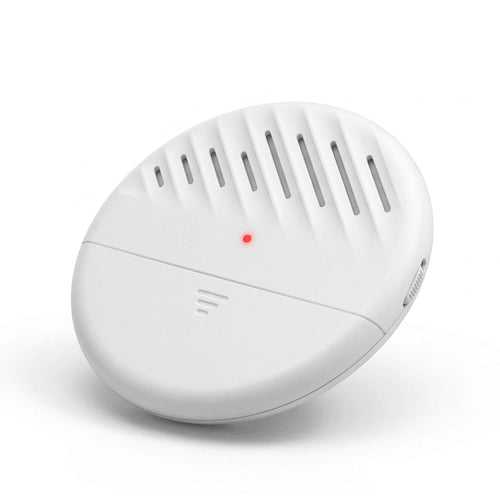
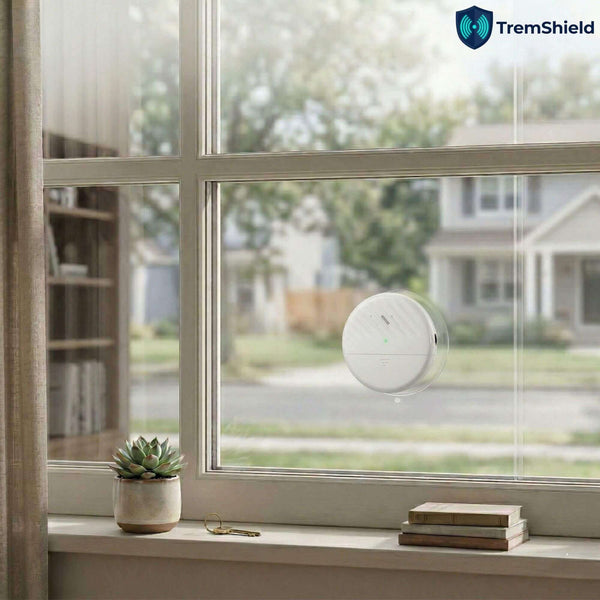
One piece goes in every plan: the TremShield Vibration Alarm. It's a thin disc you press onto the glass of a window or a glass door, and a knock or a pry on that pane sets off 125 dB. No drilling, no Wi-Fi, no monthly fee.

Which of these do you rent?
A tenth-floor studio and a rented house with a back yard need different things. Find yours, then use the move-in checklist further down.
An apartment above the ground floor
Your risk sits mostly at the front door, plus any glass next to a balcony or a fire escape.
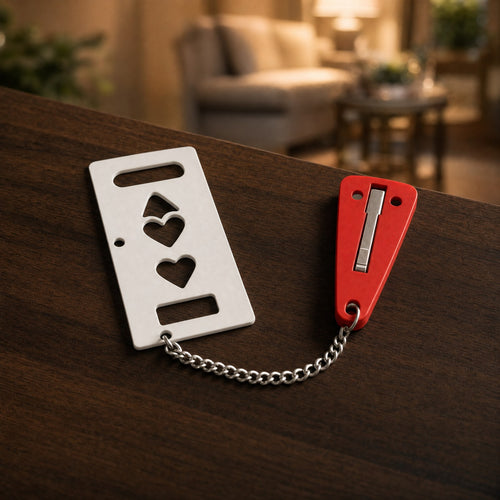
- Front door, held: a Portable Travel Door Lock ($19.99) holds an inward-swinging door shut from your side, so nobody with a key on the other side gets in while it's set. It rests in the strike plate you already have: no screws, no marks.
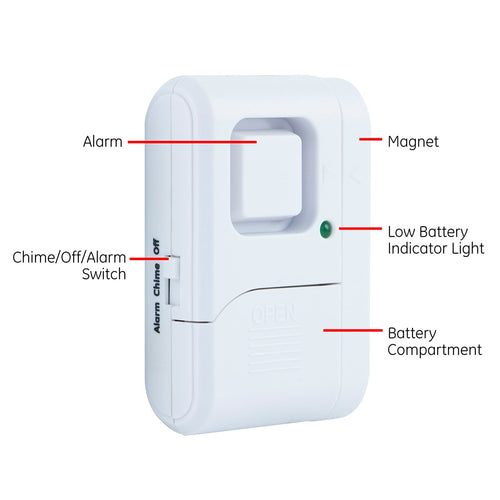
- Front door, loud: a Door Stop Alarm ($16.99) wedges under an inward-opening door and sounds 120 dB when the door is pushed. Check for roughly three-quarters of an inch of clearance under the door, and buy a 9V battery with it.
- Balcony slider or fire-escape window: a TremShield alarm on the glass.
The lock and one alarm come to $49.98. Add the door stop alarm and it's $66.97.
A ground-floor apartment
Here the windows are the job, because someone on the sidewalk can reach every one of them.
- Every reachable pane: an alarm on the bedroom window, the living room window and anything beside a walkway.
- Sliding windows you crack for air: a clamp-on Sliding Window Lock ($14.99) or the No-Drill Window Door Lock ($7.99) holds a fixed gap. Both block the slide. Neither stops someone lifting the sash up and out, so keep the alarm on that glass too.
- The front door: same as above.
Four reachable windows plus a door is five openings. Five alarms cost $99.95; six cost $99, so the sixth is free in effect. Privacy film and a ready-to-send landlord letter are in our ground-floor apartment guide.
A rented house or townhouse
More doors, more glass, and usually a patio slider out back.
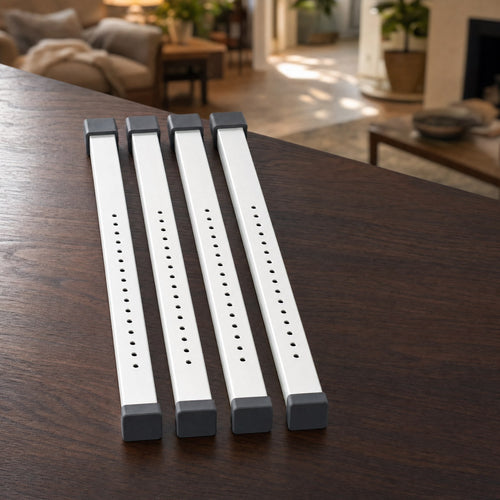
- Patio slider: the Adjustable Door Security Bar ($34.99) lies in the bottom track with its head off, which leaves the door no room to travel, latch or no latch. Head on, the same bar props a hinged back door shut, its fork under the handle and its foot on the floor. It telescopes from 17 to 50 inches.
- Every window and glass door you can reach from outside: one alarm each. Count them with the planner; houses often have more ground-level glass than people expect.
A room in a shared house
Your bedroom door is the boundary, and other people hold keys to the front door.
- Know if your door is tried: the Door Knob Touch Alarm ($19.99) hangs on the inside knob and sounds 120 dB when a hand touches the handle. Test it the day it arrives, because a plastic, rubber-coated or painted handle may not register a touch.
- Hold the door at night: the portable travel lock, if your door swings inward.
- Cash, cards, passport: a Portable Combination Safe ($18.99). Its cable tethers it to a bed frame, so it stays in your room.
What needs your landlord's yes
Anything that takes screws: the strike plate kit, the door reinforcement lock, the keyed window lock, the sash jammer and the window restrictor. Ask first, in writing. Our list of what you can install in a rental without asking goes device by device, including what each one leaves behind. If the deadbolt wobbles, or nobody can tell you who holds old keys, ask for a repair or a rekey. It's a normal request, and your no-drill gear stays up either way.
Move-in day, and move-out day
Most deposit trouble starts with an adhesive pulled off too fast.
Renter's move-in and move-out list
- Photograph every door and window frame before you stick anything on.
- Wipe each mounting spot with rubbing alcohol and let it dry fully.
- Mount alarms on the glass where you can, since glass releases more cleanly than paint.
- Fit the door lock or the door stop alarm on the first night.
- Put an alarm on each opening you could reach from outside, and test each one.
- Email the landlord about a loose deadbolt or a rekey, if either applies.
- Moving out: warm each pad with a hairdryer and peel it off slowly.
- Clean leftover adhesive off the glass with rubbing alcohol.
- Pack the alarms, and order fresh pads for the new place.
Foam pads don't bond twice. The 12-pack of mounting pads ($9.99) re-sites six alarms twice, which covers a move and a spring clean.
Questions renters ask before they buy
Can I take the alarms to my next apartment?
Yes. Peel them off slowly, then fit fresh foam pads at the new place, because a pad that has been peeled off won't bond again. A 12-pack of pads re-sites six alarms twice.
Will a portable door lock fit my apartment door?
Most likely. It needs a door that opens into the room and a standard latch plate in the frame, and it won't work on a door that swings out or slides.
Can I put security on the window by the fire escape?
An alarm on the glass is fine there, because it doesn't stop the window opening. Skip any lock or restrictor that limits how far that window opens, since you may need it as a way out.
Will stick-on alarms damage paint or glass?
Glass lets go cleanly, and rubbing alcohol lifts any residue. Painted wood is the risky one: soften the pad with a hairdryer, then peel slowly, since a quick pull can take paint with it.
Your deposit stays, your alarms move
Start with the opening you'd least like to hear rattle at night. For a whole apartment or a rented house, the 6-pack is $99. Each alarm lands at $16.50 per alarm rather than $29.99, the pack saves $80.94, and it brings two free no-drill window locks and the Home Security Guide. It ships free to the US, Canada, the UK, Australia and New Zealand, returns are open for 30 days, and every alarm leaves with you when the lease ends.
Back to all articles