In this article
To make a ground-floor apartment safe, lock or restrict every window someone could reach from the sidewalk, put anti-shatter film and a 125-decibel vibration alarm on the glass that worries you most, brace the patio slider, back up your unit door, and close the apartment each night with a two-minute routine. Nearly all of it is no-drill and deposit-safe.
A ground-floor apartment gives you things the fifth floor never will: no stairs with the groceries, maybe a patio. It also gives you footsteps a few feet from your pillow, headlights sweeping the ceiling, and windows a passerby could touch without breaking stride. If some part of your brain stays on duty at night because of that, you're not being dramatic. Street-level living asks more of your setup.
It also rewards a plan. Below: the window-by-window plan, a copy-paste letter for the two upgrades that need a landlord's blessing, the privacy trade-off that keeps your light, and the nightly routine that lets the on-duty part of your brain clock out. First floor or garden level, the plan is identical.
What a ground floor changes
Reach, mostly. Upper floors are protected by geometry; street level is protected by what you do. Your windows and patio door are reachable from the sidewalk, and as a renter you inherit whatever hardware the last tenant lived with. Bureau of Justice Statistics victimization data does show renters experience higher burglary rates than owners. The likely reasons are unglamorous: turnover, shared access, older locks. Every one of those is fixable, and none of it is about you. Scale matters too: FBI figures show US property crime lower than it was ten years ago, and the overwhelming majority of households go year after year without a burglary. A ground-floor unit doesn't make you a target; it makes you reachable. And reachable cuts both ways: everything a stranger could touch from the sidewalk, you can harden this weekend.

How to secure ground-floor windows, one by one
Give every window a stranger could reach a simple stack: something that controls how far it opens, something that makes the glass stubborn, and something loud. Not every window needs all three; match the stack to how you use each opening. On a window no one would ever use as an exit, a window lock with key is the strictest version of the first item.
| Window situation | What to fit | Why it works |
|---|---|---|
| The bedroom window you sleep next to | A sash or track lock so it stays exactly where you set it, anti-shatter film on the pane, and a 125 dB vibration alarm on the glass | The quietest approach becomes the loudest, and the earliest warning sits three feet from you, so you can stop doing the listening yourself. |
| Windows you crack at night for air | A cable window restrictor, designed to vent a few inches and no farther, plus an alarm on the pane | Air moves, the sash doesn't; widening the gap takes loud, obvious force. |
| Sliding windows | A track lock clamped in the channel behind the moving panel, film on any pane a fence or hedge hides from the street | Sliders fail at their small factory latch. A track lock ignores the latch and blocks the travel itself. |
| The patio slider | A security bar seated in the bottom track, film on the glass nearest the latch, a second vibration alarm on the fixed panel | The latch is the slider's weak point. With the bar down, the panel stays put even if the latch gives. |
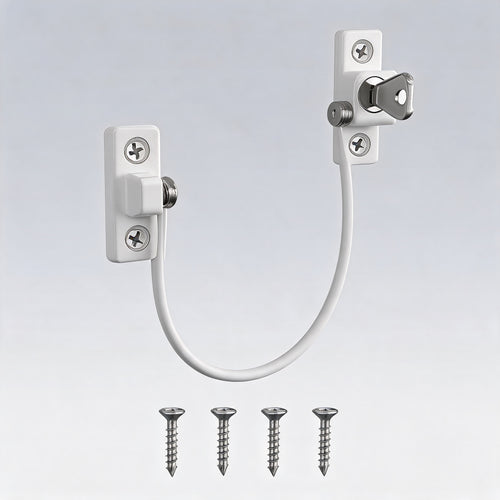
The restrictor solves the specific ground-floor dilemma: air at night without an invitation. It's a short steel cable between two fittings, installed with two small screws, that lets the window open far enough to breathe and no farther, and a key releases it from inside in seconds. One rule outranks security: the restrictor releases with a key, and a window a sleeping room relies on for escape must open from inside without one, so fit it on windows nobody sleeps behind.

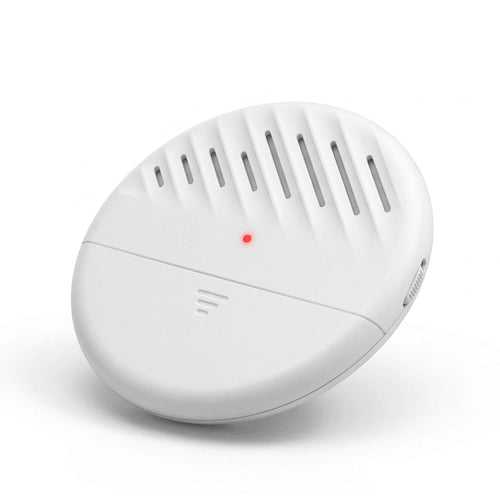
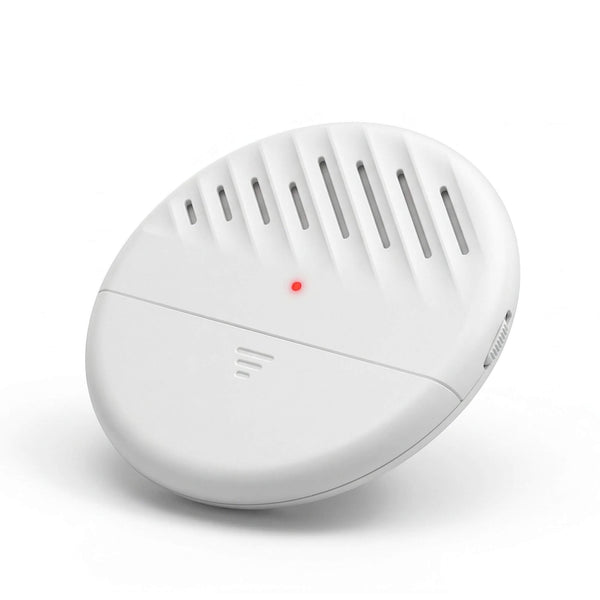
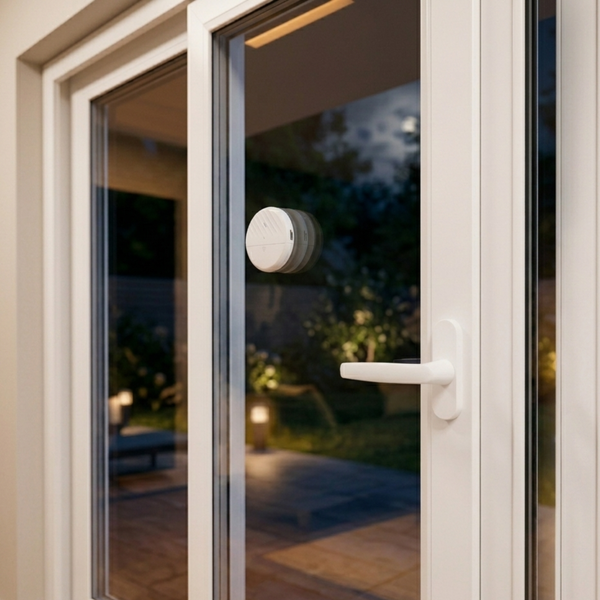
The alarm is simpler than it sounds. The vibration alarm sticks to the pane, arms with one switch, and sounds at 125 decibels when the glass is struck or rattled. No Wi-Fi, no app, nothing to pair or subscribe to; it runs on batteries. Burglars want no part of that. In a University of North Carolina at Charlotte survey of 422 incarcerated burglars, about 83% said they would try to find out whether a home had an alarm, and 60% said an alarm would send them looking for a different target. The interactive alarm finder matches alarms to openings in about a minute, and the no-drill security playbook covers everything in this table.
The copy-paste landlord letter
Two upgrades in this plan touch the building with screws: the window restrictor, and a reinforcement lock for your entry door, the single best door upgrade a renter can get approved. So ask. Landlords say yes more often than renters expect: the hardware is inexpensive and stays with the unit, and you're offering to protect their property at your own expense. Send the request by email or tenant portal so the yes is on record.
Hi [name],
I'm in [unit] and settling in well. Since the apartment is on the ground floor, I'd like your okay on two small security upgrades at my own expense: a door reinforcement lock at the entry door (four screws into the door and frame) and a cable-style window restrictor on the living room window (two small screws). Both stay with the unit when I move out. Everything else I'm adding, window locks, anti-shatter film, and standalone alarms, is no-drill and fully removable. I'm happy to coordinate timing with your maintenance team, or your team can install them instead. Could you also let me know when the entry lock was last rekeyed? Thank you.
[Your name, unit, phone number]
A yes means the two strongest points of the unit just got stronger, with permission on record. A no collapses nothing: everything else here installs without a screw, and the renter-friendly security guide covers deposit-safe upgrades for the rest of the apartment.
Privacy without blacking out the apartment
The street-level trade-off is real: the same window that fills your kitchen with light shows the sidewalk your laptop. The fix is to stop the inventory view, not the light. Sheer curtains do most of the work; from outside, your living room becomes shapes and warmth instead of a shopping list. Angle blinds upward if you have them. Move temptation out of the frame: chargers and laptops off the table beside the window, packages and keys away from the entry sill.
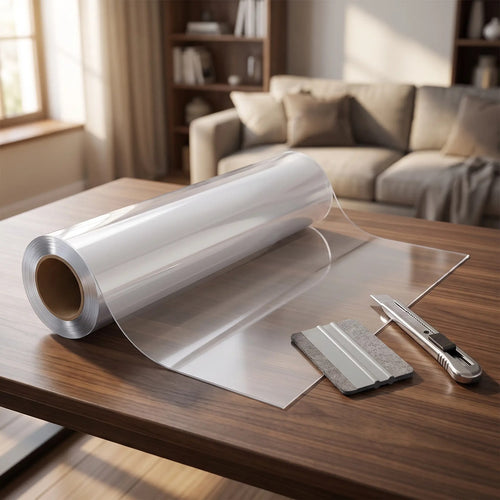
Don't cave-ify the place, though. A permanently blacked-out ground-floor window reads as empty from the street and feels besieged from the couch. The Department of Justice's burglary guide for police puts it plainly: homes that appear occupied, with light and visible activity, are less likely to be burglarized. Sheers drawn, one lamp on, ordinary life in outline. That's a deterrent you can comfortably live inside. And since anti-shatter film is optically clear, the protection on the glass itself costs you nothing in light.
Your door, and the building's
Treat your unit door as the real front door, because it is one. The building's locked entrance is an outer ring, but you don't control it: it gets propped for movers and held open out of politeness. Your own threshold is where your security starts.
The first step costs nothing. In the Bureau of Justice Statistics' detailed household burglary study, when someone was home and no force was used, a door or window someone forgot to lock was the way in for 28.0 percent of entries, and one left standing open for 27.0 percent. The takeaway: the deadbolt you already own, thrown every time you're inside, not just at bedtime, is the highest-value security device in the apartment.
Add hardware as permission allows. The reinforcement lock from the letter strengthens the point where the door meets the frame. With or without it, a 120-decibel door stop alarm works from the first night: it wedges under the closed door, physically braces it, and sounds if the door is forced against it. No screws, no setup, and it packs for hotels later. For frame, hinge, and chain upgrades specific to rentals, the apartment door security guide covers the whole door in the same no-drill spirit.
The nightly two-minute routine
Good security is boring on purpose. A short, fixed loop that ends gives the checking somewhere to stop; after a week or two, your body treats the loop itself as the all-clear. Same order, same two minutes, every night:
- Windows, 60 seconds. Touch each reachable window once: locked, or resting on its restrictor gap. Alarm switches on.
- Slider, 15 seconds. Latch flipped, bar lying flat in the track.
- Door, 20 seconds. Deadbolt thrown, wedge alarm set behind it.
- Sightlines, 20 seconds. Sheers drawn, one lamp left on where it shows from outside.
- Close the loop, 5 seconds. One last look and a deliberate finish, out loud or not: the apartment is closed. It sounds silly and works anyway; a clear ending is what lets your brain file the job as done.
One more thing, for the lamp-off moment. Of the burglars in that same Charlotte survey who discovered an alarm during an attempt, half said they would stop there. The hours that feel most exposed at street level are the hours your setup is already covering. Run the loop, and let the alarms do the rest of the listening.
Street-level renters ask
Is a ground-floor apartment less safe than an upper floor?
It is more reachable, which is not the same as being targeted. Burglary figures are rarely broken out by floor, so treat any precise percentage you see online with suspicion, but windows a passerby can touch get tried more than windows nobody can reach. Locks, film and alarms on those openings close most of that gap.
What should I add to a ground-floor apartment with sliding glass doors?
A security bar laid in the bottom track, so the panel can't slide even if the latch gives, and a vibration alarm on the fixed panel, which sounds at 125 dB the moment that glass is pried or struck. The bar adjusts between 17 and 50 inches, which covers most sliders, and needs no drill, though it does not stop a panel being lifted out of its track on a door with enough clearance.
Will a door stop alarm work on my apartment door?
Yes, if the door opens inward and has about a 0.75 inch gap underneath. The wedge braces the closed door and sounds a 120 dB siren when the door is forced against it, and it runs on one 9V battery, sold separately.
Can I put a window restrictor on my bedroom window?
Only if the room has another way out. The restrictor releases with a key, and an escape window has to open from inside without one, so fit it on windows nobody sleeps behind.
Start with the glass you sleep next to
If one thing goes up this week, make it the alarm on the bedroom window. A single TremShield Vibration Alarm is $29.99. Then count the panes a stranger could reach from the sidewalk: the bedroom window, the ones you crack for air (or the one with the AC unit in it), both panels of the slider. That count is what the six-pack is for: $99 for six, which is $16.50 per alarm and listed as Save $80.94 against six singles. Two free no-drill window locks come with it, the Home Security Guide follows as a PDF by email, shipping is free to the US, Canada, the UK, Australia and New Zealand, and returns stay open for 30 days. Every piece peels off the glass when the lease ends.
Back to all articles