In this article
If you have ever stood in a quiet house at night and felt that a window seemed a little too open, a little too easy, that feeling is worth listening to. It is also very fixable. A window is not a weak point you have to live with. It is one of the most upgradeable parts of your whole home. The good news is that you do not need bars, floodlights, or a fortress to feel settled. You need a few small, well-chosen layers, most of which install in minutes and leave your windows looking exactly like windows.

This guide walks through those layers calmly and in order: the right lock for each window type, how to keep a window open for air without leaving it exposed, film that helps the glass hold, and a quiet alarm as the final word. Let us make your windows secure and still completely livable.
Why windows feel vulnerable (and why that is good news)
First-floor windows are among the most common entry points, and here is the part most people do not realize: the standard window latch is a positioning catch, not a real lock (security sources). It pulls the sash snug and lines things up. It was never designed to resist force. That sounds unsettling at first, but flip it over. It means the gap in your security is not some deep structural flaw. It is a small hardware gap, and small hardware gaps are exactly the kind of thing you can close in an afternoon.
It helps to know what you are actually planning for. Most break-ins are opportunistic, happening through unlocked or weakly secured openings (Bureau of Justice Statistics). The takeaway is reassuring: you are not trying to outbuild a determined professional. You are removing the easy invitation. That is why simple, visible window hardware is so high-leverage. A modest upgrade changes a window from the easiest option on the block to one that is simply not worth the bother.
The layered approach, window by window
Think in layers rather than in one big solution. Each layer is simple. Stacked together, they add up to real, quiet confidence. We will go from the lock outward to the glass, then finish with sound.
Layer 1: A real secondary lock
This is the foundation, and it is the single best place to start. A secondary lock does the job the factory latch only pretends to do: it physically holds the sash in place so the window cannot be slid or lifted open.
- Double-hung windows (the classic up-and-down style): a sash lock or a sash pin secures the two panels to each other, or pins the moving sash to the frame. Our Window Sash Lock tightens by hand and adds a firm, dedicated hold beyond the original latch. If you prefer key control on a window nobody would ever climb out of, the Keyed Window Sash Lock holds the same way with a key.
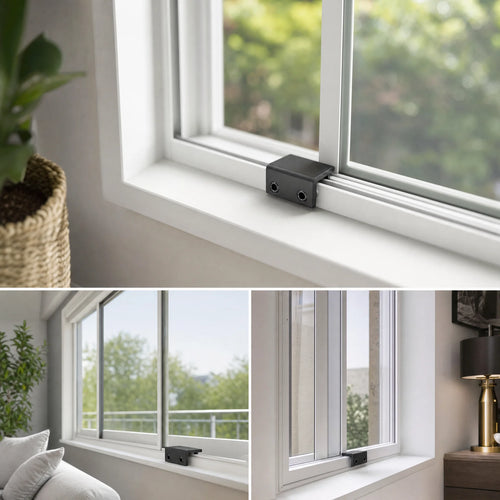
- Sliding windows (the side-to-side style): these are vulnerable because a closed slider can often still be jostled or lifted out of its track. A Sliding Window Lock clamps onto the track so the panel simply cannot travel, closed or at a set gap.
Both are no-drill, no-damage installs. If you rent, this matters: you can secure every window in the place and leave it exactly as you found it.
Layer 2: Vent locks, for air without exposure
Here is the question almost everyone asks, and it is a fair one. "I want fresh air at night. Do I have to choose between sleeping with the window open and feeling safe?" No. That is the whole point of a vent lock.
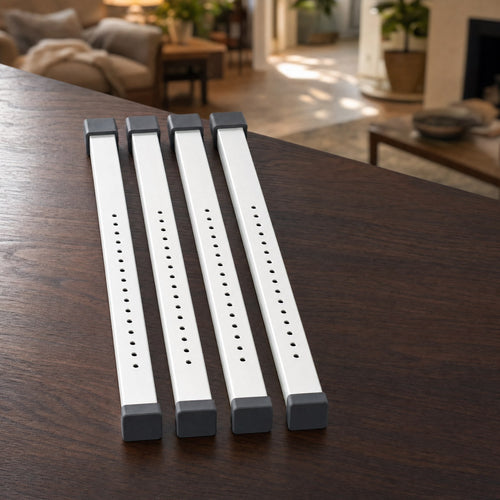
The principle is simple: lock it shut when you are away or asleep on the far side of the house, or lock it at a safe vented gap when you want air. A vent lock or window restrictor lets the window open just a few inches and then stops it there, firmly, so it cannot be pushed wider from outside. You get the breeze and keep the opening too small to climb through. Our Window Restrictor Lock sets that safe gap and holds it, and a No-Drill Sliding Window Lock does the same on side-sliding windows with nothing to install, just clamp it to the track and it physically stops the sash from sliding past your chosen point.
The goal is not to seal yourself in. It is to decide, on purpose, exactly how far your window can open, and to know it will hold there.
Layer 3: Film for the glass
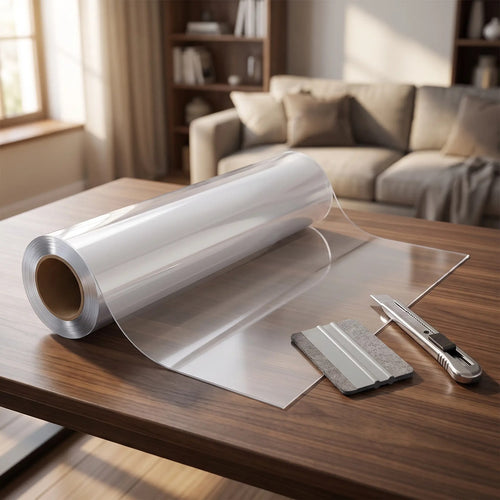
Locks handle the sash. Film handles the pane. Anti-shatter window security film is a clear layer that bonds to the inside of the glass. If someone tries to break through, the film holds the broken pieces together, so the glass flexes and resists instead of falling away into a clean opening. It turns a quick, quiet smash into a slow, loud, frustrating effort, which is exactly the opposite of what an opportunist wants.
Our Anti-Shatter Window Security Film is transparent, so it does not darken the room or change how the window looks. As a bonus, the same film helps hold glass together during storms and accidental impacts. It is one of those quiet upgrades nobody can see from the curb.
Layer 4: An alarm on the pane
This is the layer that turns a delay into a decision. Locks and film buy time and make entry hard. An alarm makes that effort impossible to do quietly, and quiet is what an intruder needs most.
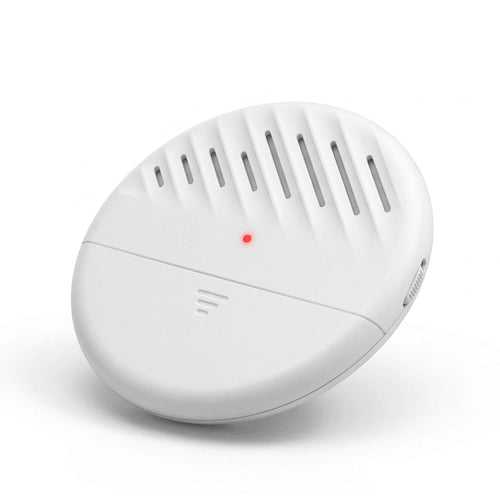
Research from the University of North Carolina at Charlotte found that burglars want quiet, fast entry. A window that holds and an alarm on the glass send them elsewhere. The TremShield Alarm sticks directly to the window and listens for the vibration of tampering or a strike. The moment the glass is hit or pried, it sounds at about 125 decibels, loud enough to stop the attempt and to wake the house. No drilling, no wires, no app, no subscription. It just sits there, ready.
Putting it together without making your home a fortress
You do not have to do all four layers on every window this weekend. Start where the unease lives. For most homes that is the ground-floor and basement windows, plus any window hidden from the street by a fence or hedge. A practical first pass looks like this:
- Add a secondary lock to every accessible window so the sash actually holds.
- Fit a vent lock or blocker on the windows you like to sleep near, so you can have air at a safe gap.
- Apply film to large, low, or hidden panes of glass.
- Place an alarm on your most exposed window or two, then expand as you like.
Notice what is not on that list: bars, cages, and anything that makes your home feel braced for trouble. Every item here is small, mostly invisible, and reversible. You can browse the full set in our window security collection and build your home's layers at your own pace.
FAQ
Can I really keep a window open at night and still be secure?
Yes, and this is the most common reason people put off securing windows at all. A vent lock or restrictor sets a fixed, narrow opening, a few inches, and stops the window from being pushed any wider. You get airflow, and the gap stays too small to be useful to anyone outside.
Will any of this damage my windows or frames?
No. TremShield window hardware is designed to be no-drill and no-damage. Secondary locks clamp or pin into place, blockers simply sit in the track, and the alarm and film both use adhesive. It is renter-friendly and fully reversible.
Do I need bars or grilles for real protection?
For the vast majority of homes, no. Bars address a worst-case scenario most people never face, and they carry real downsides, including blocked exits in a fire. Layered hardware, locks, film, and an alarm, closes the easy openings that opportunists actually use, which is where the real risk lives.
What is the single best first step?
Add a proper secondary lock to your accessible ground-floor windows. It directly fixes the latch gap, takes minutes, and immediately moves your windows out of the easy category. From there, add air-safe vent locks, film, and an alarm as you go.
The calm bottom line
A window that felt like a question mark can become a window you stop thinking about. That is the real goal here, not paranoia, just quiet confidence. A few small layers, chosen on purpose, and the unease has somewhere to go.
The TremShield Alarm is the simple final layer over 1,500 homes already trust. It rates 4.8 stars, installs in about 60 seconds, and runs with no subscription, ever. Start with the windows that have been on your mind, and let the rest follow at your pace. Add the TremShield Alarm to your windows and give yourself the quiet back.
Back to all articles