In this article
There's a question a security store isn't supposed to ask out loud: do you need a home security system at all? Not a camera or an app. The whole monitored package, contract and all. We ask because the answer is sometimes no, and the short quiz below will tell you, in about a minute, which side of that line your own home sits on.
Most homes are well served by a few good standalone layers. A reinforced door. Alarms on the glass that worries you. A light over the approach, and no subscription behind any of it. Some situations, though, really do call for professional monitoring, and pretending otherwise would be its own kind of sales pitch. The 60-second quiz below sorts you into one of three paths based on how you live, not on what any company wants to sell you.
Whichever path it points to, the goal stays the same: the least complicated setup that lets your nervous system stand down. Sometimes that's a monitored system. More often it's simpler and cheaper than the ads suggest.
Take the 60-second quiz
Answer all six the way your life really looks, not the way you think it should. Your answers map to one of three paths. No wrong outcome, and your result shows up right here.
Prefer to skip the quiz? Here is who each path fits.
Pricing out a monitored system is worth it for you
Your home sits empty for long stretches with real value inside, and nobody nearby could respond to an alert. That's the specific case professional monitoring was built for: a service that notices, and calls out on your behalf, when you're too far away to do either. Price current plans directly and see what the ongoing monthly fee buys you.
Go in clear-eyed. The bill recurs for as long as you keep the service, false alarms happen, and some areas charge fees for repeat police dispatches. None of that makes monitoring a bad choice for your situation; it just means the value should be obvious before you sign. Ask what happens the moment a sensor trips. Ask how disarming works, and whether the contract follows you if you move.
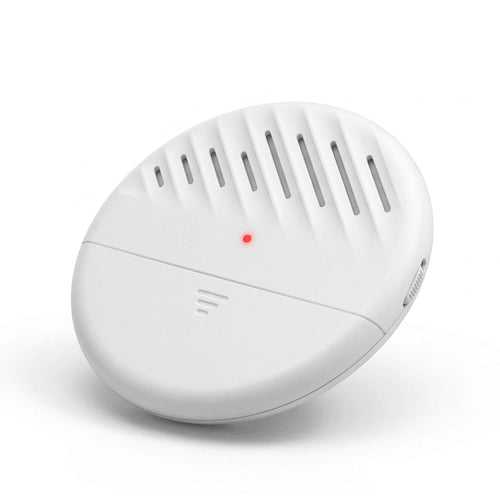
Even with monitoring, the cheap layers still pull their weight. A monitored door contact does nothing for a pane someone pries quietly, so a 125 decibel vibration alarm on vulnerable glass fills a real gap, and a door reinforcement lock buys physical time no signal can. Monitoring watches; layers resist.
A standalone setup fits you best
You have something worth protecting and a normal amount of time away, but a monthly contract would be paying for more service than your situation asks for. This is where most homes land, and it's a strong position to hold. In a COPS Office review of the research, homes with alarms of any kind faced roughly a 1.4 percent burglary risk versus 2.3 percent without (Hakim and Buck, 1991), and the deterrent works whether or not anyone is monitoring it.
Build it in layers, each doing one job:
- Resist at the main door with a reinforcement lock and a strike plate anchored to the stud.
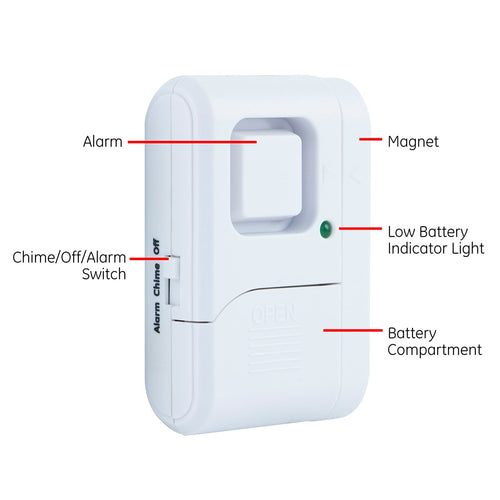
- Alarm the entries with door and window entry alarms, then put a vibration alarm on the pane that worries you most.
- Light the approach with a motion light so nobody works at your door unseen.
Not sure which alarm goes where? The alarm finder matches devices to each door, window, and pane in about a minute.
Start with the basics this weekend
You're home most nights. You rent. And you'd rather not owe anyone a monthly fee. A full system would be overkill here. The highest-value fixes here are the cheap ones, the kind you can install this weekend without picking up a drill or clearing anything with the landlord.
Start here:
- Entry alarms on the door and the windows you use, so any opening announces itself. A four-pack covers a small apartment.
- A vibration alarm on the pane nearest where you sleep, so a pry or a knock triggers a 125 decibel response before anyone is through.
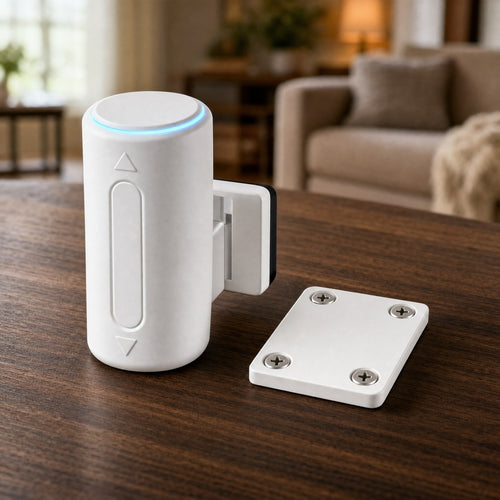
- A door wedge alarm for the front door at night. It braces the door and sounds off if the door moves.
That's a real, layered defense for a one-time cost, and none of it follows you around with a bill. Our guide to your first $100 in home security maps out the order to buy in.
Monitored system versus standalone devices, side by side
Both approaches work. They just solve slightly different problems, and the right one depends on the answers you gave above, not on which company runs the glossier ad.
| Factor | Monitored system | Standalone layers |
|---|---|---|
| Ongoing cost | A monthly monitoring fee, ongoing for as long as you keep it | None. You buy each device once. |
| What happens when it trips | A monitoring center is alerted and can contact you or dispatch police | A loud local siren deters the intruder and alerts anyone in earshot |
| Installation | Professional or app-guided; often wired or hub-based | Peel-and-stick and battery powered; minutes per device |
| If Wi-Fi or power drops | Depends on the system; some rely on internet or a hub | Keeps working. No Wi-Fi, hub, or account involved. |
| Renting or moving | Contracts and hardware can complicate a move | Unclips and comes with you to the next place |
| Best suited to | Long absences, high value, no one nearby to respond | Everyday protection, deterrence, and fast local warning |
Notice the catch in the monitored column: a service that calls for help is worth a great deal when you're far away and nobody is around, and much less when you're home most nights and a neighbor is thirty feet off. That's the whole logic behind the quiz.
What every setup needs, whatever the quiz said
The three paths differ at the edges, but they share a spine. No system, monitored or not, removes the need for these three things, because a signal is not a barrier and noise is not a lock.
First, resistance at the main door. Forced entry usually comes down to the frame giving way, so a reinforcement lock and a strike plate with three-inch screws sunk into the stud buy the seconds that decide an attempt. Second, a noise layer on the openings that matter, glass above all, since a quiet pry slips right past a door contact; if you're weighing sensor types, our comparison of a glass-break sensor versus a vibration alarm lays out which catches what. Third, visibility on the approach. A burglar who can be seen working rarely keeps working.
Those three hold whether you spend nothing beyond a few devices or add a monitored service on top. If you'd rather skip subscriptions entirely, our guide to home security without Wi-Fi, apps, or a monthly bill covers the whole approach.
When a monitored system is the right call
There are also homes where paying for monitoring is the smart move, and Path A above is not a consolation prize. If you travel for weeks at a stretch, keep high-value property at home, and have nobody nearby to respond, a service that watches around the clock and can summon help is doing something no standalone siren can. A local alarm still needs a human to hear it and act. Monitoring supplies that human.
The reason to stay level-headed rather than fearful is that even the best system leans on response, and response has limits. In FBI Uniform Crime Reporting data, police clear only about 13 percent of reported burglaries. That is not cause for despair; it's a reminder that the real win is deterrence and interruption, the burglar who leaves before anything happens. A monitored system, good locks, and loud local alarms all push toward that outcome from different angles. Choose the mix that matches your life, then stop shopping and go to sleep.
Standalone or monitored: what buyers ask next
Will police come if a standalone alarm goes off?
Not on their own. A standalone alarm sounds in the house and contacts no one, so it relies on you or a neighbor hearing it and calling. That is the gap a monitored service fills.
Will a vibration alarm go off for a passing truck or the wind?
Not once it is set up. Each TremShield Vibration Alarm has a sensitivity dial: turn it down until traffic and wind leave it quiet, and a knock or push on the glass still sets it off.
What does a standalone setup cost?
A one-time spend, no monthly fee. The door and window entry alarm 4-pack is $19.99, the door reinforcement lock $24.99, and the vibration alarm is $29.99 for one or $99 for six, which is $16.50 each and $80.94 less than six singles, with two no-drill window locks included.
Back to all articles