In this article
Home security marketing runs on scary numbers. The actual numbers, the ones printed in FBI and Bureau of Justice Statistics tables, tell a much calmer story, and they have been telling it for two decades.
Here is the honest headline for 2026: US burglary is at a 48-year low. The FBI's latest full-year rate, 229.2 reported burglaries per 100,000 people in 2024, is down 69 percent from 2005. About 99 percent of households had no burglary or trespassing incident in 2024, and preliminary 2025 figures point down again.
The patterns inside those numbers matter even more than the totals, because they are refreshingly mundane: empty weekday afternoons, doors that were never locked, attempts abandoned at the first loud noise. Those are problems with cheap, finishable fixes. This page collects the figures worth knowing, each from a named source, with a four-bar look at the decline and a one-hour plan at the end for putting the data to work.
How common are home burglaries in the US?
The FBI estimates 779,542 burglaries in the US in 2024, a rate of 229.2 per 100,000 inhabitants, and 405,776 of them, about 52 percent, happened at residences. Homes used to account for roughly two-thirds of burglaries; a growing share now targets stores and offices instead.
Two federal datasets track this crime, and they agree on the direction. Reported crime comes from the FBI's UCR Summary of Reported Crimes in the Nation, 2024, which shows burglary down 8.6 percent in a single year, with property crime overall down 8.1 percent. The victim's-eye view comes from the Bureau of Justice Statistics survey Criminal Victimization, 2024, which counts crimes whether or not police ever heard about them: 12.0 burglary or trespassing victimizations per 1,000 households, only 1.01 percent of households affected all year, and about 40.7 percent of incidents reported to police.
The long view is even better. The Council on Criminal Justice traces reported burglary to its 1980 peak of 1,684 per 100,000 people; by 2022 the rate had fallen 84 percent from that peak, and against the 2024 rate the decline works out to about 86 percent. USAFacts, reading the same federal data, puts it plainly: larceny and burglary rates were at 48-year lows in 2024. You would have to go back to 1976 to find a year with less burglary per person.
The US burglary rate keeps falling
Reported burglaries per 100,000 people
Source: FBI, UCR Summary of Reported Crimes in the Nation, 2024 (20-year rate table). The 20-year decline works out to 69 percent; the 48-year-low comparison is from USAFacts analysis of FBI data.
The early word on 2025 points the same way: the FBI's preliminary First Look release, covering more than 17,000 agencies and 96 percent of the population, estimates property crime fell another 12.4 percent from 2024 to 2025. Those figures are preliminary, and final burglary-specific numbers arrive later, but the direction is familiar.
The stat: 1.01 percent of US households experienced burglary or trespassing in 2024. What it means for you: you are preparing for a rare event, so a short list of calm, inexpensive moves is a proportionate response.
When do most burglaries happen?
Mostly during the workday: the FBI counted 387,405 daytime burglaries and 362,238 nighttime burglaries in 2024 among offenses with a known time, and daytime has led nighttime every year from 2020 through 2024.
That is not new behavior. The Department of Justice's field guide on residential burglary, written by criminologist Deborah Lamm Weisel, reported that about 60 percent of reported residential burglaries in its era occurred in the daytime, when houses sit unoccupied, concentrated on weekdays, with some research pointing to peaks at 10 to 11 a.m. and 1 to 3 p.m. Burglars behave like commuters: they work daytime shifts precisely because they are trying not to meet anyone.
Victim surveys agree. Bureau of Justice Statistics data shows burglaries of unoccupied homes were far more likely between 6 a.m. and 6 p.m. (43 percent) than between 6 p.m. and 6 a.m. (26 percent). Seasonality is real but mild: BJS found household burglary rates roughly 11 percent lower in winter, 9 percent lower in spring, and about 6 percent lower in fall than in summer, and reported burglary has historically peaked in August and bottomed out in February. The summer bump is mostly open windows and vacation absences, and you control both.
The stat: daytime burglaries outnumbered nighttime burglaries every year from 2020 through 2024. What it means for you: the risk mostly clocks out by evening, so an occupied-looking house on a Tuesday afternoon buys more safety than another restless night.
How do burglars get in?
Very often through an opening that offered no resistance: in 2024 FBI data, 275,270 of the 721,833 burglaries with a known entry method, or 38 percent, were unlawful entries involving no force at all, and victim surveys put the no-force share even higher.
In the Bureau of Justice Statistics study Victimization During Household Burglary, 63 percent of completed household burglaries, 1,949,520 of 3,083,750, involved unlawful entry with no force. Within no-force entries of unoccupied homes, 39.5 percent came through an unlocked door or window, and another 17.2 percent came through one that was standing open.
One myth worth clearing up while we are here. You have probably seen the tidy viral breakdown claiming 34 percent of burglars enter through the front door, 23 percent through a first-floor window, and so on. Those precise percentages trace to no primary source: they appear in no FBI, BJS, or DOJ publication, and the DOJ guide states there is "no consensus about the most common entry point," because it depends on the house. What the guide does support is less quotable and more useful: side and back doors, the openings neighbors cannot see, are the most common access points in most areas, and about a third of burglars force nothing at all.
The stat: 63 percent of completed burglaries in victim surveys involved no force. What it means for you: tonight's 60-second lock walk outperforms hardware you have not bought yet.
What happens during a typical burglary?
Far less than the imagination suggests: 93 percent of household burglaries involve no violence of any kind, per the Bureau of Justice Statistics, which also found a household member present in only about 28 percent (27.6 percent) of them.
The same BJS study holds a genuinely calming detail. When someone was home, 55 percent of burglaries ended with nothing taken at all, compared with 25 percent when the home was empty; presence, noise, and interruption ruin the job. And in the rare cases that did involve violence, the offender was someone the victim knew 65 percent of the time, with strangers accounting for 28 percent. The random-stranger scenario that fuels late-night worry is the rarest version of an already rare event.
Burglary is a crime against property that organizes its entire schedule around avoiding people. That reframes the job in your favor: you do not need to win an encounter, you need to signal that the quiet, empty, unnoticed conditions the crime requires do not exist at your address.
The stat: 93 percent of household burglaries involve no violence, and 55 percent of occupied-home burglaries end with nothing taken. What it means for you: even the bad scenario usually ends with someone leaving quickly, and your setup can make that exit come sooner.
What actually reduces burglary risk?
Alarms carry the strongest offender-reported evidence: in a University of North Carolina at Charlotte survey of 422 incarcerated burglars, about 83 percent said they would try to determine whether an alarm was present before attempting a burglary, and 60 percent said they would seek an alternative target if one was there. (The study was funded by an alarm-industry research foundation; the researchers and methods were academic, and it remains the largest survey of its kind.)
The same survey covered discovery mid-attempt: among burglars who found an alarm while already at work, half said they would stop, and another 31 percent said they would sometimes retreat. Neighborhood data points the same direction. A Rutgers analysis of five years of Newark, New Jersey police records found that areas with more registered residential alarms had fewer residential burglaries, "without displacing burglaries to nearby homes." And an older study cited in the DOJ guide, Hakim and Buck in 1991, found homes with alarms faced a 1.4 percent burglary risk versus 2.3 percent without.
The DOJ guide adds the cheapest layer of all: houses that appear occupied, with lights on, a car in the driveway, or sound from inside, are less likely to be targeted, and most burglars avoid dogs. One honest caveat, because honesty is the point of this page: yard signs and fake cameras have weak-to-no evidence when used alone. Props add a little friction inside a layered setup; they are not the layer.
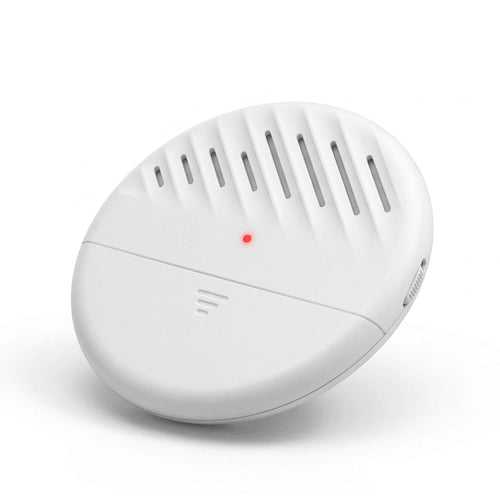
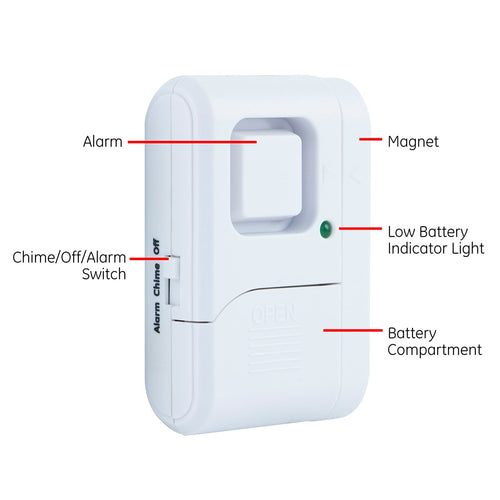
This is why simple, loud devices earn their place. A 125 decibel vibration alarm pressed onto ground-floor glass, or a magnetic entry alarm on a door, exists to delete the one condition every finding above circles: quiet. For the full evidence review, deterrent by deterrent, see what actually deters burglars.
The stat: 60 percent of burglars said an alarm would send them to a different target. What it means for you: deterrence is a signaling job, and signals are cheap.
What should you do with these numbers?
Spend one hour, in five short steps matched to the patterns above; that covers the realistic entry paths for most homes. Nothing here needs wiring, Wi-Fi, an app, or a subscription, and most of it costs little or nothing.
- Minutes 0 to 10: walk the locks. Every exterior door, every ground-floor window, tonight before bed. This one habit addresses the no-force entries that dominate the victim data, including the openings left standing open on nice days.
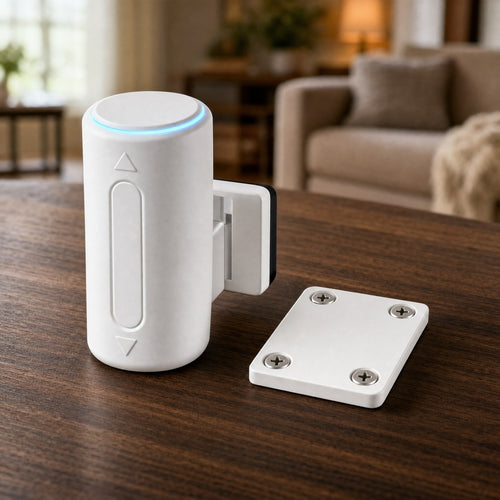
- Minutes 10 to 25: alarm the doors. Place peel-and-stick magnetic entry alarms on the doors you actually use, including the side and back doors the DOJ guide flags as favored access points. Battery powered, no hub, nothing to subscribe to.
- Minutes 25 to 40: cover the ground-floor glass. A vibration alarm on the panes a passerby cannot see gives you the mid-attempt interruption that ends many burglaries on the spot. Our plain-language read of the evidence is in do window alarms actually work, and the alarm finder matches device to opening in about a minute.
- Minutes 40 to 50: reinforce the main door. For the minority of entries that do involve force, a door reinforcement lock adds resistance exactly where a kick lands. One screwdriver, a few minutes, and it helps most on the door you use daily.
- Minutes 50 to 60: set the occupied-by-day signals. A lamp or radio on a cheap timer for weekday afternoons, the car in the driveway when you can, a neighbor collecting deliveries when you travel. The data says occupied-looking homes get skipped, so look occupied.
The stat: only about 12 percent of burglars in the UNC Charlotte survey typically planned a burglary in advance, while 41 percent described spur-of-the-moment decisions. What it means for you: you are not outsmarting a mastermind, you are declining an impulse, and an hour of small obstacles does exactly that.
If you want to keep going after the hour, your first $100 in home security ranks the next upgrades by value, and everything mentioned here lives in the protect-your-home collection. But do not let the to-do list bury the headline. Burglary has fallen for two decades, it avoids people, and it flees noise. You are allowed to take the win, lock the door, and sleep.
Frequently asked questions
How many home burglaries happen in the US each year?
The FBI estimates 779,542 burglaries in the US in 2024, of which 405,776 were at residences. The Bureau of Justice Statistics victimization survey, which also counts crimes never reported to police, recorded 1,609,650 household burglary or trespassing victimizations in 2024, a rate of 12.0 per 1,000 households. Reported burglary fell 8.6 percent from 2023 to 2024.
Are home burglaries increasing or decreasing?
Decreasing, and they have been for decades. The FBI burglary rate fell 69 percent between 2005 and 2024, from 738.9 to 229.2 per 100,000 people, and USAFacts notes larceny and burglary rates were at 48-year lows in 2024. Preliminary FBI data for 2025 shows overall property crime down an estimated 12.4 percent more, so the trend is still pointed down.
What percentage of burglaries happen when someone is home?
About 28 percent. Bureau of Justice Statistics data puts a household member present in 27.6 percent of household burglaries. The reassuring follow-through: 93 percent of household burglaries involve no violence of any kind, and when someone was home, 55 percent of burglaries ended with nothing taken at all. Burglars overwhelmingly schedule their work around empty homes.
What is the most common way burglars enter a home?
There is no single dominant entry point. The Department of Justice burglary guide says there is no consensus, and the viral breakdown claiming 34 percent enter through the front door traces to no primary source. What the data does show: 38 percent of reported 2024 burglaries involved no force, and in victim surveys 63 percent of completed burglaries did not. Locking every door and window closes the easiest and most common path.
Back to all articles