In this article
If you have ever paused at the back door before bed and given the handle a second check, you are not being paranoid. You are being aware. That small habit, the one where you notice a window that does not quite latch or a door that feels a little flimsy, is your attention doing exactly what it should. The good news is that the feeling behind it is fixable, and fixing it does not require a contract, a camera pointed at your living room, or a monthly charge on your card forever.

This is the calm, practical case for security you own outright. No Wi-Fi to drop. No app to update. No subscription to cancel later. Just a handful of well-chosen pieces, set up in an afternoon, that quietly do their job and let you stop thinking about it.
Why simple security works better than it sounds
It helps to start with how break-ins actually happen, because the reality is far less dramatic than the headlines suggest. According to FBI crime data, property crime and burglary rates in the US have fallen substantially over the last decade. The trend has been moving in your favor for years, even if the news cycle does not feel that way.
More to the point, most break-ins are opportunistic. Research from the Bureau of Justice Statistics shows that a large share happen through a door or window that was unlocked or only weakly secured. This is reassuring, not alarming, because it means the problem is mostly about easy access, and easy access is something you can take off the table in a single afternoon.
There is also good data on what makes someone move along. In a well-known University of North Carolina at Charlotte study of convicted burglars, most said they wanted to be in and out in under about ten minutes, and most said they would avoid a home that showed signs of an alarm. Many said they would simply leave if one sounded. You do not need to make your home a fortress. You only need to make it slower and louder than the easy option next door.
You are not trying to stop a determined professional. You are gently encouraging an opportunist to keep walking. A few honest layers do that quietly and well.
What "layered defense" actually means
Layered defense is a calm idea dressed up in a serious-sounding name. It simply means using a few different kinds of protection that each do one job, so that no single weak point decides everything. Think of it in three plain categories:
- Alarms that warn. A loud, immediate sound that tells you something moved and tells an intruder they have been noticed. Noise is the cheapest, most effective deterrent there is.
- Locks and bars that hold. Physical reinforcement that turns a quick push into a slow, frustrating effort. Time is the one thing an opportunist does not want to spend.
- Deterrents that redirect. Visible signs and small cues that make your home read as "handled," so someone scanning for the easy house picks a different one.
You do not need all three on every opening in your home. You need the right one in the right place, which is much more manageable than it sounds. Our full home security collection is organized around exactly these layers if you want to browse by job rather than by product.
Start with the loudest, simplest layer
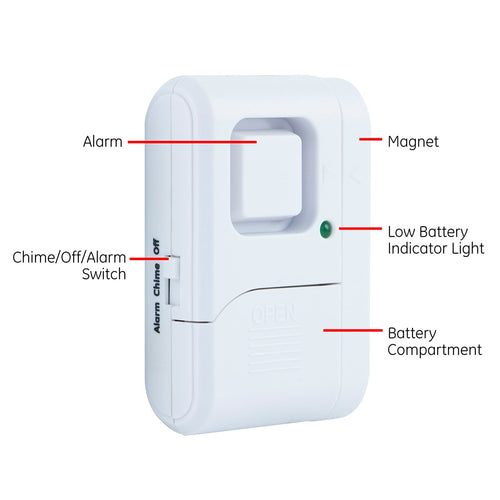
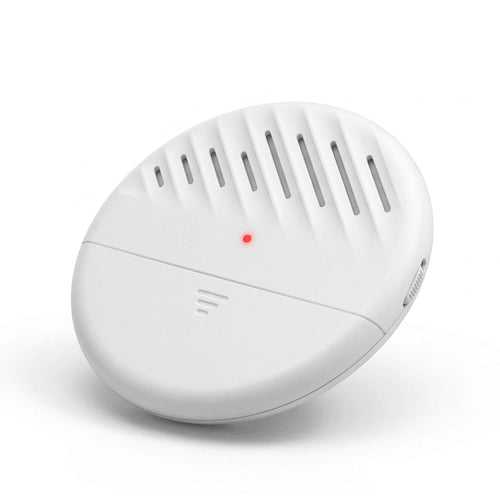
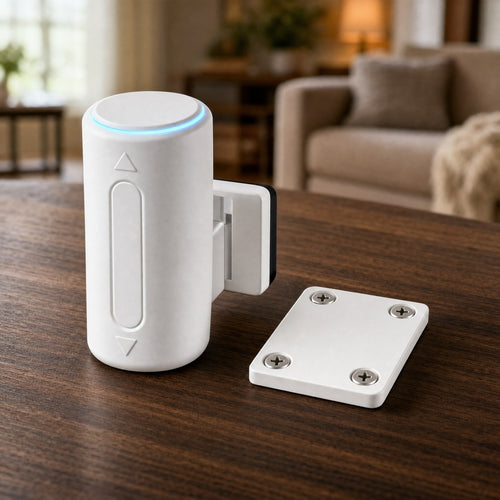
If you only do one thing this week, add sound. The flagship TremShield Alarm is a small, stick-on vibration sensor that mounts to a door or window in about a minute. When the surface it is attached to is disturbed, it sounds at roughly 125 decibels, which is loud enough to be heard across the house and well past the property line.
What makes it suit this whole philosophy is what it does not need. No Wi-Fi connection that can drop. No hub to pair. No app to babysit and no account to keep paying for. You peel, stick, and switch it on. For an entire home, a multi-pack covers every entry point at once, which is why a lot of people start with the TremShield Entry Alarm 4-Pack and place one on each ground-floor door and window in a single pass.
This layer matters most because it works on the burglar's own logic. Remember that ten-minute window and the strong preference to avoid anything that signals an alarm. A sudden 125-decibel tone removes both the quiet and the speed they were counting on.
Build it room by room
Here is the part that turns a vague worry into a finished, settled feeling. You do not secure "the house." You secure specific openings, one at a time, and then you are done.
Front and back doors
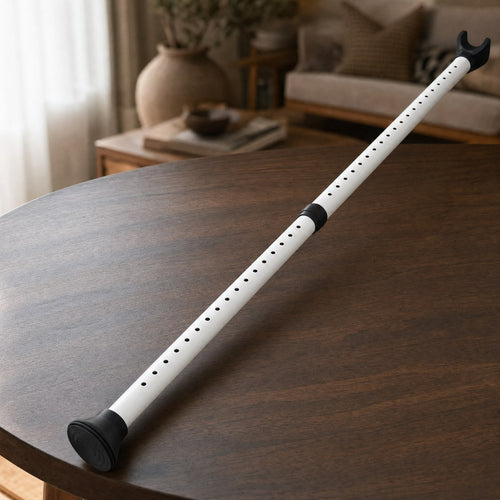
Doors are the most common entry route, so they earn the most attention. Pair an alarm with something that physically holds. A door security bar braces against the floor and turns a kicked or forced door into a slow, loud struggle that almost no opportunist will continue. Browse the full door security range for reinforced strike plates, secondary locks, and bars sized to your space.
Ground-floor and accessible windows
Windows that are easy to reach from the ground, from a patio, or from a shared walkway deserve a second look, especially for renters and anyone in a ground-floor apartment. Window locks and sash stops cost very little and remove the "slide it open quietly" option entirely. Our window security collection covers locks, pins, and sensors that fit standard frames without tools or drilling.
The visible "handled" signal
The cheapest layer is the one a passerby can see before they ever touch anything. Yard signs, window decals, and visible alarm units do quiet, constant work. The burglar deterrents collection is built for this: small, visible cues that say a home is paying attention, which is often all it takes for someone to choose an easier target.
Bedrooms, entryways, and people who live alone
Layered defense is also about how you feel inside your own walls. A personal alarm by the bedside, a door alarm on a bedroom door, or a small safe for documents and valuables can make a real difference in everyday peace of mind, particularly for people living alone or parents who want one reassuring layer near the kids' rooms.
Why "no subscription" is a feature, not a shortcut
It is worth saying plainly: owning your security outright is not the budget version of a real system. In many ways it is the more honest one.
- It keeps working when the internet does not. No router, no outage, no dropped connection at the wrong moment.
- Nothing is watching you. There is no camera streaming the inside of your home to a server, and no account holding footage of your family.
- There is no bill that grows. You pay once. The protection does not stop the day a payment fails or a company changes its pricing.
- It is yours to move. Renters can take every piece to the next place, which makes this approach genuinely practical for people who are not staying put.
One more calming fact worth keeping in mind: Bureau of Justice Statistics data shows that daytime, when homes tend to be empty, is a common window for break-ins. That gently corrects the "they only come at night" assumption, and it is a good reason to favor measures that protect the house whether or not you are home and whether or not anyone is watching a screen.
Frequently asked questions
Do I really not need Wi-Fi or an app?
Correct. The TremShield Alarm and our locks, bars, and deterrents are fully self-contained. They run on their own power, sound on their own, and require no network, no pairing, and no account. Setup is physical, not digital.
How long does installation take?
The flagship alarm installs in about 60 seconds: peel the backing, press it onto a clean door or window, and switch it on. A full room-by-room setup with a multi-pack is usually an afternoon project, and most of that time is just deciding where each piece goes.
Will an alarm actually stop a break-in?
No single device guarantees anything, and we would not claim otherwise. What the research consistently shows is that noise and visible signs of an alarm cause most opportunists to leave. Combined with a lock or bar that adds time, you are removing the two things they want most: speed and quiet.
I rent. Is any of this allowed in an apartment?
Yes. Everything in this approach is designed to be damage-free and removable. Stick-on alarms, tension-based door bars, and no-drill window locks all come with you when you move, with nothing to repair or explain to a landlord.
A calm next step
You do not have to solve all of this tonight. Pick the one opening that has been quietly nagging at you, the back door or that ground-floor window, and start there. Add sound, add something that holds, and let yourself feel the difference of one thing being genuinely handled. Then do the next one when you are ready.
That steady, layered approach is what we have built for over 1,500 homes, and it is why our customers rate us 4.8 stars. Every piece installs in about a minute, with no Wi-Fi, no app, and no subscription waiting to surprise you later. When you are ready, the full collection is organized by the job each layer does, so you can build exactly the setup your home needs and then, finally, stop thinking about it.
Back to all articles