In this article
Maybe you saw the Los Angeles story, or the one out of a Minneapolis suburb. A crew walks up to a house, a small device in a backpack floods the local Wi-Fi, and the cameras that were supposed to be watching go quiet. If you own a camera or a smart system, you probably noticed what the reports only implied: everything you installed depends on one signal.
Yes, burglars can jam security cameras. Wi-Fi depends on a radio channel, and police in several cities have reported burglars flooding it. What a jammer can’t touch is a device with no radio at all.
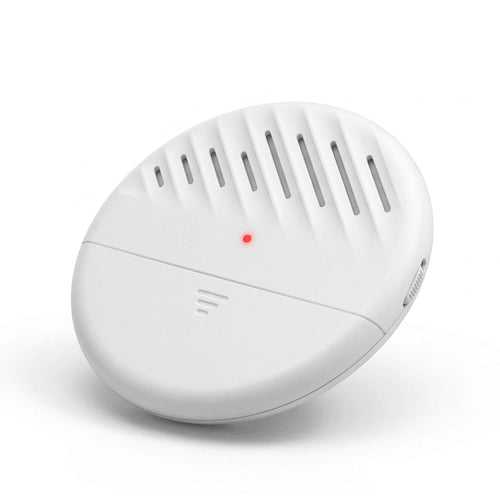
This page explains the technique in plain words, then what to do about it. Our answer to the second part is the TremShield Vibration Sensor Alarm, a $29.99 stick-on unit with no Wi-Fi inside, and we’ll show you exactly where it fits. Your cameras stay. They just stop being the only thing on watch.
What a Wi-Fi jammer does, in plain words
A jammer doesn’t hack anything. It shouts. Wi-Fi devices take turns talking on a shared radio channel, and a jammer floods that channel with noise so nothing else gets through. Your camera keeps running and your router keeps blinking, but the messages between them stop arriving. The motion alert never leaves the house. The clip never reaches the cloud.

Nothing about it is subtle or clever. There’s no password to crack and no software flaw to find, just a louder voice on the channel your devices share. Operating or selling a signal jammer is illegal under US federal law, which hasn’t stopped the reports below.
Where police have reported it
What follows is reported news with names and dates attached, not a trend line. What we have are police departments choosing to warn the public, on the record, more than once.
In February 2024, KARE 11 in Minneapolis reported that police in Edina, Minnesota suspected a string of nine burglaries involved Wi-Fi jammers. Tom’s Hardware picked the story up that same month as a warning to smart-home owners far beyond one suburb.
Weeks later, in March 2024, ABC7 in Los Angeles covered a Glendale Police Department advisory about the same technique. A police sergeant told the station that with “any kind of alarm system that is WiFi-based or a camera that’s WiFi-based,” the device “blocks the signal and knocks it out.”
By March 2025 the warning had reached the top of the LAPD. NBC Los Angeles covered Chief Jim McDonnell’s warning that jammers are letting burglars into homes with no alarm ever going off. The station’s report put it plainly: “WiFi jammers are now the preferred method of operation for many burglars.”
And in December 2025, KPRC 2 in Houston reported a burglary in Bellaire, Texas, where police said a backpack the suspects held up to a camera likely contained a Wi-Fi jammer.
That’s four police departments across three states, inside two years. Not a wave to panic over, and not a rumor to dismiss. A documented technique that keeps resurfacing.
Keep your cameras
If you bought cameras, you did a reasonable thing, and the case for them still stands. A Portland TV station, KGW, once mailed a survey to 86 convicted burglars. It was an informal project, not a scientific sample, but every respondent said they’d knock first to check if anyone was home, and the advice that kept coming back was to have a visible camera. Deterrence starts at the curb, before any radio matters, and recorded footage still helps solve cases after the fact. Both points hold their place on our evidence-based list of what deters burglars.
The gap is narrower and more specific than “cameras don’t work.” Everything in a smart system that acts, acts through the network. The alert that wakes you and the siren command from the hub both ride the same channel a jammer floods. Jam it and the acting stops. A wired camera recording to storage inside the house keeps filming through the whole visit, and that footage matters. But filming a break-in is not the same as stopping one.
What a jammer can and can’t affect
| Device | During a jamming attempt |
|---|---|
| Wi-Fi camera alerts | Jammable. The camera can’t reach the router, so the alert never leaves the house. |
| App notifications | Jammable. No connection, no push. |
| Smart hub sirens | Depends on the hub’s radio. If sensors reach the hub wirelessly, a flooded channel can keep the trigger from arriving. |
| Wired camera recording | Keeps recording to local storage. It still can’t alert your phone if the internet is out. |
| Stick-on vibration alarm | Nothing to jam. It has no radio, so it sounds regardless. |
Read that last row again, because it’s the quiet fix hiding in the chart. The failure the jammer creates is a lost connection. A device with no connection has nothing to lose.
A siren with no signal to lose
A vibration sensor alarm sticks to the window pane and feels the surface it guards. A pry or a sharp strike travels through the glass, the sensor reads it, and a 125 dB siren fires from the exact window under attack. The person outside hears it while they’re still outside, jammer or no jammer.
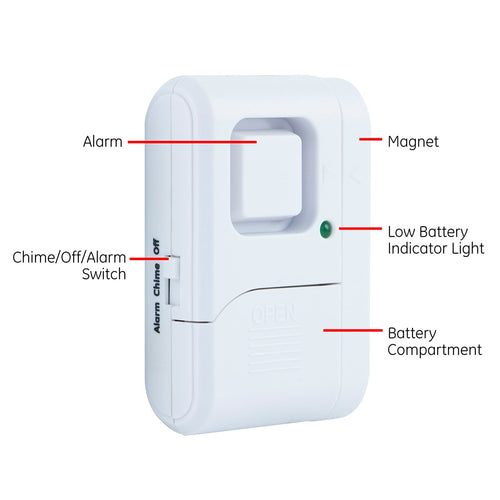
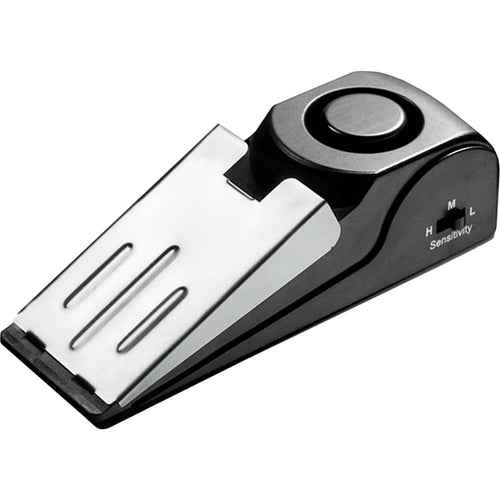
There’s no radio inside to jam and no hub to knock out. The sensor and the siren share one small box, so no signal ever travels between the attempt and the noise. It runs on batteries for up to 12 months, which means a power outage changes nothing either. Install is adhesive: peel, press onto clean glass, switch on, about 60 seconds. A dial on the unit sets how much force it takes to trigger, so passing trucks stay below the line and a deliberate pry crosses it.
Professional installers sell this same idea under the name “shock sensor,” a sensor meant to catch forced entry before anyone gets inside. That’s the whole argument in one line. The siren belongs at the attempt, not after it.
The trade-off: this alarm will not text you. No app exists. Its job is the moment itself, making the window too loud to keep working on. That job doesn’t need your phone to be reachable, and it doesn’t need your Wi-Fi to survive the night.

Now picture that same technique meeting a house with one of these on the back window’s glass. The jammer runs, the phones stay silent, and then the pry bar touches the pane. The pane answers at 125 dB. The whole visit was built on quiet, and the quiet is gone.
Hardening that holds up, with or without Wi-Fi
Three moves cover most of the gap, and none of them means abandoning the system you already own.
- Wire what can be wired. Power and recording that don’t travel through the air can’t be flooded out of the air.
- Keep local storage on your cameras. Footage saved inside the house survives an internet outage. A gap in that footage is also how most owners learn a jammer was there.
- Add one device with zero connectivity. Something that senses and sounds in the same box, with nothing between the two for anyone to cut.
We walked the evidence for that third move in our look at whether window alarms work, including where they fail. And if the monthly bill bothers you as much as the jamming, the sister guide to home security without Wi-Fi, apps, or a monthly bill covers the cost side of the same idea. Leaving town soon? The pre-trip security checklist leans on the same principle: devices that do their job with nobody watching a phone.
Jammers and cameras: short answers
Will a Wi-Fi jammer cut power to a battery camera?
No. A jammer floods the radio channel and does nothing to power, so a battery or plug-in camera stays switched on. What stops is the traffic: its alerts and uploads cannot get through to the router while the jammer runs.
Can a camera tell when it is being jammed?
Usually not in the moment. Most owners find out afterward, from a gap in the footage, because a short outage looks like a router hiccup. That is one more reason to have something that makes noise on its own.
What batteries does the TremShield alarm use?
LR44 button cells. It runs on those alone, with no Wi-Fi, mains power or hub, so neither a jammer nor a power cut touches it.
Cover the glass, keep the cameras
The plan that survives a jammer isn’t complicated. Your cameras keep deterring at the curb and recording what happens. And on the panes a stranger could reach, a sensor with no radio waits for the first pry, ready to turn the attempt itself into the noise.
Count those panes tonight. For most homes the count lands close to six, which is what the 6-pack at $99 is priced for: $16.50 per alarm instead of $29.99, a saving of $80.94 against six singles, with two free no-drill window locks shipped alongside them and the Home Security Guide delivered as a PDF to your email. It ships free to the US, Canada, the UK, Australia and New Zealand, with 30 days to send it back if you change your mind. Stick them on this weekend, and the one layer with no signal to lose is on duty by Sunday night.
Back to all articles