In this article
To secure basement windows, sort them first. A window anyone might need to climb out of stays a fire exit, so it only gets fixes that never slow an exit: anti-shatter film, a vibration alarm on the glass, and a lock that releases by hand. Windows nobody will ever climb through can take a keyed lock or a restrictor, and every window well gets light and a clear line of sight.
Count the windows you look at in a day. The basement ones didn't make the list. They sit behind the dryer, over the workbench, half-hidden behind a shrub outside, and most of us go whole seasons without touching one. The quiet irony is that the windows nobody studies from inside are the ones easiest to study from outside: they sit low, within reach, out of everyone's view. If that thought has been nagging at you lately, it's a reasonable thing to notice. It's also very fixable.
If the room is a bedroom, or you might ever need to climb out that way, that window is a fire exit first and a security project second. This guide walks through that rule in plain English, then matches the right fix to each window type: hopper, slider, glass block, and anything sitting in a well. No wiring, no contractor. Nothing here eats a full weekend.
Why basement windows attract attempts, and why the odds favor you
Basement windows offer one thing no other opening in the house does: privacy for the wrong project. A window well sits below every sightline on the street. At-grade panes hide behind shrubs and steps and AC units. What happens at one of these windows can't be seen from a neighbor's porch or even your own kitchen, and burglars, who are mostly opportunists rather than planners, prize that above almost everything.
Now the balance. The Department of Justice's problem-oriented policing guide on burglary of single-family houses finds no consensus on a single most common entry point; it depends on the house and the lot. What the same guide does flag is where no-force entries happen: especially basement windows and garage doors, the openings people forget to lock. FBI figures for 2024 back that up, with 38 percent of reported burglaries with a known entry method involving no force at all. So the first fix is free and takes five minutes. Latch every basement window tonight, and fix any latch that won't catch.
And keep the scale in view. Bureau of Justice Statistics victimization data show that about 99 percent of US households had no burglary at all in 2024. You're not patching a sinking ship. You're closing one small, specific gap, once.
Egress window security: fire exit first, security project second
Building codes already answered the hardest basement-window question, and the answer works from both directions. The International Residential Code (section R310) requires an emergency escape opening for basements and basement bedrooms: roughly 5.7 square feet of net clear opening (5.0 at grade level), at least 24 inches tall and 20 inches wide, with a sill no more than 44 inches off the floor. Clear opening means the space that opens, not the glass size; a window 24 inches tall needs about a 34-inch-wide opening to qualify. One line from the code should guide every purchase you make down there: the window must operate from inside without keys or tools. Local amendments vary, so check how your city applies this before you finalize plans.
That single line rules out a few popular fixes for any escape window, no matter how secure they feel at midnight:
- Never screw, nail, or paint an egress window shut. It's the one modification you can't undo at 2 a.m.
- Never fit an egress window with a keyed lock or fixed bars. A key in a drawer upstairs is a locked exit downstairs. Keyed hardware belongs on windows nobody will ever climb through.
- Never accept a well grate or cover that cannot be pushed open from below. Covers are welcome, useful even, when they lift instantly from inside without tools.
What does belong on an escape window is the stack that never touches its latch or hinges: film to make the glass stubborn, an alarm to make the attempt loud, a lock your hand releases in one motion. You give up nothing this way. The window stays a ten-second exit for the people you love and becomes slow, noisy work for anyone outside. That's the entire trade, and it runs in your favor.
How to secure each type of basement window
Basement windows come in four common configurations. Find yours in the table, then read the notes that follow.
| Window type | Fire-exit check first | The right stack |
|---|---|---|
| Hopper or awning (small, hinged, tilts open) | Usually too small to qualify as egress, but measure before you assume | Anti-shatter film plus a vibration alarm on the glass; keep the factory latch healthy. If it is truly not an escape route, add a restrictor or keyed lock. |
| Sliding basement window | Often egress-sized in walkouts and newer homes; measure the clear opening | Film and alarm on the glass, plus a clamp-on track lock. On an escape window, every lock must release by hand instantly, no keys. |
| Glass block | Never an escape route; choose it only for rooms that will never need one | The block itself is the security. Add nothing, and never choose it for a bedroom window. |
| Any window in a well | If it serves an egress window, the cover must push open from below without tools | Keep the well swept, fit a debris cover, mount a motion light above, and alarm the window inside like any other. |
Start with the glass, because on a basement window the glass is usually the weak part. Anti-shatter window security film is a clear sheet applied to the inside of the pane that holds broken glass together, turning a fast smash into slow, loud scraping. It changes nothing about how the window opens, which is why it goes first on an egress window. The limit: film doesn't make glass unbreakable. It makes it expensive to break quietly, which defeats the point of picking a hidden window in the first place. Our guide to burglar-proofing windows without bars on the glass walks through the broader technique.

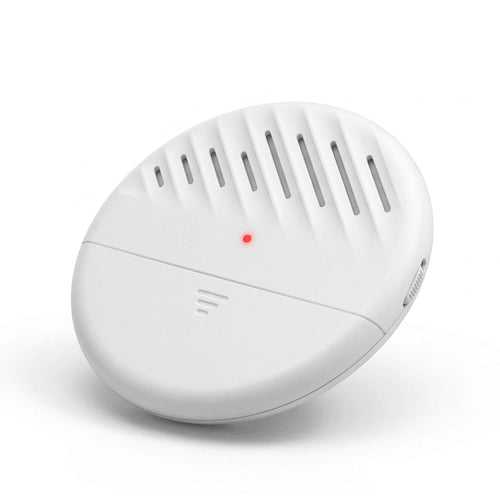
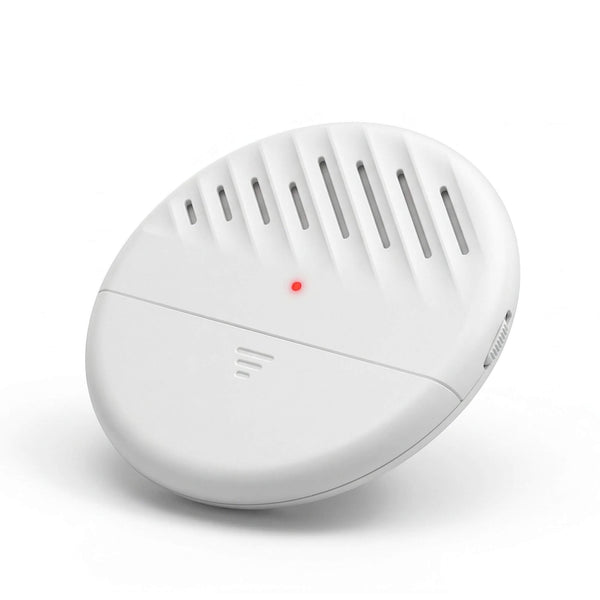
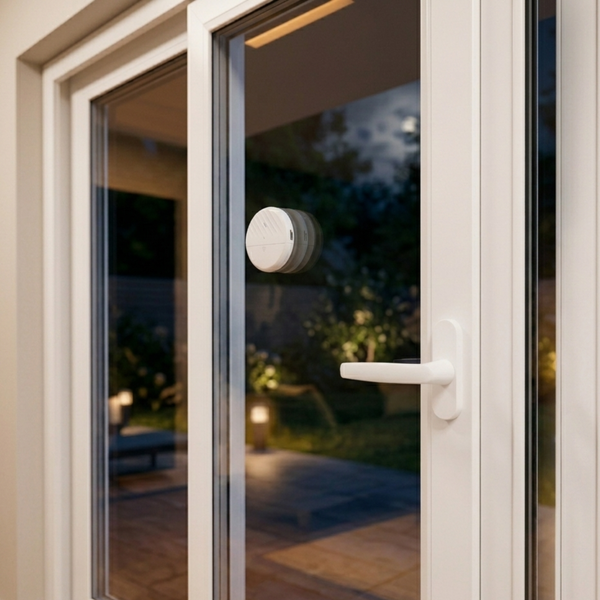
Then add the noise. The TremShield vibration alarm sticks to the pane and sounds a 125-decibel siren at the first hard rattle or impact, while whoever caused it is still outside. This matters more in a basement than anywhere else: a well and a shrub can hide a person, but they can't hide 125 decibels. In the University of North Carolina at Charlotte survey of 422 incarcerated burglars, about 83% said they would try to find out whether a home had an alarm, 60% said an alarm would send them looking for a different target, and half of those who discovered one mid-attempt said they would abandon the attempt entirely. We lay out that evidence in do window alarms actually work. The alarm is battery powered and has no Wi-Fi, no app and no subscription, which suits a concrete basement where signal goes to die anyway.
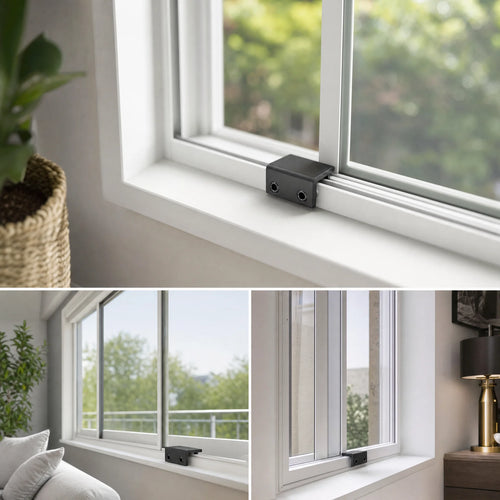
For sliders, lock the track. A clamp-on window sash lock tightens onto the track by hand and stops the pane from moving, and the adjustable sliding window lock does the same job on longer tracks. Both go on without a drill and come off the same way. One caution, and it's the egress rule again: on the window your family would leave through, anything in that track must come out by hand, in one motion, in the dark, and everyone who sleeps down there should practice the release once. If that feels like too much to ask of a groggy ten-year-old, leave the escape window to its factory latch, film, and alarm, and put the track locks on windows in rooms where nobody sleeps.
The window restrictor lock is the mirror-image tool: a cable with a key release. The key makes it exactly right for a utility window that isn't an escape route, and exactly wrong for one that is. To say it plainly: a restrictor belongs on non-egress windows only, never on a window anyone might need to climb out of. Everything in this section, film through locks, lives in the window security collection.
Light the window well, then trim what hides it
Concealment is the basement window's only real advantage, and light takes it away. Lighting is also one of the few deterrents with randomized-trial evidence behind it. When temporary streetlights were placed around New York City public housing developments in 2016, a National Bureau of Economic Research study found nighttime outdoor index crimes fell by at least 36 percent. Your window well isn't a housing development, and researchers still debate the exact size of lighting effects, but the direction is consistent and the cost is small.
A solar motion security light mounted above the well, or on the wall facing it, answers the two problems basements create: no outlet nearby, and no appetite for a floodlight burning all night. The panel charges itself and the heads fire only on motion. While you're out there, cut the shrub in front of the well back to knee height and sweep out the leaves. A clear, tended well tells anyone sizing it up that someone pays attention down here.
Renting the basement? Same rule, no drilling
Every fix above works in a rental. The sash and sliding track locks clamp on by hand and come off clean at move-out. The vibration alarm sticks to the glass. The solar light asks for a few outdoor screws, usually an easy yes from a landlord. Film is the one semi-permanent item: it's glass-safe but slow to remove, so ask first rather than beg forgiveness.
If your bedroom is below grade, the egress rule exists for you most of all. You're allowed to ask your landlord to show that the sleeping-room window meets escape-opening requirements, that the well has a way to climb out, and that any cover pushes open from below. Those are safety questions, not complaints, and a decent landlord hears them that way. For the wider picture, at-grade doors, shared entrances and all, our ground-floor apartment security guide picks up where this one ends.
Basement windows: questions from the well up
How do I add privacy to a basement window without losing the light?
Frosted static-cling film from a hardware store turns clear glass translucent, so daylight still comes in and nobody outside can see what is stored down there. It is applied wet, comes away without residue, and suits a rental.
Do the same fixes work on first-floor windows?
Yes. A first-floor window a passerby could reach takes the same set: a hand-release lock that fits the window type, an alarm on the glass, and film where a small pane sits near the latch. The escape rule applies to any window a sleeping room depends on, on any floor.
Will a stick-on alarm hold on a damp basement window?
It needs clean, dry glass to bond. If a basement pane sweats in winter, wipe it with rubbing alcohol, let it dry fully, press the alarm on firmly for a few seconds, and give the adhesive a day before you rely on it.
How many alarms does a basement need?
One for each basement pane a person could reach from outside, which usually means every window in a well or at grade. Add them to the ground-floor count, and once the total reaches six, buy the 6-pack: $99, or $16.50 an alarm.
A plan you can finish by the weekend
Tonight, walk the basement with a rag in one hand: wipe each latch, lock it, and note which windows a person could fit through. Tomorrow, measure the sleeping-room window against the escape-opening numbers and clear anything stacked in front of it. This weekend, put film and an alarm on the one or two windows that are both reachable and hidden, and mount the light above the well. If you're unsure which alarm belongs on which opening, the alarm finder pairs each opening with the right alarm in about a minute.
For the glass, one TremShield Vibration Alarm is $29.99. Once the hidden basement panes and the ground-floor ones above them are on the list, the six-pack is the better buy: $99 for six, $16.50 per alarm and $80.94 below six singles, with two free no-drill window locks in the box and the Home Security Guide sent to your inbox as a PDF. The pack ships free inside the US, with 30 days to send it back.
That's the whole project. The windows you never look at end up covered, loud, and still ten seconds from open when it matters, and you can go back to never looking at them.
Back to all articles