In this article
You found the marks this morning, or you were home last night when someone tried the window, and it held. The pane is whole, the latch did its job, and you’d like to be sure of that before it gets dark again.
That’s a fair way to feel. It’s also a useful spot to be in, because you now know which opening a stranger picked and what they did to it. That tells you where to spend an hour and about $100 this week.
Tonight: report it on the non-emergency line, photograph the marks, lock every opening, lights on. This week: a vibration alarm on the tested glass, and real hardware on the door or latch they picked.
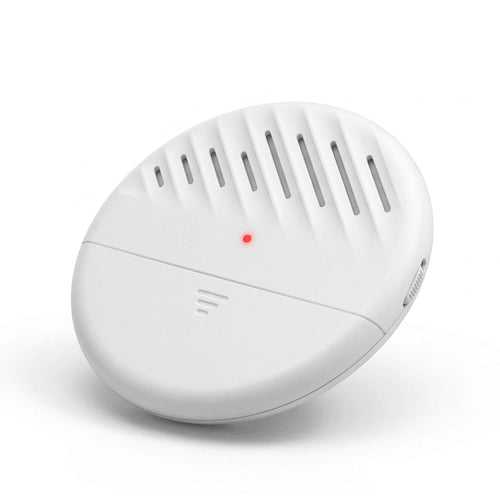
The alarm we mean is our TremShield Vibration Sensor Alarm, $29.99 for one. It sticks to the glass and fires a 125 dB siren at the first pry, before the pane gives. We sell it, and the locks further down.
Tonight: report it, then write it down
If it’s happening now, or you think the person is still nearby, call 911. If it’s over and you’re safe, call your city or county police non-emergency line. Say “attempted break-in,” give the address, say what you found and when, and ask for a report number. Your landlord, and your insurer if you ever claim, may ask for it.
Before you touch anything, take photos: one close up of each mark, one from a few steps back, a coin beside the mark for scale. Email them to yourself so they carry a date.
If you rent, tell the landlord tonight, in writing: what happened, the report number, the photos, and one ask, to fix the latch or door that was tested. Email rather than a call, so there’s a dated record.
Tell the neighbors whose yards touch that side of the house. Keep it plain: someone tried the back window, it held, the police have a report. They’ll check their own latches, and they may have seen something you didn’t.
Tonight: make the house harder with what you already own
Walk every opening, not just the one they tried. Every ground-floor window, every outside door, the garage side door, and the inside door from the garage. Check that each latch is turned all the way, not resting halfway. The bathroom window and the one behind the air conditioner count.
Leave the outside light on at the side they tried, all night, and a lamp on in a room facing that side.
Now the loud thing. Give the tested sash something to knock over: a few empty cans on the inside sill, or a metal baking tray leaned against the lower sash so it clatters if the window lifts. For an in-swinging door, the back of a kitchen chair wedged under the handle. For a slider, a broom handle laid in the bottom track to stop the panel sliding. None of this holds against a determined shove. All of it makes a quiet way in loud.
Then go to bed with the bedroom door shut and your phone charging within reach.
The next 48 hours: change what the second attempt meets
The cans come down in the morning. What goes up in their place should do the two things the factory latch can’t: hold, and make noise.
A vibration alarm on the tested pane, and every pane like it
Peel the adhesive backing and press the alarm onto the glass. About 60 seconds, and that pane is covered. It senses the vibration of a pry or a strike and fires a 125 dB siren at the moment of contact, while the person is still outside. No Wi-Fi, no hub, no app, no monthly fee. It’s fully offline, so there’s no signal to jam. A sensitivity dial on the unit lets you tune it: lower for a window on a bus route, higher for a basement pane nothing else touches.

Don’t stop at the window they tried. Stand at the curb and look for it. If you can’t see it from there, list every other pane you can’t see either: the other back windows, the side by the fence, the basement window, the slider glass. Give each of those the same alarm. In a UNC Charlotte study of convicted burglars, about 83% said they would try to find out whether a home had an alarm before attempting a burglary. What that check finds on your glass is up to you.
A lock on the latch they were working
The crescent latch on a double-hung window keeps it from rattling. A thin blade from outside can slip it, and it does nothing to stop the sash being forced up from below. Two fixes. Pick by what your lease or your frame allows.
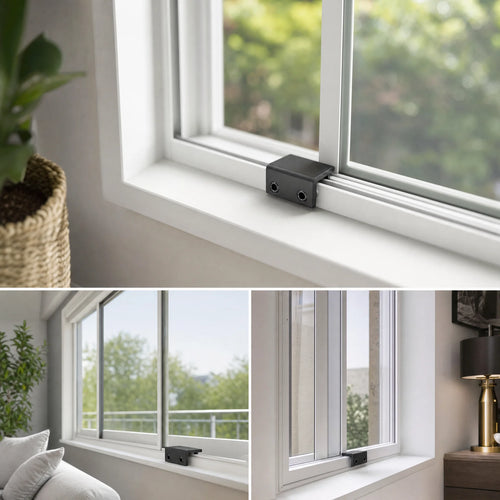
If you can’t, the Window Sash Lock (2-Pack) is $14.99. It clamps onto the frame or track of a double-hung or sliding window and tightens with a thumb-screw. No tools, no holes. Tighten it and the sash can’t be lifted or slid, shut or at a vent gap, and it comes off clean when you move.
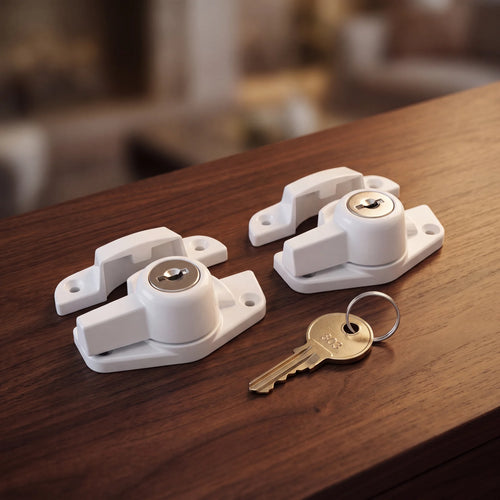
If you can, the window lock with key is $19.99 for two. It screws to the frame where the two sashes overlap and only opens with the key, so a hand through a broken corner of glass finds nothing to flip. About five minutes per lock with a screwdriver and a pilot hole.
On the tested window, both is fine: the clamp today, the keyed lock this weekend.
If the door was the target
Pry marks at the latch, a dent in the jamb, a bent strike plate. Your deadbolt held. The part that gives on a door is the frame: the factory strike plate sits on two short screws biting into soft pine, and a hard shove splits the wood with the lock still thrown.
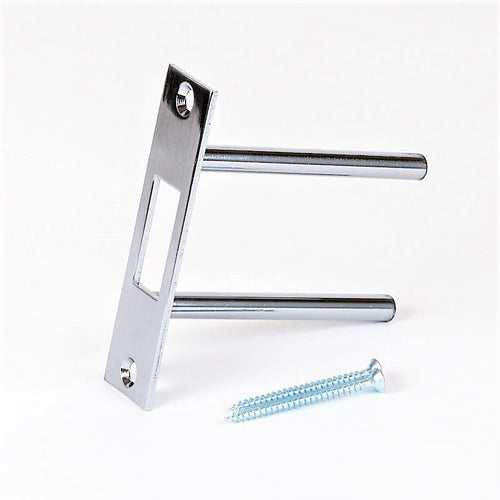
The Door Strike Plate Kit, $24.99, swaps that plate for a heavy-gauge hardened steel one and drives six 3-inch screws past the jamb into the wall stud behind it. You keep your deadbolt. About ten minutes with a drill, and it works every hour of the day, home or not.
The Door Reinforcement Lock, also $24.99, is for the hours you’re inside. It fits on the door frame, right next to the lock you already have, on a standard in-swinging door. Flip it down before bed and the door stays put no matter what’s tried from outside: a bump key won’t open it, and neither will a shoulder. Five minutes, a 1/8-inch drill bit, and screw holes that patch over with filler.
If the attempt came while you were out, the strike plate first. If it came at night, the reinforcement lock first. Both together is $49.98, and that’s the whole door done.
Where they tried, and what changes the next attempt
Match the marks to a row. Every row assumes the opening still closes.
| Where they tried | What it tells you | The fix that changes the next attempt | Cost |
|---|---|---|---|
| Front or back door: pry marks at the latch, a dented jamb, a bent strike plate | The deadbolt held. The frame is the part that gives, because the factory strike plate sits on two short screws in soft pine. | The TremShield Door Strike Plate Kit: a heavy-gauge steel plate, with six 3-inch screws that reach the wall stud. Keeps your deadbolt, about ten minutes. Add the Door Reinforcement Lock for the hours you’re home. | $24.99 each, $49.98 for both |
| Double-hung or sliding window: bent screen, pry mark at the sill, scratches at the latch | The crescent latch took the work. It holds the window closed, but a thin blade from outside can slip it, and it does nothing to stop the sash being forced up. | A TremShield vibration alarm on that pane, plus a keyed window lock (2-pack) or a clamp-on sash lock (2-pack) so the sash can’t lift. | $16.50 per alarm in the 6-pack (or $29.99 single), plus $19.99 keyed or $14.99 clamp-on |
| Sliding glass door: marks at the latch, the panel rocked or lifted | Marks at the latch mean the latch was worked. A panel that rocks or lifts has room in its track. Either way, one small factory latch is all that holds the biggest pane in the house. | A TremShield vibration alarm on the slider glass, plus our Adjustable Door Security Bar laid in the bottom track (17 to 50 inches, no tools) so the panel can’t slide. The bar does not stop a lift; the alarm covers that. | $16.50 per alarm in the 6-pack, plus $34.99 for the bar |
| Basement window: pried at the frame, screen torn | Pry marks at the frame mean the frame took the force, not the glass. Check that the sash still closes flush and the latch still catches. | A TremShield vibration alarm on the glass with the sensitivity dial turned up, plus a clamp-on sash lock if the window slides or lifts. | $16.50 per alarm in the 6-pack, plus $14.99 for two sash locks |
| Garage: side door pried, garage window tested | Once someone is inside a garage, the only thing left is the door into the house. Treat that door like a front door. | A TremShield vibration alarm on the garage window. The Door Strike Plate Kit on the garage-to-house door if it has a deadbolt in a standard frame. | $16.50 per alarm in the 6-pack, plus $24.99 for the kit |
Week two: settle it, then let it go
Walk the outside once and count every pane a person could reach with both shoes on the ground: the back, the fence side, the basement, the garage window, the slider. Our guide to how many window alarms you need does this walk step by step; most houses land between four and eight. The window they tried is one of that count. Cover all of it.
Then set a bedtime order and keep it every night: outside light on, every latch checked, every alarm back in place on its pane, door brace down, bedroom door shut. After a week it runs itself.
Three things not to buy this week:
- A contract. A monitored system signed the night after an attempt is a monthly bill decided while you were shaken. If you still want it in a month, sign then.
- Bars. Bars on a bedroom window are a fire exit you no longer have.
- One expensive thing for one opening. The tested window is one of the four to eight a stranger can reach. Spreading about $100 across all of them beats spending more on the one.
And if the attempt didn’t fail, if someone did get in, the job is different: recovery, the insurer, the locks to change. Our guide to what to do after a break-in covers that.
After a failed break-in: what people ask next
Will they come back after a failed break-in?
Nobody can promise either way, so plan for a second attempt instead of guessing. What you control is what it meets: a lock where there was only a latch, and a siren that fires at the glass before the pane gives.
Can I put a vibration alarm on the window they already tried?
Yes, as long as the glass is intact. The TremShield alarm sticks to the pane with an adhesive backing, is covering the glass about 60 seconds later, and sounds its 125 dB siren as soon as that pane is hit or pried. If the pane is cracked, board it tonight, replace it this week, then mount the alarm on the new glass.
Do I need to replace the window after an attempted break-in?
Only if the glass is cracked or the sash no longer closes flush. Pry marks in the paint and a bent screen are cosmetic; what matters is that the sash and latch still hold. If the latch is loose or bent, add a lock that doesn't depend on it, like a keyed sash lock.
Do I turn the alarm off to open the window?
Yes, on a window you open: switch it off first and back on after you close it, because sliding the sash moves the glass the alarm is listening to. On a pane you never open, it stays on.
Cover the pane they picked, then the five like it
You know which opening a stranger chose, and you’ve made it hold and made it loud. The panes with the same view of the street are next, and for most houses that count is about six. The 6-pack at $99 covers them: $16.50 per alarm, $80.94 less than six bought one at a time, with two free no-drill window locks for the tested window and its twin, and the Home Security Guide (a PDF). Free shipping to the US, Canada, the UK, Australia and New Zealand, and 30-day returns if your walk counts fewer. Order it tonight, stick the first one on the pane they tested, and the second attempt meets a different house.
Back to all articles