
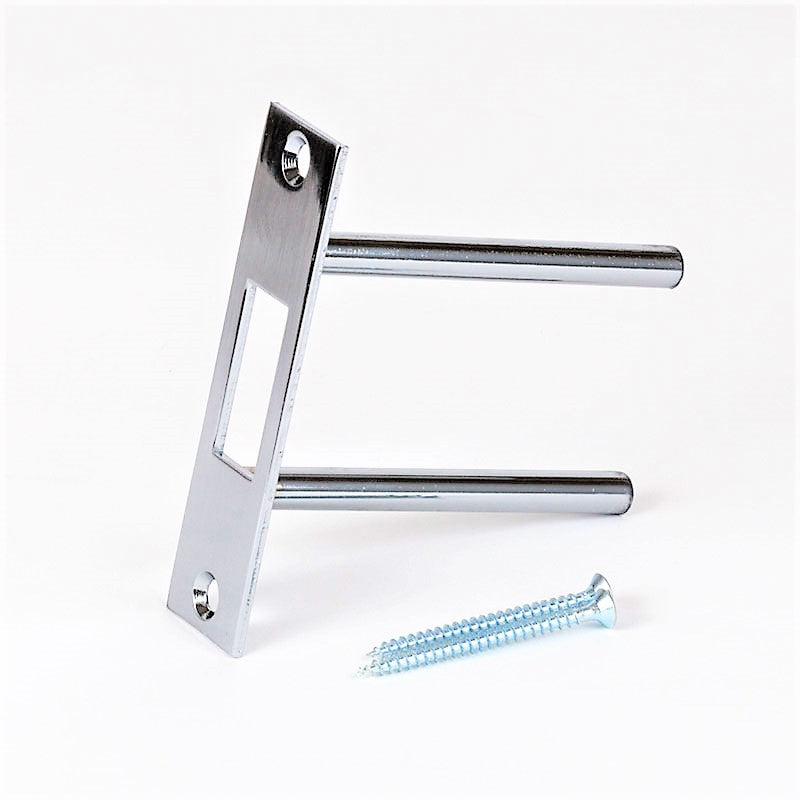
Door Strike Plate Kit (Anti-Kick)
Anchors your door frame into the wall stud.
- Bites into the stud, not the trimSix 3-inch hardened screws reach past the jamb into the wall stud behind it, so force fights your home's framing instead of a thin strip of pine.
- Heavy-gauge steel, not factory tinThe replacement plate is thick hardened steel that spreads a kick across more wood, instead of the thin pressed plate two short screws can rip out.
- Stops the jamb from splittingA kick concentrates on the latch area. A wider, deeper plate distributes that load so the wood around your deadbolt does not crack and let go.
- Ten-minute install, no new lockYou keep your existing deadbolt and handle. Swap the plate, drive the long screws with a drill, and you are done. Nothing to relearn.
Why the frame fails first
Burglars do not pick locks. They kick the frame.
A deadbolt can be rated for a thousand pounds of force and still be useless, because the lock is not what fails. The wood is. The factory strike plate is screwed into the jamb, a thin board nailed to the framing with an air gap behind it. Two short screws hold it. When someone kicks near the handle, all that force lands on those two screws and the inch of pine they grip, and the jamb splits clean down the grain.
This kit moves the fight. The long screws skip the soft jamb and anchor into the jack stud, the vertical framing member that carries your wall. The heavy plate keeps the bolt pocket from deforming. So instead of asking two short screws to hold a house together, you are asking the house to hold the door.
The lock almost never breaks. The two short factory screws do.

Thick steel, long screws, deep bite.
The plate is heavy-gauge hardened steel sized to cover the full latch area, so a kick spreads across the wood instead of concentrating on one cracked spot. It mounts flush with most standard residential door frames and works with common deadbolts.
The screws do the real work. At 3 inches with a self-starting tip, they drive through the jamb and into the framing without splitting the wood on the way in. The kit also includes longer screws for your strike-side hinge, the second place doors give way under a kick.
Ten minutes, one drill
Remove the old plate
Back out the two short factory screws on the deadbolt strike and lift the thin plate off the jamb.
Position the new plate
Set the heavy-gauge plate so the bolt pocket lines up with your deadbolt. Mark the screw holes with a pencil.
Drive the long screws
Drill pilot holes if your framing is dense, then drive the 3-inch screws firmly until the plate sits flush against the jamb.
Reinforce the strike-side hinge
Swap two screws on the hinge nearest the lock for the long ones included, anchoring that side into the stud too.
One layer in a door that actually holds
A strong door is a stack of small upgrades, not one magic gadget. The strike plate keeps the frame from splitting, a good deadbolt keeps the bolt thrown, and a door bar adds bracing at the floor for when you are home. Add the alarm and a forced entry stops being quiet. Each layer is cheap on its own. Together they make a kick-in slower and louder.
Make the frame hold, then make it loud
The strike plate buys you seconds at the door. The TremShield Alarm makes those seconds impossible to ignore, with 125dB the moment the door takes a hit. Six cover the doors and windows for $99, $16.50 each.
See the alarm
Questions, answered calmly
From the security guide
Door Security Devices, Ranked: What Stops a Kick-In, What’s Theater
Seven door security devices ranked by what they do in a kick-in, with prices and whether each needs a drill, and the three things that on...
Read the guide →Stay one step ahead
Real home-security tips, first looks at new gear, and the occasional subscriber-only deal. Unsubscribe anytime.