In this article
Door reinforcement means making the parts around your lock harder to break, and it works best in a set order: make the frame hold on the lock side first, add a second hold on the door itself, then make any attempt on it loud. The frame is where a forced door usually gives.
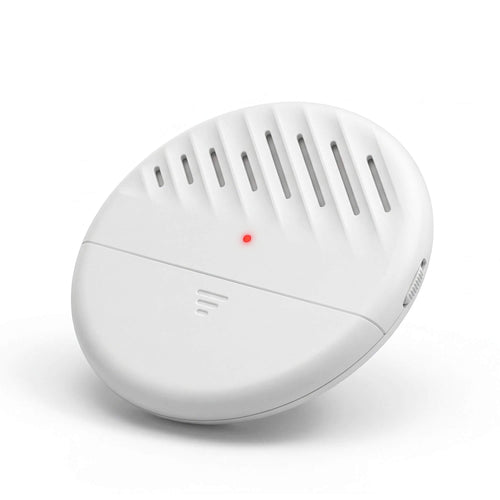
The first two steps are hardware. The third is our TremShield Vibration Alarm, which sticks to a solid door panel or to the glass in or beside the door and sounds 125 dB when that surface is struck, pried or rattled. It holds nothing, which is why it comes after the parts that do.
What does door reinforcement reinforce?
A locked door can give way in four places, and each has its own part.
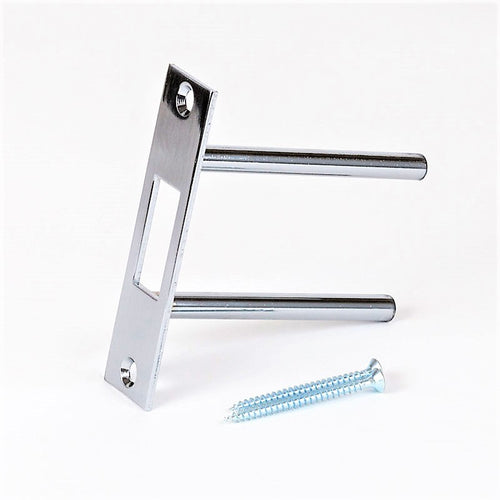
The strike side of the jamb. The jamb is the frame the door shuts against, usually wood. Your deadbolt throws into a metal strike plate set in it, and on a lot of doors that plate is held by short screws in soft trim. A hard kick splits the wood and the bolt leaves with it, still locked. This is the usual weak point. The answer is a heavier strike plate on screws long enough to reach the wall stud. Mechanics and a door check: how to stop a door getting kicked in.
The hinge side. The hinges carry the other edge of the door, and their screws are often short too. Once the lock side holds, the hinge side is next. Longer screws through the hinge leaves into the framing answer it, and any hardware store sells them.
The door edge around the lock. The handle and deadbolt sit in holes bored through the edge of the door, so there is less wood there to hold. A door edge wrap is a metal sleeve that fits around that edge and spreads the load over more of the door. If the door sounds hollow when you knock on it, the slab itself is the weak part, and a solid-core door is the fix worth pricing.
The lock itself. A picked lock, a bump key or a card slipped at the latch opens a door without breaking anything. The answer is a second hold, set from inside, that does not depend on the lock.
Door reinforcement parts, one by one
| Part | What it fixes | Needs drilling? | Fits | Ours or hardware store |
|---|---|---|---|---|
| Strike plate kit with 3-inch screws | The strike side of the jamb splitting where the deadbolt sits | Yes, about ten minutes with a drill | Standard residential deadbolts and door frames; check first on a metal frame | Ours: Door Strike Plate Kit, $24.99 |
| Longer hinge screws | The hinge side of the frame tearing loose | Usually not; they go through the existing hinge holes | Doors hung on screwed hinges in a wood frame | Hardware store |
| Jamb wrap or full-length jamb plate | Spreads the load over more of the lock side of the frame | Yes | Check the listed frame sizes against your door | Hardware store |
| Door edge wrap | Spreads the load around the lock holes in the edge of the door | Usually a few screws | Check the listed door thickness and lock layout | Hardware store |
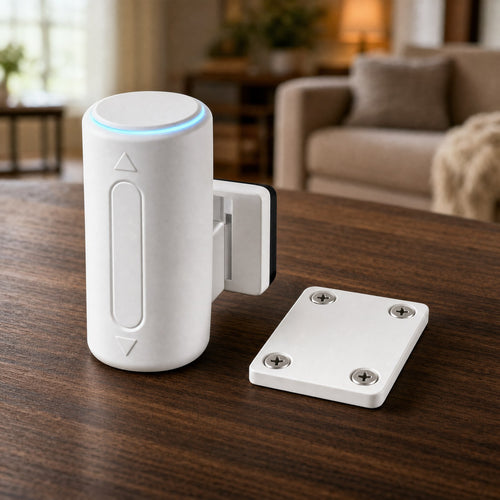
| Door reinforcement (flip) lock | A second hold on the door, independent of the deadbolt, set from inside | Yes, small pilot holes with a 1/8 inch bit, about five minutes | Standard in-swinging doors | Ours: Door Reinforcement Lock, $24.99 |
| Floor-to-handle brace bar | A shove on a hinged door, sent into the floor while you are inside | No | In-swinging hinged doors; head off, it also lies in a patio slider's track | Ours: Adjustable Door Security Bar, $34.99 |
| Portable travel lock | A second hold from inside on a door you cannot change | No | In-swinging doors that have a standard strike; not outward-swinging or sliding doors | Ours: Portable Travel Door Lock, $19.99 |
| French door handle lock | Holds both inside handles of a pair of French doors so neither turns | No | French door pairs, in- or out-swinging, with an inside handle on each door at about the same height | Ours: French Door Lock Bar, from $24.99 |
| Vibration alarm | Holds nothing; sounds 125 dB when the door or its glass is struck, pried or rattled | No, it peels and sticks | Any smooth, solid surface: a solid door panel, a glass lite, a sidelight | Ours: TremShield Vibration Alarm, $29.99 |
Ranked by stopping power: door security devices, ranked.
Which reinforcement does your door need?
An in-swinging wood door you own
You can do the whole job here. Start at the frame with the Door Strike Plate Kit, then give the hinges longer screws as well. For the hours you are asleep, add the Door Reinforcement Lock beside your deadbolt: flip it down and a picked lock or a bump key does not open the door. Back doors with glass: back door security.
The same door, but you rent
Read your lease before you drive a screw into the frame. With no drilling at all, the Adjustable Door Security Bar wedges under the handle with its foot on the floor and lifts out in one motion, and the Portable Travel Door Lock sits in the strike you already have. The reinforcement lock leaves only small screw holes that patch with filler. The renter's version, fire rule included: how to secure an apartment door from the inside.
A door that swings out
Floor braces, our reinforcement lock and the travel lock are all made for doors that open inward, so skip them here. The hinge pins sit outside, so shop for hinge security pins and other hardware sold for out-swinging doors. The alarm still works on the door's smooth, solid panel or glass.
French doors
The French Door Lock Bar holds both inside handles with a keyed bracket, so it works whether the pair swings in or out, with nothing drilled. More in securing French doors that open outward.
A sliding patio door
A slider is held shut by one small latch, so block the track: the same security bar, head off, lies in the bottom track so the panel cannot slide. It does not stop the panel being lifted out of the track on a door with enough clearance, so an alarm on the glass covers that. Details in patio door security.
A door with a glass lite or a sidelight
If there is glass within arm's reach of the lock, someone can skip the frame and reach for the thumb turn. Reinforce the frame anyway, then put an alarm on that pane, because no strike plate does anything about glass.
A metal door in a metal frame
The strike plate fix assumes a wooden jamb with a stud behind it. Tap the frame beside the lock: if it rings like metal, check what is behind it before you buy screw-in parts. On an in-swinging door, the brace bar puts nothing into the frame at all.
Before you buy: check these at the door
You need a screwdriver, a tape measure and the door open.
Door check before you order
- Note which way the door swings: into the house or out
- Tap the jamb beside the lock: a dull knock is wood, a ring is metal
- Count the strike plate screws, then pull one and measure its length
- Pull one top hinge screw and measure it too
- Knock on the face of the door: hollow or solid
- Look for any pane close enough that a reaching hand finds the lock
- Check the floor inside the door, where a brace's foot would stand
- Ask: may I drill this frame? Do I sleep behind this door, or would I leave by it in a fire?
Short screws point to the strike plate kit and longer hinge screws. On an in-swinging door, a metal frame or a no-drill lease points to the no-screw options; an out-swinging door needs hardware sold for that swing. If you sleep behind the door or would leave by it in a fire, anything you put on it has to come off from inside in one movement, with no key: the flip lock, the brace bar and the travel lock all do, and the keyed French door bar comes off before bed on an escape door.
In what order to spend
- Free, or close to it: throw the deadbolt every time, not only the latch. If you own, longer hinge screws are a cheap hardware-store item.
- $24.99: the strike plate kit, for the usual weak point.
- $24.99 or $34.99: a second hold on an in-swinging door: the reinforcement lock if you can drill, the brace bar if you cannot.
- From $29.99: an alarm on the door panel or the glass, so an attempt is loud from the first strike.
None of this makes a door impossible to force. It makes forcing it slower and harder.
Reinforce the frame, then make the door loud
Hardware holds the door; the alarm makes working on it loud. One TremShield alarm is $29.99. The 6-pack at $99 comes to $16.50 per alarm and saves $80.94 against six singles, enough for both main doors and the glass beside each, plus 2 free no-drill window locks. The Home Security Guide comes as a PDF by email. Free shipping to the US, Canada, the UK, Australia and New Zealand, and 30-day returns.
Door reinforcement questions, before you drill
Does door reinforcement work on a rental door?
Yes, without drilling. A floor-to-handle brace bar or a portable travel lock adds a second hold on an in-swinging door and leaves no holes in the frame. A strike plate kit screws into the frame, so check your lease first.
Is a strike plate enough on its own?
It fixes the usual weak point, the lock side of the frame, but not the hinge side, the door edge around the lock, or glass near the lock. Longer hinge screws, and on an in-swinging door a reinforcement lock or a brace bar, cover more of it.
Can I reinforce a door that opens outward?
Partly. Floor braces and the TremShield reinforcement lock and travel lock are made for doors that swing inward, so they do not fit. A single outward door needs hardware sold for that swing. Outward French doors can take a lock that holds both inside handles, and a vibration alarm sticks to a smooth, solid door panel or its glass.
Does reinforcing a door stop a break-in?
It makes forcing the door much harder and slower. No door is impossible to force, and reinforcement does nothing about glass in or beside the door. So the last layer is an alarm that sounds when the door is struck or pried.
Do I still need an alarm if the door is reinforced?
They do different jobs. Reinforcement holds the door. A vibration alarm holds nothing, but it sounds 125 dB the moment the door or its glass is struck, pried or rattled, so an attempt on it is loud. Six TremShield alarms cost $99 together, $16.50 apiece, against $29.99 for one.
Back to all articles