In this article
Every November the clocks go back an hour (this year on Sunday, November 1, 2026), and the stretch between leaving work and walking through your own door moves into the dark. For many households, that means an unlit, empty house from about 5 p.m. until someone gets home. The national numbers are calmer than that picture: in the last two years of FBI data, burglary did not climb in winter. What changes is narrower and cheap to fix: one hour of an empty, dark house, the back of it most of all.
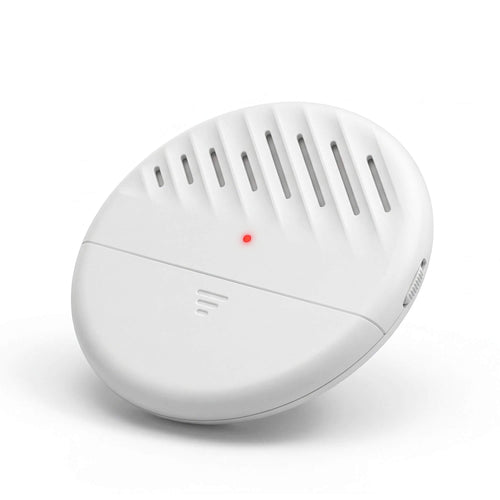
The fixes below run cheapest first, and most cost nothing. The one we make for this job is the TremShield Vibration Alarm, a $29.99 disc that sticks to a back window or a glass door and sounds 125 dB when someone strikes or pries that surface. It comes last on the list below.
What changes when it gets dark at 5 p.m., and what does not
The FBI's Crime Data Explorer publishes burglaries reported to police month by month. Scale each month to 30 days and the picture is nearly flat. In 2024 and 2025 the busiest month was July, only about 10 to 12% above the quietest. November 2025 was the quietest month of that year. The one recent exception is 2023, when December came out on top.
| Month | 2024 | 2025 |
|---|---|---|
| January | 18.7 | 16.1 |
| February | 18.8 | 15.8 |
| March | 17.8 | 15.8 |
| April | 18.5 | 16.1 |
| May | 19.1 | 16.4 |
| June | 19.2 | 16.3 |
| July | 20.0 | 16.7 |
| August | 19.4 | 16.4 |
| September | 19.6 | 16.3 |
| October | 18.8 | 15.8 |
| November | 18.4 | 15.1 |
| December | 19.7 | 15.6 |
One caveat: these are crimes police heard about, and in the Bureau of Justice Statistics survey for 2024 only 40.7% of burglaries were reported. Read it for its shape.
On the street, the dark does matter. Economists Jennifer Doleac and Nicholas Sanders found that reported robberies rose 7% when daylight saving time ended, and 27% in the hours during and just after sunset, in 2005 to 2008 police data from mostly urban, East Coast areas. Robbery is a crime against a person, the mugging on the walk from the train. It is a reason to have your keys in hand on the walk in, not evidence about break-ins.
For the house, the federal study Victimization During Household Burglary (2003 to 2007) found that when nobody was home, 43% of burglaries came in the 12 daytime hours from 6 a.m. and 26% in the 12 hours from 6 p.m., with the time of the rest unknown. Where the time was known, empty houses were hit more by day than by night. What the clock change does is take the hour your house already sits empty and turn it from daylight into dark. Sheriff's investigators in Ventura County, California, told a local station in 2023 that they have tracked a rise in burglaries after the change every year since 2018. Their reasons: earlier sunsets leave more homes empty in the early evening, and crime rings working the state. One county, no figures, but the same hour. More national numbers are in our home burglary statistics.
Walk the dark side of the house once, at 5:30 p.m.
On a weekday after the change, step outside before a lamp goes on and walk all the way around. You are looking for the windows and doors a person could stand at unseen.
- Glass the street and the neighbors cannot see. Kitchen window, back door glass, patio slider, a side window by the fence. That list is your dark side.
- Light at the back door and side gate. Is there any, and is its switch inside a house that will be empty at 5 p.m.?
- Cover. A fence, hedge, shed or parked trailer that would hide a person working at one of those windows.
- Things left out. A ladder, bin or garden chair under a window.
- Latches. The window you open for air and the door you use for the trash. Try each one from inside.
The setup, cheapest first
The free fix matters most. In the same federal burglary study, about 40% of the no-force entries into empty homes went through a door or window that was unlocked. Locking up costs nothing and closes that route.
| Problem | Fix | Cost | What it will not do |
|---|---|---|---|
| A door or window left unlocked while you are out | Lock every door and dark-side window before you leave, not when you get back | Free | Nothing against a forced entry |
| An empty house that looks dark from the street at 5 p.m. | A plug-in lamp timer on a living-room lamp, set to switch on before sunset | Free, or a hardware-store timer | It changes how the house looks, not how hard it is to get into |
| A back door, side gate or path in full dark | The Solar Motion Security Light, mounted eight to ten feet up where its panel gets direct sun | $49.99 | Shorter winter days mean less run time, and light shows a person without stopping one |
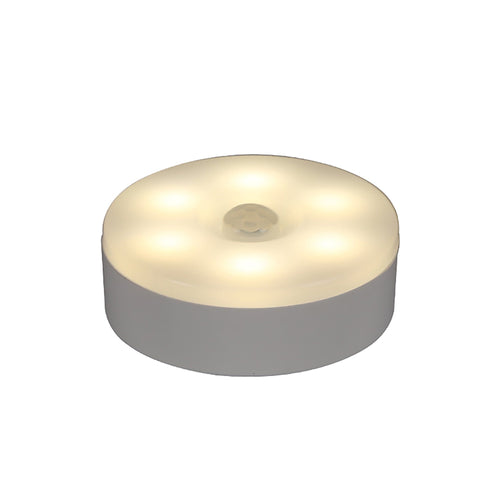
| A dark hallway or stair when you get home | Motion Sensor Night Lights, a 3-pack that sticks on with tape | $24.99, plus 9 AAA batteries (not included) | It is a light, not a sensor that alerts anyone, and it cannot tell you from the cat |
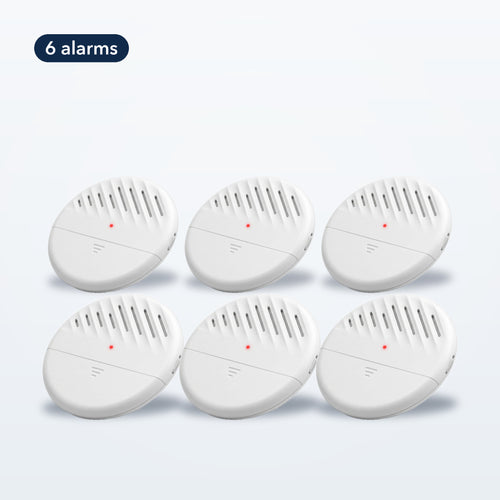
| Back and side glass nobody sees from the street | A TremShield Vibration Alarm on each pane and the back door | $29.99 each, $16.50 each bought as six | It does not hold a window shut and it does not call or text anyone |
The lighting evidence is in do motion sensor lights deter burglars. For a front window that flickers like a TV from dusk, there is the TV simulator ($29.99); the research on it is in our article on fake TV lights.
The clocks-go-back weekend, 30 minutes
- Put one living-room lamp on a timer that switches on before sunset
- At 5:30 p.m., walk around the outside and list every pane the street cannot see
- Lock each window on that list, and fix any latch that will not catch
- Move ladders, bins and garden furniture away from ground-floor windows
- Check the back door and side gate after dark: fix the bulb or add a motion light
- Lock the back door just before the front door, every time you go out
- Count the dark-side panes and the back door: that is how many alarms you need
What the alarm does when nobody is home
The alarm sticks to the glass, picks up the shake of a blow or a pry, and answers with a 125 dB siren while the person is still on the outside of the pane. With no Wi-Fi and no app, it will not text you or call anyone. The noise is its whole job: the person at the window knows the attempt is now loud, and so does anyone within earshot. What a neighbor does next is not up to the alarm; what happens when a window alarm goes off walks through that honestly.
Why it still counts: in a UNC Charlotte survey of 422 incarcerated burglars, about 83% said they would try to find out whether a home had an alarm, and 60% said an alarm would send them looking for a different target. The alarm industry funded that study, and the answers are what burglars say they do.
What not to buy for this
- A monitored contract signed because of the clock change. The national numbers did not rise in winter in 2024 or 2025, and the gap you are fixing is one hour a day. A monthly plan answers a different question: whether you want someone called whenever you are out, all year.
- A camera as the only answer for the back. With phone alerts you may watch live, but from a desk your main move is calling the police. It records what happens at the glass; it does not make the glass any harder to get through.
Trips of several days are a different job (home security while on vacation), and so is the routine once you are home (how to feel safe at home at night).
Count the dark side, then pick the pack
Count the dark-side panes and glass doors from your walk, plus the back door. One: $29.99. Two or three: $24.99 an alarm. Four: $19.99 an alarm. Five or more: the 6-pack at $99, because five at $19.99 already come to $99.95. Six for $99 is $16.50 per alarm, saving $80.94 against six singles, with two free no-drill window locks for the windows you open most and the Home Security Guide, a PDF we send by email. Shipping is free to the US, Canada, the UK, Australia and New Zealand, with 30-day returns. Most orders arrive 1 to 3 weeks after you order, so do the free steps this weekend and fit the alarms when they land.
Dark Evenings and Break-Ins: Common Questions
Do burglaries go up in winter?
Not in recent FBI data. In US burglaries reported to police, July was the busiest month in 2024 and 2025, and it was only about 10 to 12% above the quietest month once months are scaled to 30 days. In 2023, December was the busiest.
Does daylight saving time affect crime?
For robbery, one study says yes: reported robberies rose 7% when daylight saving time ended, mostly around sunset, in US police data from 2005 to 2008. It measured robbery, a crime against a person, not home burglary.
Should I leave a light on when I go out on dark evenings?
A lamp on a timer that switches on before sunset gives an empty house a lit window for the hour it would otherwise sit dark. It changes how the house looks, not how hard it is to get in, so lock up before you leave too.
Will an outside motion light annoy the neighbors?
Set to motion-only, it stays off until something moves in range, rather than shining all night. Aim the heads down across your own path or gate, not at the street or a neighbor's window.
Will a vibration alarm go off when a truck passes or the wind rattles the window?
Not once the dial is set. Each TremShield alarm has a sensitivity dial: tap the glass to test it, then turn it down a step until passing traffic and wind no longer trip it but a knock on the glass does. Every alarm in the 6-pack ($99, or $16.50 each) has its own dial.
Back to all articles