In this article
Yes, a well-lined one does. A Faraday box for car keys blocks the fob when it is lined with signal-blocking material, the fob is all the way inside and the lid is shut. Left open or half closed, it does nothing, and it never covers a spare left in a drawer. Not every box or pouch is built well, so don't take anyone's word for yours: there's a one-minute test for your own car in the middle of this page.
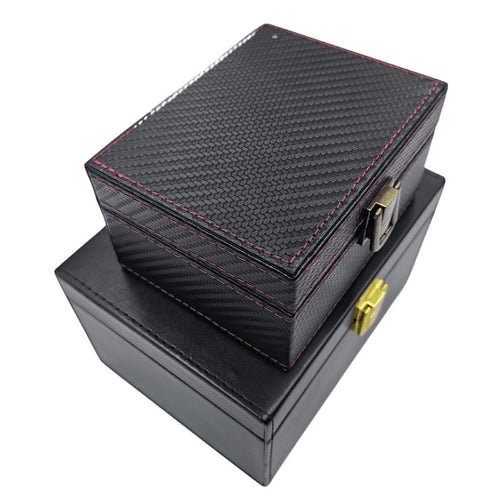
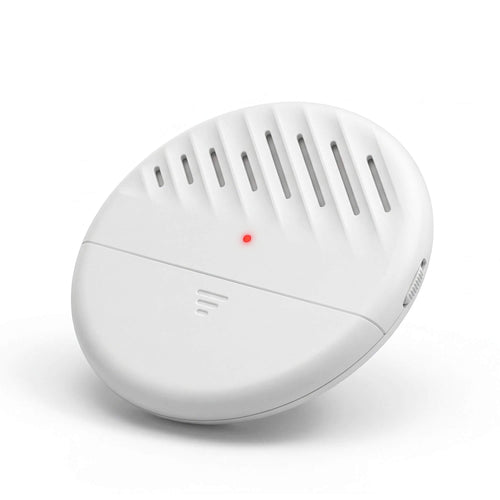
We sell a Faraday Key Box ($24.99, two lined pouches included), and it gets the same test. We also make the TremShield Vibration Alarm, for the door and window glass near wherever your keys live. That's a separate job, and it comes after the test.
What a relay attack is, in plain words
A keyless car and its fob have a short conversation every time you walk up. The car calls, the fob answers, the doors unlock. It only works at close range. Relay gear stretches that range: one piece picks up the fob's signal from outside the house, through the wall, and passes it to the car, which opens for a key that is still in your hallway. Nothing gets broken.
The Police Service of Northern Ireland, a UK police force, describes it as a device used to fool the car into thinking the key is close by, which both unlocks the car and starts it. Their page adds that thieves only need to be within a few meters of your car key to capture the signal, even if it's inside your home. In the US, the head of the National Insurance Crime Bureau named relay attacks on key fobs among the ways criminals get past modern vehicle security, in an April 2024 release.
A relay is not a jammer. A jammer drowns radio out, the trick used on Wi-Fi cameras (see what still works against jammers). A relay carries your fob's signal further than it was built to go. The fix is to stop the fob answering.
Is your car exposed? The 10-second handle check
Relay theft is a problem for cars with passive keyless entry, the kind that opens with the fob still in a pocket or bag. The PSNI page draws the line simply: if you have to push a button on your car key to open your car, you don't have keyless entry.
Check yours now. Lock the car, keep the fob in your pocket, and touch or pull the driver's door handle. If it unlocks without a button press, your car uses passive keyless entry and the rest of this page applies. If nothing happens until you press the fob, you don't have keyless entry by that definition. If your car still starts with a push button while the fob stays in your pocket, ask your dealer how keyless start works on your model before you decide you're clear.
Then check two free settings. Some fobs can be switched off or put to sleep, and some cars let you turn keyless entry off. Whether yours can, and how, is in the owner's manual or a question for the dealer. Where it's possible, the PSNI advice is to turn off the wireless signal on your fob when it's not being used.
Faraday box for car keys, pouch, tin or microwave: what works
Lichfield District Council, a local council in England, describes a Faraday pouch or box as lined with a special metallic material that blocks radio signals. That's why home hacks are hit and miss: whether a cookie tin, a wrap of foil or the microwave blocks your fob depends on that tin, that foil and that fob. Your car can tell you in a minute.
Pouches carry one more catch. A 2019 UK news report in the Express & Star said the mesh in cheaper pouches can be damaged by constantly taking the keys in and out, and cited UK security firm Thatcham Research: some pouches have two pockets, and only one blocks signals. A hard box's lid has to shut all the way and the fob can't sit in the seam, so it gets the same test.
| Option | Works when | Fails when | Daily habit cost |
|---|---|---|---|
| Lined Faraday box | It passes the car test with the fob fully inside and the lid shut | The lid is left up, the fob is caught in the seam, or another fob lives somewhere else | Keys in, lid down, in one fixed spot |
| Lined pouch | It passes the car test with the fob in a pocket that blocks and the pouch closed | It's left open, the fob goes in a pocket that doesn't block, or the lining is damaged | Close it every time it goes in a pocket or bag |
| Metal tin | Your car test passes with that tin and that fob | The car test fails, which only testing shows | Same as a box, if it passes |
| Foil wrap | It passes the car test after every rewrap | The car test fails after a rewrap; foil tears with handling | Rewrap and retest whenever it's been handled |
| Microwave | It passes the car test | Someone switches it on with the keys inside, or the car test fails | Everyone in the house has to know where the keys are |
The one-minute test, with a control step first
The usual advice is "put the fob in the pouch and walk up to the car." That's half a test. If the car stays locked, it may be because the box works, or because you weren't close enough for the car to notice the fob anyway. So prove the car can hear the fob first, then take that away.
Test a Faraday box or pouch on your own car
- Lock the car
- Control: fob loose in your pocket, touch the driver's door handle. The car must unlock. If it doesn't, this spot can't test anything; find out how your car unlocks first
- Lock it again. Put the fob all the way inside the box, nothing caught in the seam, and press the lid fully shut
- Hold the closed box right next to the same handle and touch the handle. The car should stay locked: no lights, no click
- Repeat with every fob in the house, the spare included, one at a time
- Repeat with each pouch, and with each pocket of a pouch on its own
- Car unlocked? Reseat the fob, shut the lid properly and try again
- Unlocked twice: that box or pocket doesn't block that fob. Don't rely on it
- Put a note with today's date in the box and test again every few months, since you can't see the lining
Standing right beside the car is the check both the council page and the 2019 report describe. Don't swap in a phone: calling a phone sealed in a pouch tells you about the phone, and a phone and a fob are different radios.
What else lowers the risk
- Keep the keys away from doors and windows if you can. The PSNI advice is to keep the key, and the spare, away from the car, doors and windows when you're home, and it warns that keys get fished through a letterbox (a mail slot) with a stick and hook. The box blocks the signal wherever it sits, so if the keys stay by the front door, the lid still handles the relay. Deeper inside also keeps them out of a hook's reach.
- Park in the garage overnight if you have one, and close to the house if you don't, both on the PSNI list. (Securing the garage door is its own job.)
- A steering wheel lock or a car alarm, also on that list. Neither blocks a signal, but a steering lock is an obstacle a thief can see through the windshield.
- No spare in the car. The NICB's own tip is not to leave your keys in your vehicle. A spare in the glove box counts.
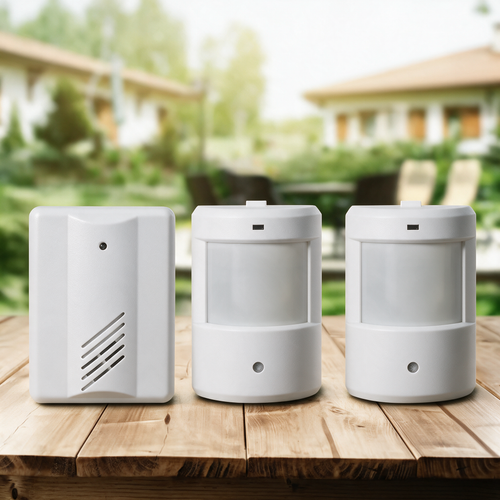
- Know when someone is on the drive. Relay gear has to be brought up close to your house and to the car. The Wireless Driveway Alarm ($34.99) has two weather-resistant sensors that pick up movement up to about 24 feet away and sound a chime indoors, as far as about 400 feet from the sensor in a clear line, with no Wi-Fi or app. It can't detect radio or stop a theft; it tells you someone is on your drive.
What a Faraday box does not do
It blocks the fob's signal while the fob is inside with the lid shut. Nothing more:
- It isn't a lock. If someone breaks a car window, the box does nothing about it.
- The fob in your pocket at the store is on the air. That's what a pouch is for.
- A spare in a drawer is exposed until it gets a box or pouch of its own.
- It doesn't keep keys from being taken. Keys fished through a mail slot still open the car the normal way.
If the keys stay by the door
A box on the hall table still sits a few feet from glass. The TremShield Vibration Alarm sticks to that glass, or to a solid door panel, and sounds a 125 dB siren if someone strikes, pries or rattles it. It holds nothing shut; it makes the attempt loud, with no Wi-Fi, app or subscription.
Car key Faraday questions, answered short
Do Faraday boxes really work for car keys?
Yes, when the box is well lined with signal-blocking material, the fob is fully inside and the lid is shut. Not every one is built well. Prove it on your own car: fob in the closed box, box held by the door handle, and the car should stay locked.
Can I just use a metal tin or the microwave?
Maybe. Whether a tin, foil or a microwave blocks your fob depends on that container and that fob, so test it the same way you would test a box. A microwave has a second problem: someone may switch it on with the keys inside.
Do Faraday pouches wear out?
They can. A 2019 UK news report said the mesh in cheaper pouches can be damaged by taking keys in and out constantly. You can't see the lining, so test each pouch on your car again every few months, and test each pocket on its own.
Does a Faraday box stop my car being stolen?
No. It stops one method: the fob's signal being relayed to the car while the keys sit in the closed box. It isn't a lock, and it can't protect a fob that is outside the box.
Do I need one if my car needs a button press to unlock?
By UK police advice, if you have to push a button on your key to open your car, you don't have keyless entry, the feature relay theft goes after. But if your car starts with a push button while the fob stays in your pocket, ask your dealer how its keyless start works before you skip one.
Test what you own first, then buy what's missing
Run the control test tonight with whatever you already own. If nothing you have passes, the TremShield Faraday Key Box is $24.99 with two lined pouches, one for the spare and one for the fob that leaves the house. No battery, nothing to pair, and 30 days to send it back if it fails your test.
For the door and window glass, the 6-pack at $99 works out to $16.50 per alarm, against $29.99 for a single, and saves $80.94 against six singles. Two free no-drill window locks come with it, and the Home Security Guide arrives as a PDF by email. Free shipping to the US, Canada, the UK, Australia and New Zealand, with 30-day returns.
Back to all articles