In this article
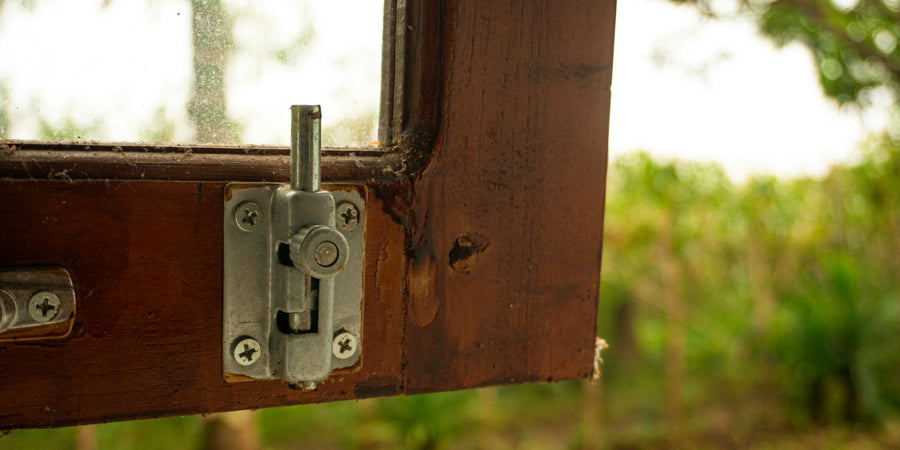
The crescent lever on your window was fitted to stop it rattling in the wind. It is a catch. Nothing about it was built to be a lock.
Putting a real lock on is cheap and quick, but there is no single part called "the window lock." What fits depends on which way your window travels: up and down, sideways in a track, or out on hinges.
Short version: a double-hung or sliding window takes a $14.99 clamp-on lock and no drilling. A casement or tilt-turn takes a $19.99 screw-on sash jammer. A window you sleep behind takes a lock that releases by hand, never a key.
Every lock here holds a frame. None covers the glass, the one part of a window with no lock on it. That layer is the TremShield Vibration Alarm: $29.99, pressed flat onto the glass, answering a pry or a strike with a 125dB siren. It comes last.
First, name your window. It takes a minute
Walk over and open it. A window that slides gives a clamp something to grip. A window that swings gives it nothing, so its lock has to be an arm screwed to the frame.
- Double-hung. Two panels stacked in one frame, the bottom sliding up, crescent lever where they meet. If only the bottom moves it is single-hung; the same locks fit.
- Horizontal slider. The panel runs sideways in a track, like a shrunken patio door, with a catch on the meeting rail.
- Casement or crank. A handle you flip or a crank you wind, and the sash swings out like a little door. An awning window is hinged too, along its top edge.
- Tilt-turn. One handle, two jobs: turn it one way and the sash swings inward, the other and the top tips in for air.
Double-hung windows: the clamp, or the clamp with a key on it
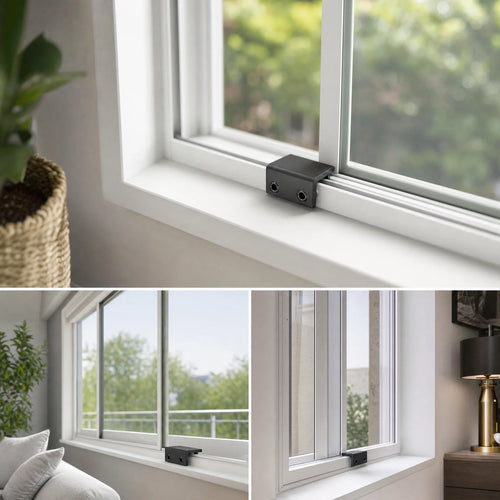
Start with the cheap one, which on most windows is the right one. The Window Sash Lock is $14.99 for two, each a compact clamp with a padded thumb-screw. Fit it to the frame just over the lower sash, turn the screw until it bites, and the sash cannot rise past it. Set it higher and the window vents to there and no further, a gap nobody outside can widen. No tools, no holes, and a couple of turns takes it back off.
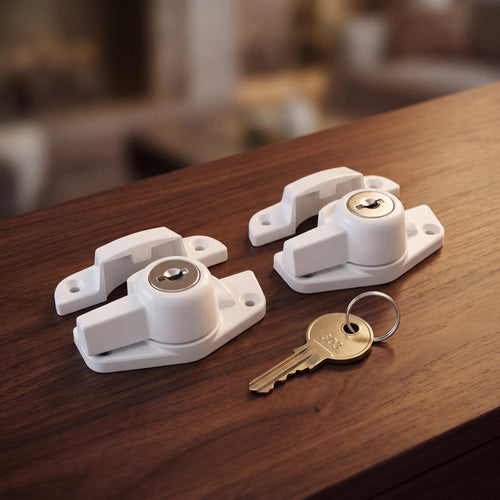
Now the five-dollar question. Our Keyed Window Lock is $19.99 for two, keyed alike, one key for both. The extra buys the removal of a thumb-turn. A catch a finger can flip can be flipped by a finger that arrives through a broken corner of glass or a cut screen. A keyed lock leaves nothing to turn.
It screws on. Hold the lock and its keeper against the rail where the sashes overlap, mark, pilot, and drive the supplied screws. Five minutes a window. White, low-profile, no batteries. It needs that overlapping rail, which most double-hungs and sliders have.
Clamp upstairs, in rentals, and in every sleeping room. Key on the ground floor within reach of a door or walkway, and on the basement or garage window nobody would climb out of.
If your latch is broken rather than weak, the guide to a window that won't lock runs through that fix by fix.
Sliding windows: stop the lift, not only the slide
A slider opens two ways and the factory catch knows about one. The other is upward: on plenty of aluminum sliders the panel lifts clear of its track from outside, catch still latched. A broomstick in the channel has the same blind spot.
The Sliding Window Lock ($14.99) is made for the track. It clamps to the track so the panel cannot slide past it. It does not stop a lift on its own: two or three short screws set into the top channel, heads just clearing the panel, do that for cents. Wipe the track, set the lock where the panel should stop, tighten the thumb-screw; there is an adhesive base too. Ten seconds. Shut, or at a vent gap you choose. Keep using the factory catch as well.
It is sized for windows; a full-size patio slider wants a bar filling the channel, which our sliding glass door guide covers.
Casement, crank and tilt-turn: the sash jammer, and yes, it takes screws
Hinged windows get skipped because window security mostly assumes two panels passing each other. A casement has no track and no overlapping rails, so a clamp has nothing to bite on, and everything holding it shut sits inside the handle.
The Sash Jammer ($19.99 for two, keyed) is the answer. A zinc-alloy arm pivots on a base plate, and the plate is fixed to the window frame with two screws, supplied in the pack. Swing the arm across and it rests over the sash edge, which now has nowhere to travel. It works independently of the handle, so forcing the latch or turning it from outside does not open the window. A small key locks the arm down.
This one is not a no-drill lock, and neither is the keyed lock or the restrictor. What it needs is a flat, solid run of frame beside the sash for its plate, so look at yours before you order. A jammer also has one position, shut: it will not hold a window open for air. Two per pack: two hinged windows, or French doors with an arm on each leaf.
The window you want left vented: a cable that opens, then stops
A clamp already holds a vent gap on a double-hung or a slider, so skip this if that is your window. The Window Restrictor Lock ($19.99) is for windows a clamp cannot fit, and for rooms where the gap should not be negotiable.
A short steel cable runs between two brackets, one on the frame, one on the moving part of the window. It opens a few inches, about four, then stops. A key releases it when you want the window wide for cleaning. Five minutes with a screwdriver, and it suits most opening windows.
It is not a child-safety device: it is not a tested fall-prevention product and only its key releases it, so a child's room needs a tested window opening control device instead. If it is your own bedroom you want airing, we wrote a guide to sleeping with the window open.
When a key is the wrong answer
A bedroom window is often the second way out of that room. Put a keyed lock or a jammer on it and the exit depends on a key being found in the dark by someone who just woke up. No hardware on the frame makes up for that.
- Sleeping rooms get hand-released locks. The sash clamp and the track clamp both loosen with a thumb-screw. No key, no tool, works by feel.
- A restrictor stays off bedroom windows. Its cable releases only with a key, so it belongs on a window nobody sleeps behind.
- Keyed locks and jammers go where nobody would climb out: basement and garage windows, the bathroom window over the sink, anything behind a fence.
Escape windows fall under fire code, and the rules differ where you live, so ask your building department first. Basements carry a sharper version, and the basement window guide works through it.
Which lock for which window
| Your window | The lock that fits | Price | Screws? | Opens for air? |
|---|---|---|---|---|
| Double-hung or single-hung | Window Sash Lock, a 2-pack of thumb-screw clamps | $14.99 for two | No, it tightens by hand, no holes | Yes, shut or at a vent gap you set |
| Double-hung or slider a hand could reach | Keyed Window Lock, a white 2-pack keyed alike, never on a window anyone might climb out of | $19.99 for two | Yes, into the frame, five minutes each | No, it locks shut and opens by key |
| Horizontal slider | Sliding Window Lock, a track clamp that blocks the slide; a lift needs short screws in the upper channel | $14.99 | No, thumb-screw or adhesive base | Yes, shut or at a vent gap you set |
| Casement, crank-out, tilt-turn or a French door leaf | Sash Jammer, a keyed 2-pack, arm swings over the sash edge from a plate on the frame | $19.99 for two | Yes, two per lock, supplied | No, one position only, holding the sash shut |
| A window you want left open a few inches | Window Restrictor Lock, a key-released steel cable | $19.99 | Yes, a bracket on frame and sash | Yes, about four inches; never on a window anyone sleeps behind |
| A bedroom escape window, or a rental where drilling is out | Window Sash Lock, or Sliding Window Lock on a slider, hand-released | $14.99 either way | No, both clamp on and lift off clean | Yes, both hold a vent gap |
The layer no lock provides
Everything above holds a frame. None of it reaches the pane, and a pane does not have to be unlocked. It has to be hit. That is the reason a lock is half a window.
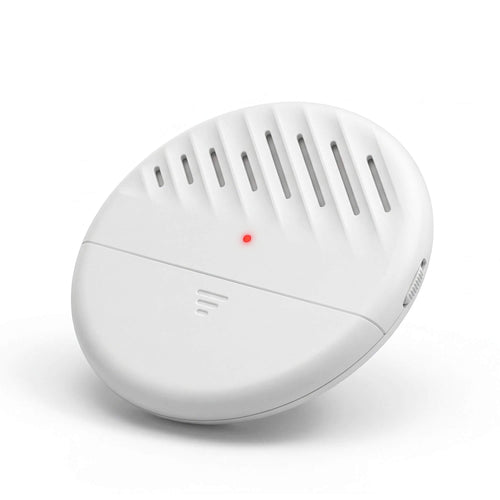
The TremShield Vibration Alarm is $29.99 and covers the half hardware cannot. Wipe the glass, pull the tab off the adhesive pad, press it on, and the window is done in about a minute. It reads vibration in the glass and fires a 125dB siren at the instant of contact, while the pane is still whole. A sensitivity dial sets how much force it takes to trigger, so a truck rolling past leaves it quiet. No Wi-Fi, no app, nothing billed monthly.
It only knows the pane it is attached to, so plan on one per window you care about. And a siren is not a lock: it will not hold a sash shut, which is why an alarm sits beside a clamp rather than replacing one.
Window lock fit questions
Does a sliding window lock stop the panel being lifted out?
No. It clamps to the track and stops the panel sliding, fully shut or at a gap you choose. A panel with clearance above it can still be lifted out, and two or three short screws set into the top channel stop that for cents.
How many sash locks does a double-hung window need?
One per window is enough to pin the sash. The pack holds two, so one pack does two windows, and a wide opening can take a second.
Can I fit a window restrictor on a child's bedroom window?
No. The restrictor limits a window to about four inches, but it is not a tested child-safety or fall-prevention device, and it releases only with a key. A child's room needs a tested window opening control device that releases from inside without a key.
Do any window locks come with the alarm 6-pack?
Yes. Two no-drill window locks come free with the six-pack of alarms, which is $99, or $16.50 an alarm. One order pins two windows and puts a siren on six panes.
One lock per opening tonight, one alarm per pane when you are ready
Walk the house and write down what each window is. Clamps for sliders and double-hungs, jammers for hinges, hand-release where people sleep. Fit them this week. That is the frames done, and the cheaper half.
Then the glass. One alarm is $29.99. The six-pack is $99, which is $16.50 per alarm and $80.94 off the price of six singles. Two free no-drill window locks ride along in that order, so two more windows get pinned, and the Home Security Guide arrives by email as a PDF. Free tracked shipping to the US, Canada, the UK, Australia and New Zealand, with 30-day returns. Six panes covered, two more windows locked, out of one box.
Back to all articles