In this article
The best place to hide a spare key is not outside at all. Leave it with someone you trust who lives close, or lock it in a combination key box mounted where you can describe it on the phone but nobody spots it walking past. Any spot by the door that feels clever is on a list most people could guess.
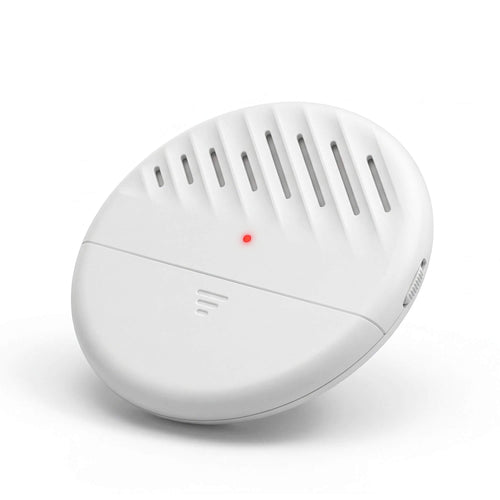
A spare key decides who gets in through the door. It does nothing for the glass, which never needed a key. For that we make the TremShield Vibration Alarm, a stick-on unit that sounds 125 dB when someone strikes or pries the pane.
Why the usual places to hide a spare key fail
Under the mat. In the planter by the step. On the ledge over the door. Inside the porch light, the mailbox or the grill. Each one was picked because it's within arm's reach of the door, so you can grab the key without thinking. That's also why anyone who has ever been locked out would check those same spots first.
Police crime-prevention pages say the same. The King County Sheriff's Office tells residents to keep spare keys with a trusted neighbor or a nearby shopkeeper, not under a doormat or planter, on a ledge or in the mailbox. A Seattle Police crime prevention bulletin says not to hide one near the front door, because burglars know the hiding places.
The fake rock gets sold as the smart option. It only works if it sits among real rocks and looks like them. Set alone by the step, the one rock in a bed of mulch a few feet from the door, it's easy to spot.
Every place to hide a key outside shares one more flaw. If someone watched you use it once, or took the key, had it copied and put it back, nothing would look different. You'd never know. The same predictable thinking runs inside the house too, which is why where burglars look first is worth reading before you stash anything indoors.
Ranked: better ways to leave a key for someone
Best first.
| Option | Good for | Weak spot | Renter-OK? |
|---|---|---|---|
| 1. A trusted neighbor or relative nearby | Lockouts and a key you rarely need | They have to be home and pick up. A key you hand over is a copy you can't easily take back. | Yes |
| 2. A combination key box screwed to the wall | Regular helpers: a dog walker, an aide, a kid after school | A box someone can see tells them a key is inside. It's an access device, not a safe. The code is only as private as the people who know it. | Only with the landlord's yes, since it screws in |
| 3. A portable shackle lockbox | Short stays, and renters who can't drill | It's only as hidden, and as hard to remove, as the thing it hangs on. On a front door knob it's in plain view. | Where the lease or landlord allows it |
| 4. A keypad deadbolt | Owners who want no key to hide at all | It replaces your lock, so it's a bigger job than a box | Only with the landlord's yes |
| 5. A key in the car | Not recommended | A Seattle Police bulletin warns that house keys found in a car parked at a home most likely go to that home | Not recommended |
| 6. A hiding spot outside | Not recommended | It's on the list anyone would check, and you can't tell if it's been found | No drilling, but no safer |
For a parent who lives alone, a key box often matters most: if something goes wrong inside, family or a neighbor can get in through the door instead of a window. Home security for elderly parents covers the rest of that setup.
Where to put a key box, and how to set the code
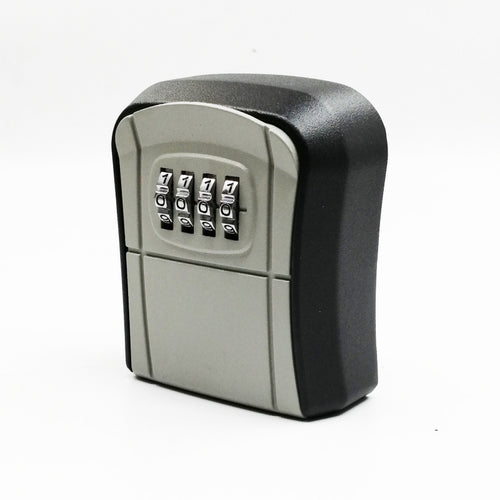
Ours is the Wall-Mount Key Lock Box ($29.99): a die-cast alloy body, four push buttons, a code you set and can reset whenever you like, and a cover that slides down over the buttons. No battery, no app. It holds several ordinary door keys or a key on a fob. It screws to a wall or a solid door frame with the anchors supplied. Placement matters most, so run two tests before you drill.
- The street test. Skip the spot right beside the front door: it's the easiest to describe and the first place a glance lands. Try around the corner, beside a side door, or low on the wall behind a downspout. Then walk to the sidewalk and look back. If you can see the box, move it.
- The phone test. Say where it is in one sentence: "Left side of the house, behind the downspout, knee height." If it takes a map, it's too hidden for the person you're helping.
- Mount it flat and tight. Masonry, siding or a solid door frame all work if the box sits flush. A box with a gap behind it is easier to lever off the wall.
- Code it indoors first. Set the four digits with the box in your hand, then open and close it a few times before it goes up.
For the code, skip the house number, a birth year, and anything someone could read off the mailbox. Change it when a job ends: the contractor finishes, the dog walker moves on, a helper no longer needs in. That's the real advantage over a key. You can take four digits back. You can't take back a copy.
Know its limits before you count on it. A key box is an access device, not a safe, so it holds keys, not valuables. It's built for outdoor mounting and the cover keeps rain and grit off the buttons, but it has no weather rating. And it's a fixture: it stays with the wall when you move. Leaving for a trip? The sitter's key goes in the box, and home security while on vacation has the rest of the list.
The spare key audit, tonight
If you can't list every copy of your house key from memory, start here. By the end you'll know who can open your door.
Spare key audit
- Count every copy of each outside door key, including ones on other people's rings
- Write down who holds each copy, and why
- Ask for back any copy nobody needs anymore
- Walk around the house and remove any key hidden outside
- Pick one way in for helpers: a trusted person or the key box
- Set a code that isn't the house number or a birth year
- Text the helper a one-sentence description of where the box is
- Have them open it once while you're standing there
- Put a reminder on your calendar to change the code when the job ends
Renters: where to keep a spare key without drilling
A box that screws to the wall needs your landlord's permission first. Ask in writing, and if they say yes, expect it to stay when you leave. Without that yes, you still have good options:
- A neighbor in the building or a friend nearby.
- A portable shackle lockbox, hung on something your lease lets you use. Keep it off your own door knob in a shared hallway, where everyone walks past it.
- Nothing under the mat, on the door ledge or in the hallway.
In a rental, other people may already hold a working key. Who else has a key to your apartment covers the landlord's copies, past tenants, and what to do about a lock you can't change.
If a key has been hidden outside for years
You can't know who saw it, or who borrowed it for an afternoon. So treat it as a key you've lost, even though it's in your hand.
If you own the home, the clean fix is to have a locksmith rekey the lock. Rekeying changes the pins inside, so every old key stops working while the hardware stays on the door. Then hand out new copies to the people on your audit list, and nobody else. If you rent, ask the landlord to rekey, in writing. Just moved in? The same logic is why the first-week security checklist starts with the locks.
Don't move the old key to a new hiding spot. Give it to a person or put it in the box.
Windows don't need a key
A key box makes the door easy for the right person. But a door is only one way in. The glass in a ground-floor window or a patio door has no key to find, and the box does nothing there.
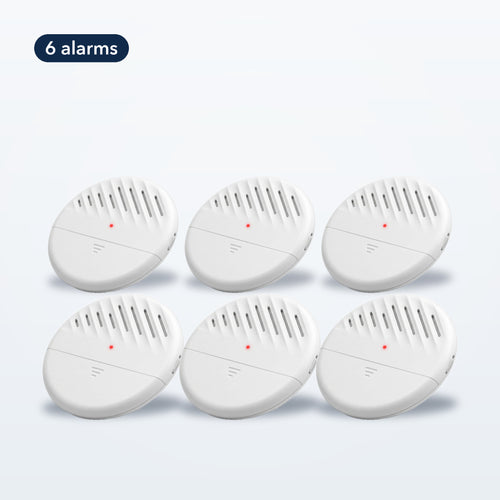
That job belongs to the TremShield Vibration Alarm. It sticks to the glass with its own adhesive, and there's nothing to wire or pair. When someone strikes or pries that pane, it sounds 125 dB right then, while the glass is still in one piece. Its sensitivity dial turns down for street traffic. It runs without Wi-Fi or an app, and you pay for it once. The limits: one alarm covers one window or glass door, it's a siren rather than a lock, and because it runs offline it won't text you at work.
Before you hide that key: quick answers
Is a fake rock a good place to hide a key?
Usually not. A fake rock only works if it sits among real rocks and looks like them, and one alone near the door is easy to spot. And like any outdoor spot, it can't tell you if the key was found or copied. A trusted neighbor or a combination key box is a safer choice.
Where should I put a key lock box?
Somewhere you can describe in one sentence on the phone but that can't be seen from the street: around the corner of the house, beside a side door, or low on a wall behind a downspout. Mount it flat and tight so there's no gap to pry at, and skip the spot right beside the front door.
Is a key lock box safe?
It's an access device, not a safe: it lets the right person in with a code you can change, and it isn't a place for valuables. It's built for outdoor mounting but has no weather rating. Placement matters most: mount it flush and out of casual view, choose a code that isn't your house number or a birth year, and change it when someone no longer needs access.
Should I leave a spare key with a neighbor?
Yes, if they live close and you trust them. Police crime-prevention advice, including the King County Sheriff's Office in Washington, recommends it over hiding a key. The catch is that they have to be home when you need the key, so it suits a spare you rarely use. Keep a list of everyone who holds a copy.
Where can a renter hide a spare key?
Not outside the door. Leave it with someone nearby you trust, or use a portable lockbox where your lease allows one. A key box that screws to the wall needs your landlord's permission first.
One way in for the right people, six alarms for the rest
Tonight, pull any key hidden outside, count your copies, and pick one way in for the people who help you. If that's a box, the Wall-Mount Key Lock Box is $29.99.
Then the windows. One alarm on its own costs $29.99. Six come as a 6-pack for $99: $16.50 per alarm, which saves $80.94 against buying six one by one, plus two free no-drill window locks and the Home Security Guide, sent to you by email. Free shipping to the US, Canada, the UK, Australia and New Zealand, with 30-day returns.
Back to all articles