In this article
Here's a slightly uncomfortable game. You have to find the valuables in a stranger's house, fast, and your only tool is instinct. Where do you go? You already know. Everyone does, and that shared knowing is exactly the problem this article fixes.
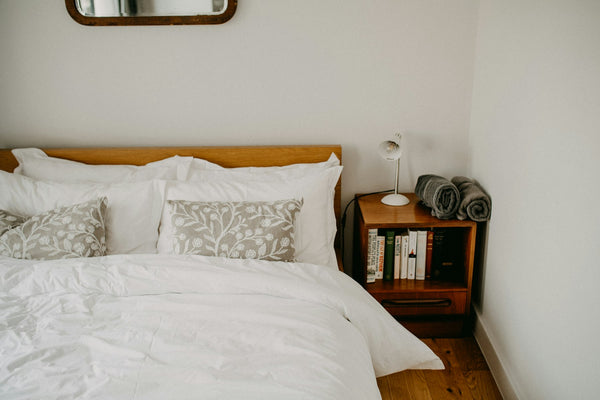
Where do burglars look first? The primary bedroom, then the obvious storage inside it: dresser drawers, the nightstand, under the mattress, the closet shelf. When KGW, a Portland TV station, surveyed 86 convicted burglars in 2017, most named the primary bedroom as stop one. Your instincts almost certainly agree.
The useful part of that answer: a predictable search is a beatable search. Below, five quick rounds test your gut against named sources, and then a three-tier placement plan (decoy, anchor, paper) makes the predictable route come up nearly empty. No paranoia required. Most of it is one afternoon.
Play five rounds: guess like a burglar
Each card asks a question. Tap the answer your gut gives, and the card checks it against its source: the Portland survey, federal victimization data, or a university study of incarcerated burglars. Prefer to just read? Tapping any option opens that card's full explanation. Your score waits at the end.
Round 1 of 5
Which room does a burglar search first?
Show the answer
The primary bedroom.
In 2017, KGW, a Portland TV station, put questions to 86 convicted burglars serving time in Oregon prisons. Most said the primary bedroom was their first stop, because that's where adults keep their best things. It was an informal survey of volunteers, not a scientific study, but nobody needs a lab for this one: your own instincts just confirmed it.
Hide smarter: treat the primary bedroom as a stage, not a vault. By the end of this article the only thing in that room worth taking will be the decoy.
Round 2 of 5
Inside that bedroom, which spot gets checked?
Show the answer
All three. Whatever you tapped, you scored.
The round was rigged, which is the lesson. A rushed search isn't creative. It goes straight at the furniture that stores things: drawers, nightstand, mattress, the shelf and its boxes. No federal dataset ranks hiding spots, and none is needed, because every spot that ever felt clever has been printed in hiding-spot lists for decades. A published secret isn't a secret.
Hide smarter: one test settles any spot. Could it appear on a list titled sneaky places to hide cash? Then it already has.
Round 3 of 5
Someone turns out to be home. How often does the burglar still leave with something?
Show the answer
Less than half the time.
First, some scale: someone is home in only about 28% of household burglaries to begin with, per the Bureau of Justice Statistics. And when it does happen, the bureau's data holds a double reassurance: 55% of those burglaries ended with nothing taken at all, and 93% of all household burglaries involved no violence of any kind. An interrupted search is usually an abandoned search.
Hide smarter: interruption can be scheduled. Lights, noise, a chime when the driveway wakes up: anything that breaks the quiet early does the work your presence would.
Round 4 of 5
Which room ranks lowest on the search list?
Show the answer
The kids' room.
Round one, mirrored. Offender accounts that put the primary bedroom at the top of the search imply its opposite at the bottom: rooms full of toys and homework, and any corner that promises slow, cluttered digging, rank low. One caveat: low isn't never. No room is guaranteed, which is why the plan below leans on locked, heavy, and boring rather than clever.
Hide smarter: use low-traffic rooms as a bonus only. A locked box in a dull corner beats a clever spot in a searched one.
Round 5 of 5
What ends a search early?
Show the answer
An alarm. Sound means leave, now.
In a University of North Carolina at Charlotte survey of 422 incarcerated burglars, about half of those who discovered an alarm mid-attempt said they'd break it off on the spot, and another 31% said they'd sometimes retreat. The entire errand depends on staying unnoticed, so the moment a house gets loud, the schedule is gone.
Hide smarter: placement quiets the loss; noise ends the search early. A battery alarm on the glass or a bedroom door is the loud partner to every quiet tier in this plan.
You guessed 0 of 5 like a burglar.
Whatever the number, it proves the useful point: hiding instincts are shared instincts, yours included. You don't answer that with paranoia. You answer it with placement, and the three-tier plan below takes one afternoon.
What the five rounds add up to
Assemble the reveals and the person behind the question stops being a shadow and becomes something more manageable: a stranger in a hurry. They check the obvious storage in the obvious room, skip whatever looks slow or dull, and leave the moment the house stops being quiet. Not a mastermind. A rushed visitor with a shopping list you've now read.
Scale matters as much as method. Per the Bureau of Justice Statistics, just 1.01% of US households experienced a burglary or trespassing in 2024, which means about 99 in 100 homes went untouched all year, and the national rate has been falling for decades. The full picture, sources included, lives in our home burglary statistics roundup. You're not preparing for something likely. You're spending one afternoon retiring something unlikely.
Two moves follow. Make the predictable search find nearly nothing, which is the placement plan below. And make quiet expensive, because round five's finding is the strongest leave-now signal offenders describe: a house that gets loud stops being worth the trouble. If you want a noise layer matched to your specific doors and glass, the alarm finder sorts it in about a minute. The TremShield six-pack covers six openings for $99, $16.50 an alarm, and comes with two free no-drill window locks.
The three-tier placement plan
Everything worth protecting sorts into three tiers: one thing meant to be found, things that should never travel, and papers that must survive worse than a break-in. The safes and secure storage collection stocks each piece named below; the plan itself costs mostly rearranging.
The decoy tier exists so a hurried search can succeed and stop. Leave a modest, real amount of cash where round two says everyone looks: an envelope in the nightstand is enough. The logic is blunt: a searcher who finds something plausible has less reason to keep digging. No guarantee attaches to that, which is why this tier holds only cash you could lose without a wince. The subtler decoy move runs the other direction: keep everyday valuables inside something too boring to open. The diversion safe is a genuine hardcover book with its pages hollowed into a foam-lined compartment. Shelved among thirty real books, it's one spine in a wall of spines, and flipping through a library is the slow, dull work a rushed search skips.

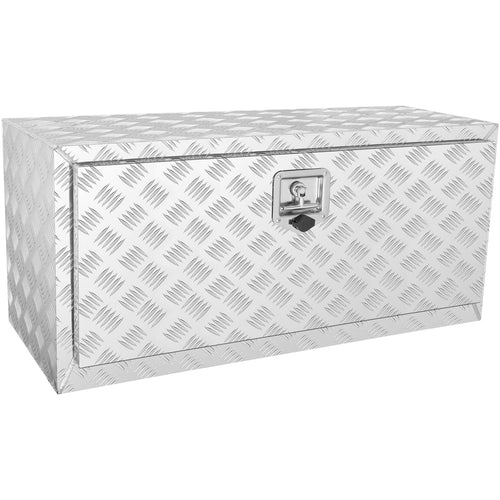
The anchor tier holds what should never leave the house: the jewelry you actually love, the camera body, the cash reserve, spare keys. The rule is locked, heavy, boring. A lockable storage trunk reads as garage clutter and is awkward to carry even empty. A locking drawer chest looks like it holds drill bits, which is the point. For small, grab-prone items, a mini combination safe comes with a steel cable that loops around a bed frame or a closet rod, turning a ten-second grab into a project with an audience. Weight and tether beat cleverness, because the search runs on a clock only the searcher can hear.
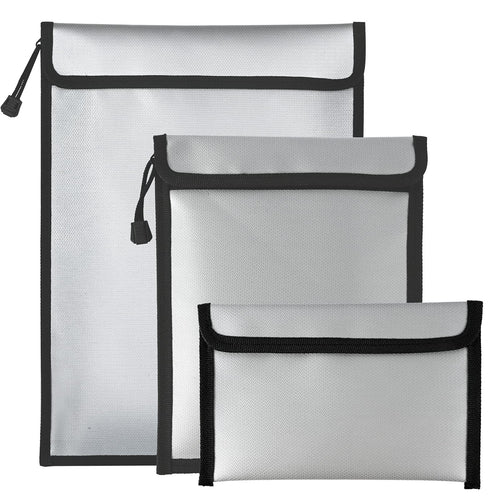
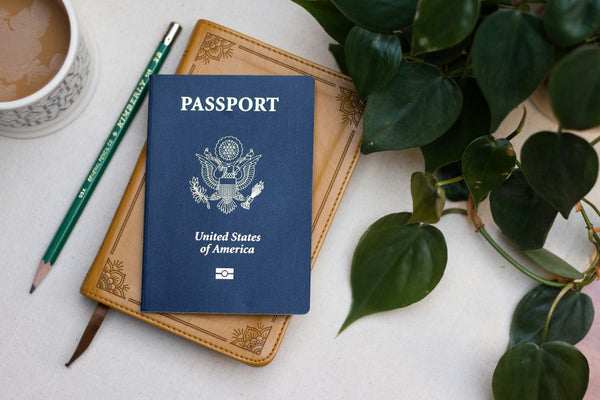
The paper tier protects what no burglar wants and you can't replace by Friday: passports, birth certificates, the deed, tax records, a USB backup. Those live in a fireproof document bag, which resists heat and water to its rating and makes no claim beyond that: it's not a burglary safe, and a thief could carry it. That's why the tiers stay split. Papers guard against fire, valuables sit anchored against theft, and the decoy upstairs closes searches early. Filling the bag is its own quick project: what goes in a fireproof document bag walks the 20-minute version.
Three hiding spots to retire tonight
Placement begins with subtraction. Empty these three before bed:
- The sock drawer. Round two already convicted it. Drawers are the first stop, and socks slow nobody down.
- The jewelry box on the dresser. It's labeled storage in the most-searched room, doing the searcher's sorting for them. Move the pieces you love to the anchor tier and let the box keep the costume jewelry.
- The freezer bag. Every hiding-spot list of the last 30 years has recommended it, which is precisely why it no longer hides anything.
That's ten minutes of emptying and one afternoon of placing. You haven't turned your home into a vault, and you don't need to. You've removed the shortcuts a hurried search depends on, which is the whole job. For a room-by-room walkthrough of where things should live instead, our guide to where to keep cash, documents and valuables at home picks up from here.
Hiding spots and storage: what readers ask next
What fits inside the book diversion safe?
Small valuables: a watch, a key or key fob, rolled bills, a passport, small jewelry or an SD card, in a foam-lined compartment. It has no lock, because its protection is that it looks like one more book on the shelf.
Does the portable combination safe need to be bolted down?
No. It comes with a steel security cable that loops around something solid, like a bed frame or a closet rod, so it can't be picked up and carried off to be opened later. It is a portable lock box against opportunist theft, not a rated anti-theft or fireproof safe.
Where should the fireproof document bag be kept?
Somewhere low and easy to reach near your way out, not the attic or a deep basement corner. The bags are rated to roughly 2000F and are water-resistant rather than waterproof, and a thief could still carry one off, so cash and jewelry belong in locked storage instead.
Where should an alarm go to protect the bedroom?
On the glass a stranger could reach, starting with the bedroom window if it is on the ground floor, then the back door glass and the patio slider. A vibration alarm sounds at 125 dB when the pane is struck or pried, before anyone is inside to start a search, and six cost $99 as a pack, $16.50 each.
Back to all articles