In this article
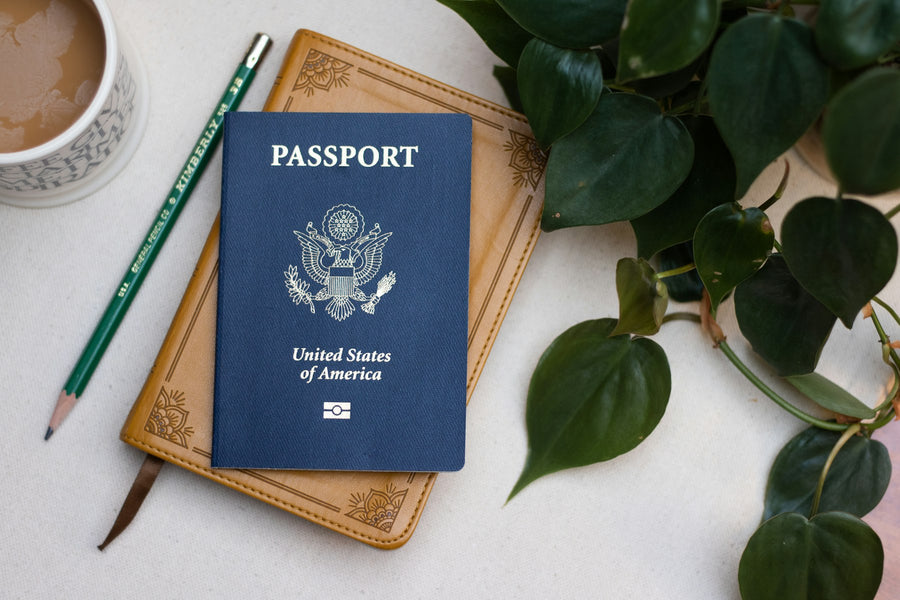
Most homes run on a filing system best described as "probably in that drawer." The passport is likely in the bedroom and the birth certificates are somewhere in the office. The deed is wherever the closing folder landed after the move. None of it feels urgent, until some night when your brain decides to run an audit.
A fireproof document bag should hold five groups: identity papers (passports, birth and marriage certificates, Social Security cards), property and legal papers (deed, vehicle titles, insurance policies, will), a financial snapshot (paper account list, latest tax return), medical basics (medication lists, insurance card copies), and a few irreplaceables (photos, small heirlooms, a USB backup).
That grouping tracks FEMA's own emergency document categories, and assembling it is one drawer-clearing session: about 20 minutes with everything spread on the kitchen table. The rest of the page is the full checklist, a simple backup rule, the one placement rule that makes the bag worth owning, and a note about what should stay out of it. Finish the session and a whole category of 3 a.m. what-ifs quietly retires.
The 20-minute checklist: five piles, one sitting
Gather first, file second. Clear a table, build the five piles in any order, and only zip the bag once everything is stacked. Working in piles is what keeps this at 20 minutes; hunting one document at a time is how the job swallows a Saturday.
The categories come from FEMA's Emergency Financial First Aid Kit, developed with Operation HOPE, which tells households to safeguard four kinds of records: identification, financial and legal documentation, medical information, and household contacts, with paper copies kept at home in "a fireproof and waterproof box or safe." The checklist below regroups those into five physical piles, splits financial from property and legal, folds the contacts page into the medical pile, and adds the one pile no agency can list for you: the irreplaceable one.
Five piles, one table. Times are estimates; the whole pass runs about 20 minutes.
1Identity4 min
- Passports for every member of the household
- Birth certificates and any adoption papers
- Social Security cards
- Marriage or divorce records
- Copies of driver's licenses, plus child ID and dental records for kids
2Property and legal4 min
- House deed or your current lease
- Vehicle titles, with copies of the registrations
- Insurance policies: home or renters, auto, life, with policy numbers and agent phone numbers
- Will, power of attorney, and healthcare directives
3Financial snapshot5 min
- A one-page account list on paper: bank, credit, retirement, each with the institution's phone number (the last four digits of an account are enough to identify it)
- Safe-deposit box details: bank branch, box number, where the key lives
- Your most recent tax return
- One recent statement for the mortgage or rent and for each utility
- A small fold of emergency cash (FEMA suggests some; the serious cash belongs in a locked box that stays home)
4Medical and contacts4 min
- Medication lists with doses, one per person
- Copies of health insurance cards
- A one-page records summary: conditions, allergies, immunizations
- A page of key phone numbers: doctors, pharmacy, family, written out on paper
5Irreplaceable3 min
- A few printed photos that exist nowhere else
- Small flat heirlooms: a letter, a recipe card, a medal
- A USB drive holding password-protected scans of everything above
Zip the bag and the job is done. Everything after this is refinement.
The 1-2-3 backup rule
One copy of anything is a single point of failure, so the kit gets three lives.
- 1. The original lives in the bag. This is the copy that sits behind the bag's heat and water rating and leaves with you if you ever have to go.
- 2. A scan lives in the cloud. While the piles are still on the table, photograph each document with your phone and drop the files into a password-protected folder. FEMA's kit specifically recommends protecting electronic copies this way. This is the slowest step, and it is allowed to become next weekend's ten minutes without breaking the system.
- 3. A copy set lives off your property. A sealed envelope at a sibling's house or in a bank safe-deposit box, both storage options FEMA's guidance endorses, means no single address holds your entire paper life.
The USB drive from pile five is the overachiever here: it rides inside the bag itself, so the grab-and-go copy and the digital copy travel together.
Where the bag lives: the grab-and-go rule
The placement rule in one sentence: the bag lives wherever you could have it in hand within 30 seconds of deciding to leave. This is an evacuation object. Its whole value is that when you walk out the door in a hurry, your documents walk out with you, which means the front closet shelf, the bedroom closet at eye height, or a cabinet along your exit path. The classic mistake is treating it like an archive: sealed in a storage tote, up in the attic, behind the holiday bins. A bag you have to excavate is a bag that stays behind.

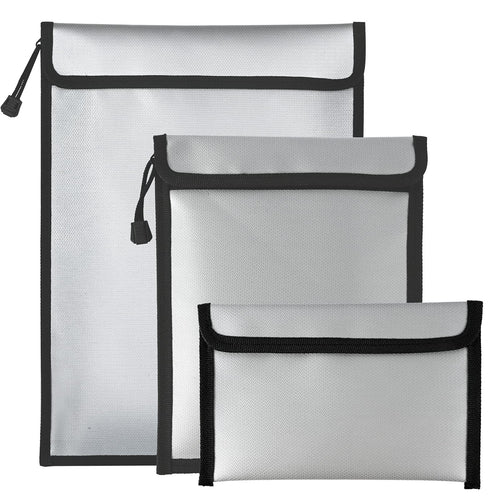
If you are still choosing the bag itself, pick one sized to hold letter paper flat, with a zipper that closes fully. The TremShield fireproof and waterproof document bag ships as a three-bag set (large sleeve, mid-size, small pouch), lies flat on a closet shelf, and grabs with one hand, which is the entire ergonomic requirement. Run the 30-second test once after you place it. If you fail your own test, move the bag, not the goalposts.
What stays out of the bag: the split strategy
A clear job description is what makes the bag trustworthy. A fire-rated bag resists heat and water per its rating, and that is all it claims. It closes with a zipper, not a lock, and it is deliberately light. It is not a burglary safe, and treating it like one puts the wrong things inside it.
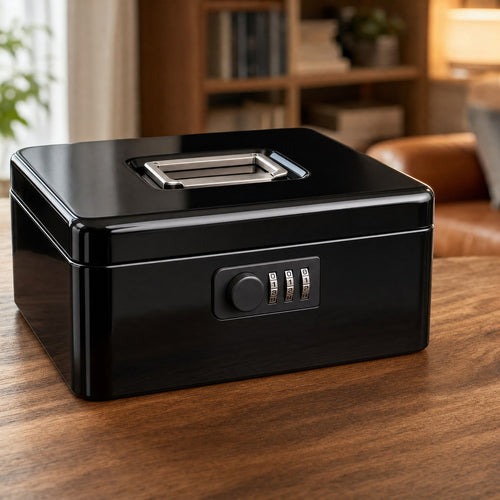
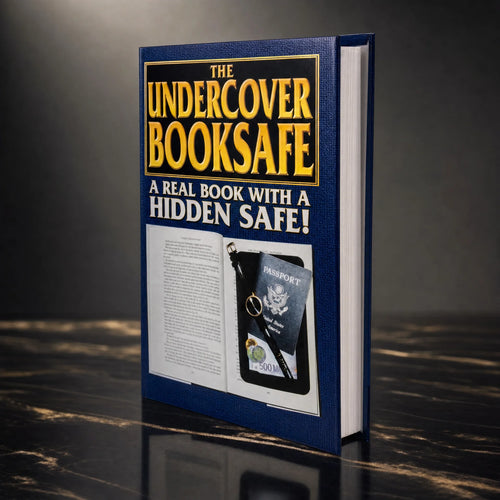
So split your valuables by destination. Paper that would leave with you goes in the bag. Things worth stealing stay home, behind a lock: a locking cash box for cash and spare cards, a mini combination safe for jewelry and small valuables, or a lockable storage trunk for anything bulkier. For everyday walking-around cash, a diversion safe built into an ordinary hardcover does quiet work on a bookshelf.
Placement matters as much as hardware. When KGW, a Portland TV station, asked 86 convicted burglars how they worked, most said the primary bedroom was the first room they searched, which is a strong argument for anchoring the locked half of this strategy somewhere less predictable. Our guides to where burglars look first and where to keep cash, documents, and valuables at home walk the whole house room by room, and the safes and secure storage collection gathers the locked half in one place.
And the bag itself? A folder of deeds and medication lists is not what a hurried search is hunting for. Keep the tempting things locked and anchored, keep the paper reachable, and each container ends up defending against the risk it was built for.
A ten-minute refresh twice a year
Documents drift: policies renew, medications change, tax returns stack up. Tie a refresh to two moments you already notice: tax day and the weekend the clocks fall back. Swap in the new insurance declarations pages and the latest return, update each medication list, confirm the emergency cash is still there, check that the zipper closes cleanly, and put the bag back on its shelf.
That is the entire maintenance burden of this system: one 20-minute build, two ten-minute touch-ups a year. The next time your brain schedules a 3 a.m. audit, it will find a zipped bag on a reachable shelf, three copies of everything that matters, and nothing left to do.
Heat, water and sizes: document bag questions
How much heat can a fireproof document bag take?
The TremShield set is silicone-coated fiberglass, the same family of cloth used in fire blankets, rated to roughly 2000F. That is the fire half of the job; the sealed zipper handles the water that follows.
Is a fireproof document bag waterproof?
Water-resistant, not waterproof. The sealed zipper holds back sprinkler spray and standing water, but not hours fully under water.
Which of the three bags holds what?
The large sleeve takes deeds and full-size documents without folding, the mid-size holds passports and certificates, and the small pouch keeps cash, a spare key and the USB drive from getting lost among the papers.
Can a fireproof bag go inside a safe?
Yes, and the two pair well. A metal lockbox stops hands but does little against the heat of a house fire, so the bag inside it adds the fire and water protection the box lacks.
Should I store originals or copies in the bag?
Originals for the hardest-to-replace papers: birth certificates, Social Security cards, vehicle titles, and the signed will if your attorney does not hold it. Then keep password-protected scans in cloud storage and a copy set with a trusted person or in a bank safe-deposit box.
Back to all articles