In this article
Old wooden double-hungs, sealed double-pane units, a casement that cranks out, small hoppers, one big patio slider. Nobody wants to buy six alarms and find their windows were the wrong shape.
A stick-on vibration alarm works on any window with a flat, reachable pane of glass you can press it against, which covers most single-hung, double-hung, sliding, casement, awning, hopper and patio door glass in a US home. Smooth glass on the inside face, within reach of your hand, means the alarm has something to sense.
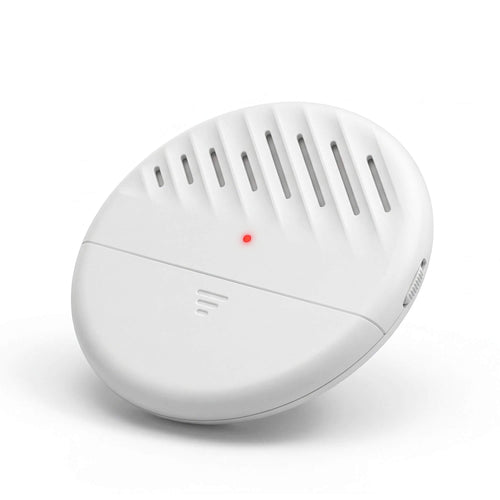
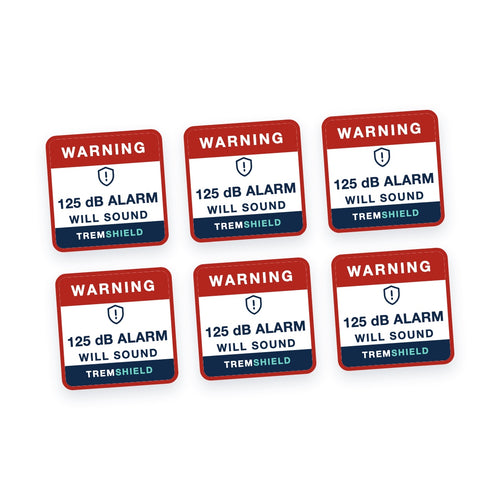
The TremShield Vibration Alarm is a $29.99 stick-on unit that reads vibration in the pane it is pressed onto and answers at 125 dB. One unit senses one pane and nothing else, so the real question is which panes, and how many. For the mechanism, read what a vibration sensor alarm is.
Will a stick-on window alarm work on my windows?
Three conditions decide it, all checkable tonight.
- There is glass, and the unit goes on the glass. A vibration alarm senses the surface it is bonded to, so mounted on a sash frame it reports every open and close.
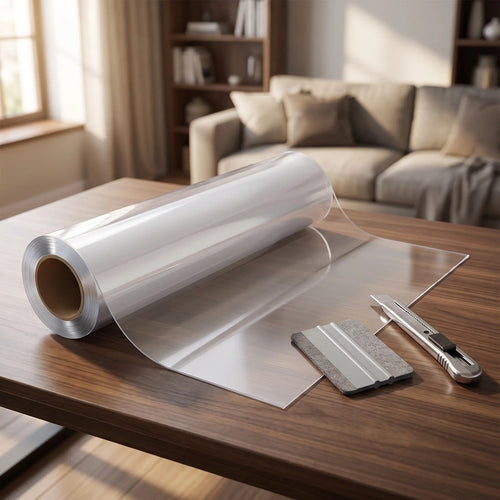
- The inside face of that pane is flat, smooth and within reach. Textured, frosted, etched, leaded and stained glass give a pad only high spots to hold. Aftermarket film and tint are a coating rather than glass, and peeling a sensor off film lifts it.
- The room is warm and the glass is clean when you fit it. Wipe the spot with rubbing alcohol, not a household spray, which leaves a film adhesive cannot grip through.
A unit goes on in about a minute; the bond under it needs a full day. Press the whole pad hard for a count of ten, then wait a few hours before testing. Moving the unit later? Use a fresh mounting pad, because a used one will not bond twice.
Tune the alarm once, at fitting. Start the sensitivity dial at its lowest setting, knock the pane firmly with a knuckle, and raise it only until that knock trips every time. Never test by striking the glass hard: an old or chipped pane can break. If a tuned alarm still fires at nothing, work through the false alarm fixes.
Window by window: which of yours suit a stick-on alarm
- Double-hung and single-hung. Both sashes of a double-hung open, and vibration in one pane does not usefully reach the other, so full cover is one unit per opening sash, not per window. Never mount on the sash frame, which moves whenever the window is touched.
- Horizontal sliders. The moving panel carries the unit. The fixed panel earns its own only if that pane is reachable from outside.
- Casement, crank-out and tilt-turn. The unit sits low on the handle side, near the lock point. Open the window fully afterwards and check nothing fouls the crank arm or screen.
- Awning and basement hoppers. Small panes suit the alarm well. The question on a hopper is condensation in winter rather than the glass, and the egress rule for basement windows comes first.
- Patio and balcony sliders. Slightly above the handle, a hand span in from the latch stile: the part of the pane nearest the lock, and high enough that a vacuum or a dog's tail will not reach it. The patio door guide covers the bar and track lock.
- Glass in a back door, and French doors. One unit per leaf, on the pane nearest the handle, the one somebody would break to reach a thumb-turn. On a divided-light door, a small pane at the far end barely registers what happens at the handle.
- A solid entry door with no glass. It works here too. Press the unit onto the flat inner face of the door near the lock, and a kick or a pry on that door sets off the 125 dB siren. A knock can set it off as well, so keep it switched off while people are coming and going, and turn it on at night or when the house is empty. It warns rather than holds, so that door still wants a heavier strike plate and three-inch screws into the framing behind the jamb.
Where does a window alarm go on the glass, and why not the middle?
A pane behaves like a drum head: it bends most at the center, least at the edges. A unit stuck mid-pane sits where the pane answers wind, traffic and a door slammed elsewhere in the house. A deliberate attack puts its energy into one point near the latch. Mount two to three inches in from two edges, in the corner nearest the latch, the stiffest part of the pane.
The siren sounds at the pane, not at your pillow. Level drops about 6 dB per doubling of distance in free field, per the Georgia State University HyperPhysics reference, a closed bedroom door costs 15 to 20 dBA more in Victoria University smoke alarm research, and the distance behind a 125 dB rating is not published.
Will a stick-on window alarm work on double-pane windows?
A stick-on alarm works on a double-pane window, bonded to the inner pane on the room side of the sealed unit. That inner pane is the one it reads, and an ordinary US window is usually annealed glass whether it holds one pane or two.
The Consumer Product Safety Commission's safety glazing standard, 16 CFR Part 1201, covers doors, storm doors, shower enclosures and sliding glass patio doors, and ordinary windows are not in its scope. A patio slider is therefore safety glazing, which in practice means tempered; a bedroom window usually is not. A tempered pane usually carries a small etched stamp in one corner. That is a manufacturer's mark rather than anything the standard above requires, and it takes five seconds to look for.
What double glazing changes is your setup. No published figure covers how much energy a sealed unit passes between its two panes, so set the dial by knock test on that window rather than by copying another room. Never mount over tint, film or a decal. Your own knuckle settles what no spec sheet states.
When a stick-on window alarm is the wrong answer
- Cold glass at the moment of fitting. Below roughly 50 to 60F acrylic adhesive will not flow into the surface, so the pad rests there rather than bonding and the unit drops off weeks later. UL 639, the intrusion detection standard from UL Standards and Engagement, tests detector adhesive for temperature, water and humidity. Bring both up to room temperature first, or wait for a warmer afternoon. An unheated garage, porch or sunroom is worse again, and so is any pane that runs with condensation.
- Glass you cannot reach to knock-test. A pane above a stairwell or behind a fixed grille cannot be tuned, cleaned or re-pressed, and an untested alarm is decoration.
- A house whose door frame has not been done yet. Detection tells you; it holds nothing shut. With thirty dollars total, longer screws through the strike plate and every hinge do more tonight than one alarm.
- A need for a phone alert. A local siren is all this is: no Wi-Fi radio inside, so no app, no bill, no message to your phone. Notification while you are out means a connected camera or a monitored system, which we do not sell.
Section R310 of the International Residential Code requires every sleeping room and basement to have an escape opening that works from inside without keys, tools or special knowledge. An adhesive alarm needs no key and holds nothing shut, so it is fine there; keyed window locks and key-released restrictors are not. Code editions vary by state, so check locally.
Which window takes a stick-on alarm, and where
| Window type | Does it suit | Where the unit goes | Units per window |
|---|---|---|---|
| Double-hung or single-hung | Yes | Lower sash pane, corner by the latch | One per opening sash |
| Horizontal slider | Yes | Moving panel, corner nearest the latch | One |
| Casement or tilt-turn | Yes | Glass, low corner on the handle side | One per opening sash |
| Awning or hopper | Yes, if the pane stays dry | Glass, corner nearest the latch | One |
| Patio or balcony slider | Yes | Moving panel, above the handle | One, two if both panes reachable |
| Leaded, stained or textured glass | No | No flat run for a pad | None |
| Solid door, no glass | Yes | Inside face of the door, near the lock | One, and reinforce the frame |
Odd panes, colors and returns
Will it work on acrylic or plastic windows?
Yes, if the pane is flat and smooth. The TremShield alarm sticks to any smooth, solid surface, plastic included, so set the dial by knock test on that pane the same way you would on glass.
How big is the alarm on a small pane?
The TremShield alarm is a thin, flat disc about 2.76 inches across, so a basement hopper or a small divided-light pane usually has room for it in the corner nearest the latch.
Does it come in black for dark window frames?
Yes. It comes in white or black at the same price, and the 6-pack comes in either color too.
What are the free window locks in the 6-pack for?
They are two no-drill locks that hand-tighten onto a slider's frame rail as a hard stop, shut or at a vent gap. They suit sliders only, not double-hung or casement windows, and they are not child-safety devices.
Can I return the alarms if my windows don't suit them?
Yes. Returns are open for 30 days, so fit one on each window type you have, knock-test it, and send back what doesn't work for you.
Count the panes, then buy once
A short walk decides the count. Mark every pane a stranger could reach: the ground floor, the slider, the hoppers, the window over the garage roof. Let that number choose the pack, not the other way round. Our room-by-room count walks the house with you.
One alarm is $29.99. The 6-pack is $99, which works out at $16.50 per alarm and is marked Save $80.94 against six singles, and it adds two free no-drill window locks plus the Home Security Guide, a PDF sent by email. Free shipping to the US, Canada, the UK, Australia and New Zealand, 30-day returns, a 1-year warranty, batteries up to 12 months. Fit them on a warm afternoon, corner of each pane, and leave them a day.
Back to all articles