In this article
To secure a shed or detached garage without running power, work in three steps. Make the door and hinges hard to open. Cover or toughen the window. Then add solar or battery devices that light up or sound off when someone walks up. None of it needs an outlet or an electrician.
If the shed at the back of the lot has been on your mind, that's a fair thing to notice. It holds the mower and the tools, and it sits away from the house in the dark. The fix doesn't start with a trench for a power line. It starts at the door.
Keep one thing in mind as you read: the shed window is glass, and glass is where a stick-on alarm does its best work. A TremShield Vibration Alarm presses onto the pane with no wiring and sounds 125 dB if someone pries at the glass or hits it.
Why Sheds and Detached Garages Get Skipped
Most home security assumes power. Cameras want an outlet and a signal. Floodlights want wiring. So the house gets covered and the building out back stays dark. Nobody chose that. There was just no plug out there.
That building may also have the lightest hardware on the property: a simple latch, hinge screws you can see from outside, a thin pane. So the plan below starts cheap and mechanical, then adds light and sound that run on sun or batteries.
Step 1: Make the Door Hard to Open
Swap the latch for a hasp and a good padlock
A hasp is the hinged metal strap that folds over a loop for a padlock. Pick one whose screws are hidden when it's closed, so nobody can back them out with the lock on, and a padlock with a hardened shackle. The lock is only as strong as what holds the hasp, so use the longest screws the wood will take, or carriage bolts with the nuts inside.
Deal with the hinges
If your shed's hinges sit outside with the screws on show, a lock on one edge won't help if the other edge comes off. Swap in longer screws, carriage bolts, or one-way security screws that won't turn back out.
The big door on a detached garage
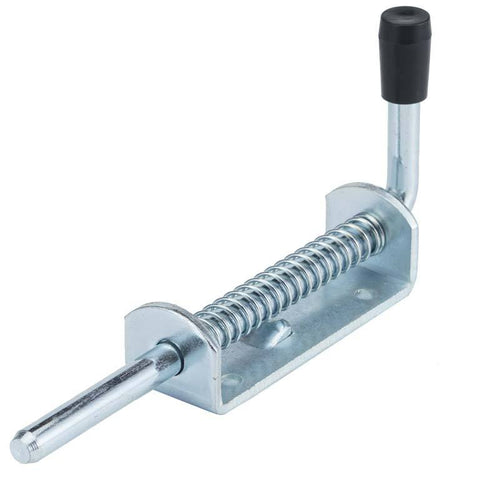
A sectional roll-up door may be held down by nothing but its opener, and a garage with no power may not have an opener at all. A slide latch on each side, fixed so its bolt runs through the vertical track, pins the door to that track so it can't be lifted. Our Garage Door Slide Latch comes as a pair for that reason. It needs no power, though it does screw into the door, and you throw it from inside, so it suits a garage with a side door you lock on the way out. The other weak spots are in How to Secure a Garage Door: Close the 6 Gaps Burglars Know.
Step 2: Cover the Window
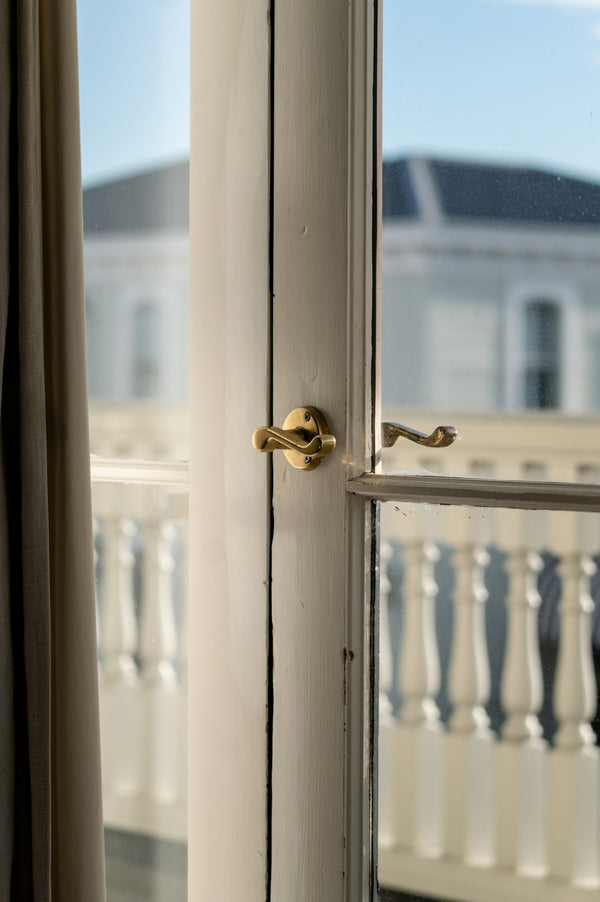
A shed window can be the easy way in, and it shows off what's inside. Start with the free fix: a curtain or a sheet of card, so the tools aren't on display. Then decide how tough you want the glass to be.
- Security film. A clear film that keeps a broken pane in one piece inside the frame, so a fast, quiet entry turns slow and noisy. Our Anti-Shatter Window Security Film goes on wet, like a big screen protector.
- A stick-on alarm. The vibration alarm from the top of this page goes straight on the glass and fires at the pry or the knock, before anyone's through. It also sticks to other smooth, solid surfaces, like a smooth, flat shed door.
Step 3: Add Light and Sound That Don't Need a Plug
Locks slow people down. Light and sound tell them they've been noticed. Without power you still have three options, and each does a different job.
A solar motion light
A solar light charges by day and switches on when it senses movement, so nobody works on that lock in the dark. Our Solar Motion Security Light has three heads you aim one by one, so a single light can cover the door, the path and a corner. For what lighting can and can't do, see Do Motion Sensor Lights Deter Burglars? What the Evidence Says.
A solar motion siren
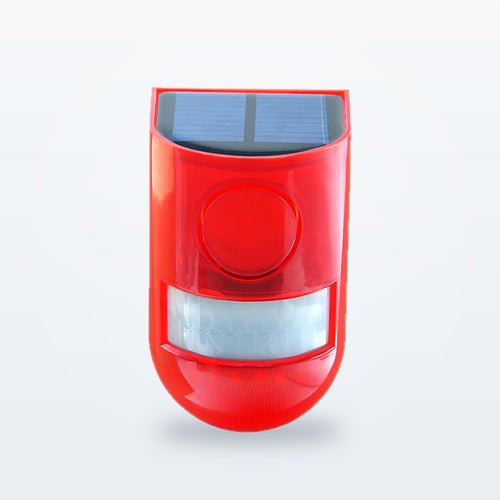
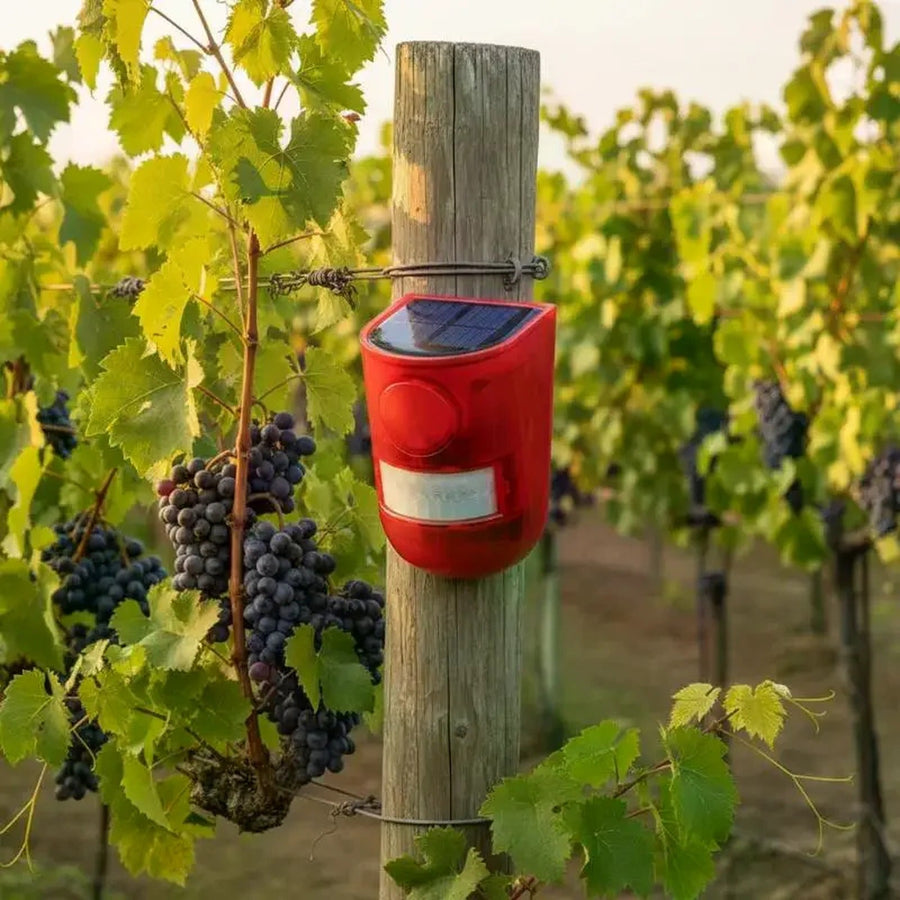
A siren adds noise, right at the building. The Solar Motion Siren + Strobe charges from its own small panel. When its sensor picks up someone moving, a 110 dB siren sounds and a red strobe flashes. It has four modes, so you can run it at night only, or with the strobe alone if a siren would bother the neighbors. Mount it on the shed wall facing the door, or on a post along the path.
A driveway alarm
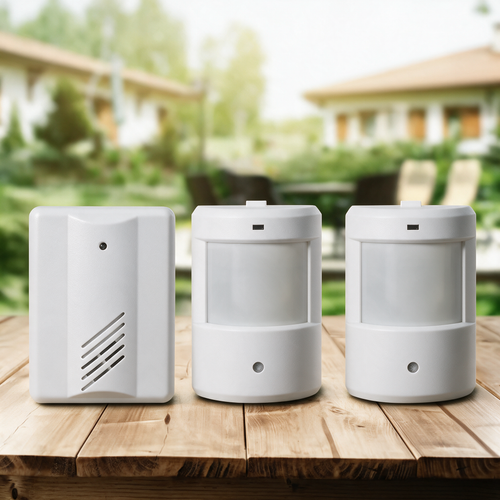
The light and the siren warn the person outside. A driveway alarm warns you: a battery sensor goes by the path, and a chime plugs in indoors. The Wireless Driveway Alarm comes with two sensors, and our guide on where to put a driveway alarm sensor covers the aim.
Where Each Piece Goes
| Spot | What helps | Needs power? |
|---|---|---|
| Shed door | A hasp with hidden screws, a hardened padlock, longer hinge screws or carriage bolts | No |
| Shed window | A cover so nothing is on show, then security film or a stick-on vibration alarm | No |
| Roll-up garage door | A slide latch on each side, thrown from inside, when there is a side door to leave by | No |
| Path to the building | A solar motion light, a solar motion siren, or both | No, both charge from the sun |
| Knowing someone is out there | A driveway alarm sensor by the path, with its chime inside the house | Only the indoor chime plugs in |
Check These Before You Mount Anything
- Sun. Solar units need daylight on the panel, so pick the sunniest wall that still sees the door.
- Aim. Motion sensors react to animals too. Point them across the path, not over open lawn.
- Neighbors. Near someone's bedroom, use a strobe-only or night-only mode.
- Your list. Take pictures of what's inside and write down serial numbers. It's free.
Off-grid shed questions: winter, shade, adhesive
Do solar security lights work in winter?
Yes, with shorter run times. The panel still charges in daylight when it is overcast, but shorter days mean less charge for the night, so give it the sunniest spot you have and keep it clear of snow and leaves.
What if the shed wall gets little sun?
The Solar Motion Siren also has a 5V charge port on the back, so a unit on a shady wall can be topped up by hand. The solar light charges only from its own panel, so give it the wall that sees the most daylight.
How do I make a stick-on alarm hold on a shed window?
Clean the glass with rubbing alcohol rather than a household spray, let it dry, press the alarm on firmly for several seconds, and give the bond a full day before relying on it. If you move it later, fit a fresh mounting pad, because used adhesive will not bond twice.
Then the House Itself
Once the shed is sorted, the windows of the house are the next thing worth a look. One TremShield Vibration Alarm costs $29.99 and takes about a minute to put on a pane. Most homes have more ground-floor glass than one alarm can cover, which is what the 6-pack is for: $99 for six, $16.50 per alarm, which saves $80.94 against buying them singly. Two free no-drill window locks come with it, the Home Security Guide arrives as an emailed PDF, and you have 30 days to send it back. Save one for the shed window.
Back to all articles