In this article
Standing at a ground-floor window at night and wondering whether the glass would hold is a fair thing to wonder. The phrase people type is burglar-proof windows.
There is no such thing as a burglar-proof window. What exists is glass that takes longer to get through and makes more noise on the way, and the three kinds of glass in an American house fail in three different ways.
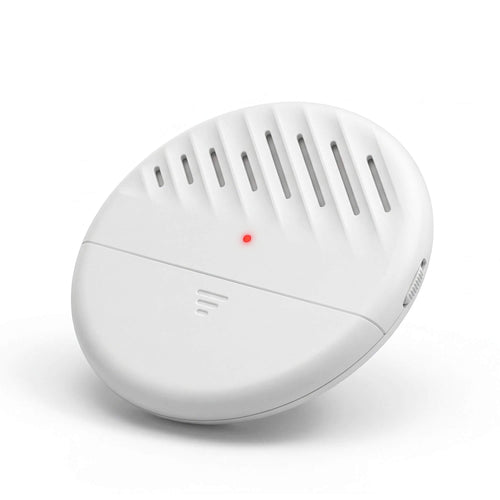
Working out which kind sits in your frames takes about five seconds per pane. Glass decides how long an attempt takes and how loud it is. Glass cannot tell anybody in the house that it is happening, which is the job of a sensor on the pane such as the TremShield Vibration Sensor Alarm, $29.99 for a 125 dB siren that bonds to the glass.
Are there burglar-proof windows?
No glass sold for a home is burglar-proof, and the standards covering the toughest glazing make no such claim. Burglary-resisting glazing is tested by repeated impact, and what gets measured is penetration, not breakage. UL 972, the standard for burglary resisting glazing material, is written that way, and so is ASTM F1233 for security glazing systems. Delay is the thing being sold, and delay is worth buying.
Breaking glass is also a smaller share of the problem than the phrase suggests. The Bureau of Justice Statistics, in its report Victimization During Household Burglary, found the window pane was damaged or removed in 30% of completed forced entries at homes with nobody inside. That covers forced entries only, and the report counts more than one kind of damage per burglary, so it is not a slice of all break-ins. In the same report, 39.5% of no-force entries at empty homes used a door or window that was sitting unlocked, which is why locking up outranks every glass decision below.
What kind of glass is in your window right now?
Annealed glass
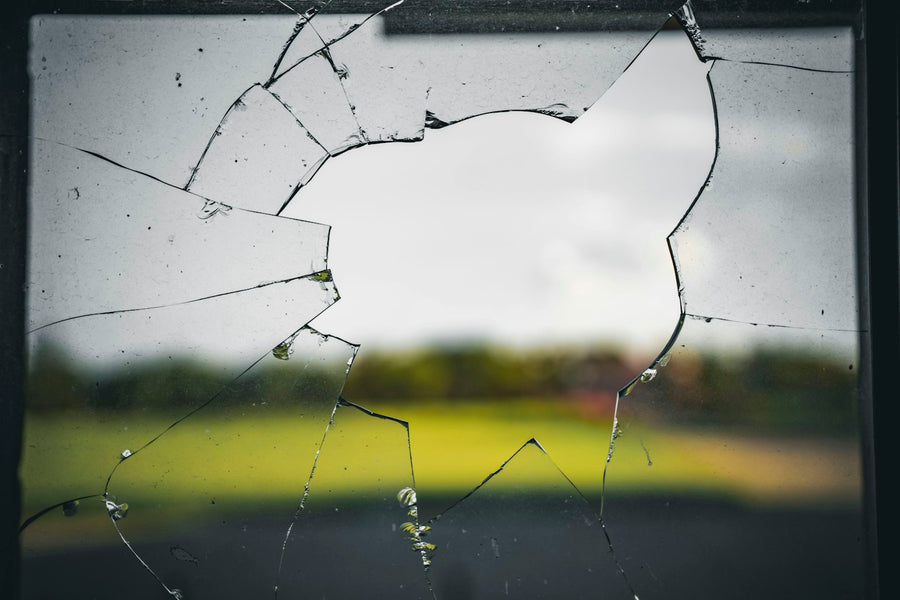
Annealed glass is ordinary window glass, cooled slowly after it is formed. Annealed glass fails locally and into long sharp pieces, so a strike leaves a hole with the rest of the pane standing in its frame. The hole is the real problem, because it puts the latch inside arm's reach. A typical bedroom, kitchen or living-room window is annealed glass.
Tempered glass
Tempered glass is the same glass, heated and then cooled fast so its outer skin is locked in compression. Tempered glass resists bending and blunt impact several times better than annealed glass, and it is comparatively weak against a small hard point, which is a property of the material, not a technique. When tempered glass does fail it does not crack. The whole pane lets go at once into small blunt pieces, extremely loudly.
Tempered glass is a safety specification, not a security one. A broken annealed window is a hole. A broken tempered patio door is a clear opening that announces itself to the street, which is why the quiet ways in are prying and lifting, not breaking.
Laminated glass
Laminated glass is two sheets of glass bonded either side of a plastic interlayer, usually polyvinyl butyral. Both sheets still break. The interlayer holds the fragments, so the pane stays in the opening after it cracks, and getting through that opening is a separate job from breaking the glass. Laminated glass is the only one of the three whose failure resists a person, and it is still not unbreakable.
How can I tell if my window is tempered?
The answer is in the corner of the pane. Tempered glass in practice carries a small permanent stamp, etched or sandblasted into one corner, and it usually names the maker and a safety standard. A pane with no mark in any corner is usually annealed. This is a field check anyone can run in five seconds, not a legal test.
Checking all four corners matters, because a stamp can sit behind a frame edge, face outward, or hide under a blind track. Many stamps name the type in words, which is also how to spot a laminated pane.
Where no mark can be found, the law narrows the guess. The Consumer Product Safety Commission rule covers glazing in doors, storm doors, sliding patio doors and shower enclosures, so a sliding patio door in a US home is safety glazing and a plain bedroom window usually is not. Under section R308.4 of the International Residential Code, a window also needs safety glazing when its pane is larger than 9 square feet, its bottom edge is under 18 inches above the floor and its top edge over 36 inches. The code accepts tempered or laminated there, and states adopt different editions.
| Glass | Where you find it | What a strike does | Reach-through hole | Slows entry |
|---|---|---|---|---|
| Annealed | Most ordinary windows, upstairs and down | Fails locally into long sharp pieces | Yes, and the latch is usually in reach | Barely |
| Tempered | Patio doors, glass in and beside doors | Whole pane lets go at once, very loudly | No, the opening is left clear | No, tempering is a safety measure |
| Laminated | Code locations and upgraded replacement windows | Cracks but stays held on its interlayer | No, the pane stays in the frame | Yes, meaningfully |
Swapping the glass in a window you own is a window purchase, not a security purchase. Laminated glass is ordered as a new unit and fitted by a glazier, priced per opening, so the moment to choose it is a window replacement.
What buys you time on the glass you already own
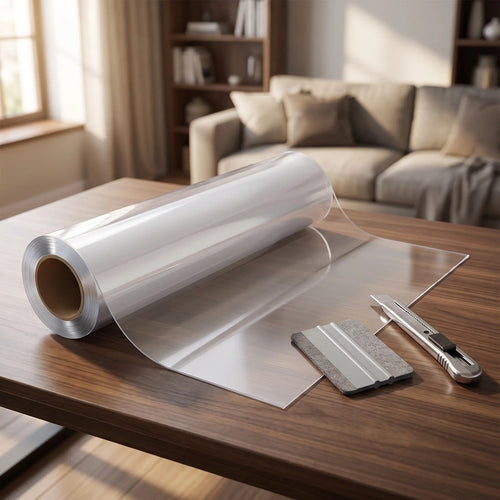
Anti-shatter film is the upgrade that attaches to glass already in the frame. Our Anti-Shatter Window Security Film is a clear 4 mil film, $19.99 for a 2 m roll and $24.99 for 4 m, applied wet and squeegeed flat. Film holds a cracked pane together so the glass will not drop out of the way, which turns a quick opening into slow, noisy work. One limit decides where film goes: with nothing anchoring it to the frame, a held-together sheet can be moved out of its glazing bead in one piece. Small panes near a latch leave no room for that, which is where film earns its price.
Film applied to the inside of a sealed double-pane unit changes how much heat the glass absorbs, which on large or partly shaded panes can crack it through thermal stress, and many window makers void the insulating unit warranty. Check that warranty first if you own the place, and skip film by default if you rent.
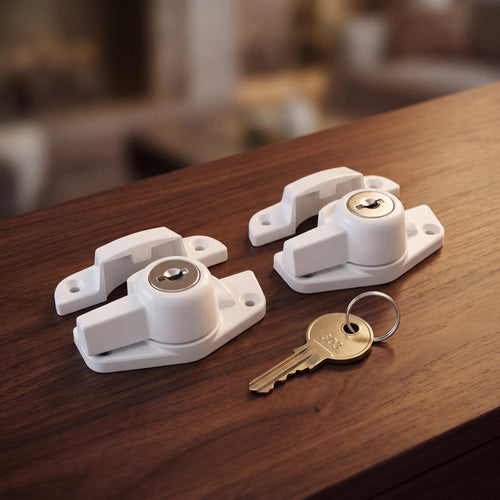
Locks are the other half, the half that holds the sash. Our guide to burglar-proofing your windows without bars on the glass runs the fixes cheapest first, and which lock fits which window matches hardware to window type. On an annealed pane beside a latch, a keyed lock removes the thumb-turn a reached-in hand could flip, and a keyed lock never belongs on a sleeping room's escape window, because the model residential code requires that opening to work from the inside unaided: no key, no tool, no special knowledge.
What no glass does: tell you it is happening
Every option above moves the same two variables, time and noise. None of them changes who knows. A pane that takes longer to defeat is worth little to somebody asleep upstairs unless something makes a noise while it happens.
Sequence is why this belongs at the pane. Prying, levering and striking all put energy into the glass before the glass gives way, so a sensor bonded to the pane can respond during an attempt rather than after it. The claim worth making there is about order, not about seconds. The Bureau of Justice Statistics report found 38% of household members who were present during a burglary were asleep at the time, and a sleeping household's only useful warning is an audible one.
The TremShield Vibration Sensor Alarm is what that layer looks like for $29.99. The unit presses onto the glass with adhesive, senses vibration in the pane, and sounds a 125 dB siren. A sensitivity dial sets how hard the pane has to be hit before it fires, so a truck going past does not set it off. Nothing is drilled, and no app, hub or monthly fee sits behind it.
Two limits come with it. The alarm guards the single pane it is stuck to, so a second window needs a second unit. And the alarm holds nothing shut, because a siren is not a lock. Sensors that listen to the room have different blind spots, covered in our comparison of glass-break sensors and vibration alarms.
Shatterproof, unbreakable, and what it costs
Are shatterproof or unbreakable windows burglar-proof?
No. A pane sold as shatterproof usually holds together when it breaks, the way laminated glass or filmed glass does, which slows entry and makes it louder without stopping it. No glass sold for a home is unbreakable.
What do burglar-resistant windows cost?
Laminated glass is priced per opening by a glazier as part of a new window, so the cost depends on the size and the frame; ask for a quote when a window is due for replacement anyway. On glass you already own, TremShield anti-shatter film is $19.99 for a 2 m roll and $24.99 for 4 m.
Does a vibration alarm work on tempered or laminated glass?
Yes. It bonds to any flat, smooth pane, annealed, tempered or laminated, and senses vibration in that pane, so set the sensitivity dial with a knuckle knock on each window rather than copying the setting from another room.
Is there such a thing as a burglar-proof door?
No more than a burglar-proof window. A kicked door usually fails at the jamb around the strike plate, not at the lock, so swapping the strike plate for a steel one anchored by 3-inch screws in the wall stud does more for most front doors than a heavier door would.
Read the corners tonight, then cover what the glass cannot
Take a flashlight round the ground floor and read the corner of every pane. A stamp means safety glazing, and force is the attack there. No stamp means a reach-through is the risk there, so film and lock those panes first.
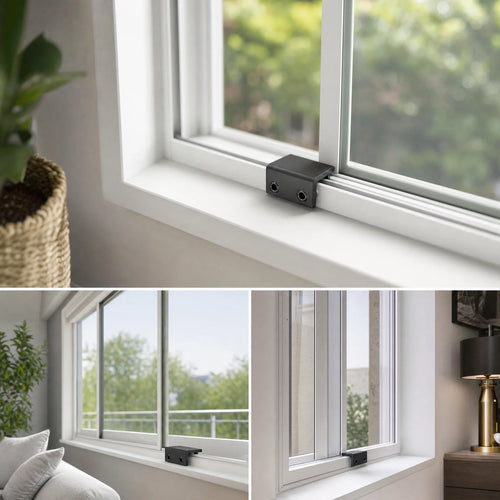
Then the part no glass covers, which is knowing. Six TremShield Vibration Sensor Alarms in one pack come to $99.00: $16.50 an alarm against $29.99 for one, a saving of $80.94. That pack carries two free no-drill window locks, with the Home Security Guide emailed over as a PDF. Free shipping to the US, Canada, the UK, Australia and New Zealand, with 30-day returns. Glass sets how long and how loud. Put an alarm on each pane you just checked, and you'll hear about an attempt while it happens.
Back to all articles