In this article
To keep a bike or motorcycle safe at home, make it slow to take and loud to move. Park it out of sight, lock it to something fixed or lock the wheel, secure the room it sleeps in, and add one thing that makes noise if someone touches it.
If you've ever looked out at the bike in the driveway at night and wondered about it, that's a sensible thought, not a nervous one. A bike or motorcycle is valuable, it's easy to move, and it usually lives in the least-watched part of the property. The fixes are cheap, quick and mostly habits.
Four questions, from the street to the wheel
Think of it as four questions, asked in order from the outside in.
- Can it be seen? A bike nobody notices from the sidewalk is a bike nobody plans around.
- Can the room be opened? A locked garage or storage room adds a whole step before anyone reaches the bike.
- Can the bike be moved? A chain, a U-lock or a locked wheel means it can't just be wheeled away.
- Will anyone hear it? Noise turns a quiet job into a public one.
You don't need all four everywhere. A motorcycle in a locked garage needs less help than a bicycle in a shared bike room.
In a garage
A garage is the best place a bike can live, as long as the garage itself is shut properly. Start with the room, then the bike.
The big door
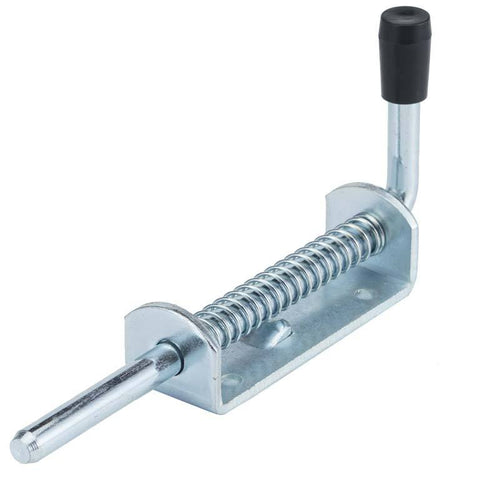
An overhead door held only by its opener is the obvious gap. A manual latch that slides a bolt through the door's track holds the door down from the inside, which is why a garage door slide latch is worth setting at night and before a trip. Set it only on a manual door, or once the opener is disconnected, and slide it back yourself before you lift the door. Most people use it at bedtime and before a trip. Our guide on how to secure a garage door walks through the other gaps, including the emergency release.
The side door and the window
Plenty of garages have a glazed side door and a back window nobody opens from one year to the next. Both get forgotten because the big door gets all the attention. A TremShield Vibration Alarm sticks straight onto that glass or door and sounds 125 dB if someone pries or knocks at it, so the quiet corner of the garage stops being quiet.
The bike itself
Even inside, lock the bike. A ground anchor bolted to the concrete gives a chain something that can't be carried off. If drilling isn't an option, a heavy workbench leg or a steel shelving post is better than nothing. Hang bicycles on a wall hook where you can, away from the window, and throw a plain cover over a motorcycle so it isn't on show when the door goes up.
In a driveway or carport
No garage, or no room in it? Parking outside works with a few changes.
- Park close to the house. Nose in, as near to the door and the lights as you can.
- Use a cover. A cover hides what's under it and adds a step, since it has to come off first.
- Lock to something fixed. A post, a railing or a ground anchor gives a chain a real job.
- Light the spot. A motion light over the drive means nobody stands next to the bike in the dark.
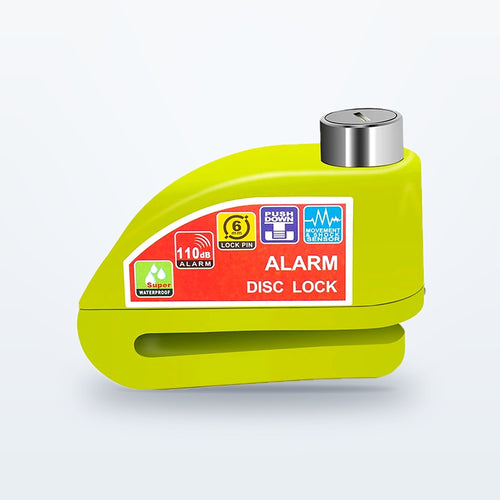
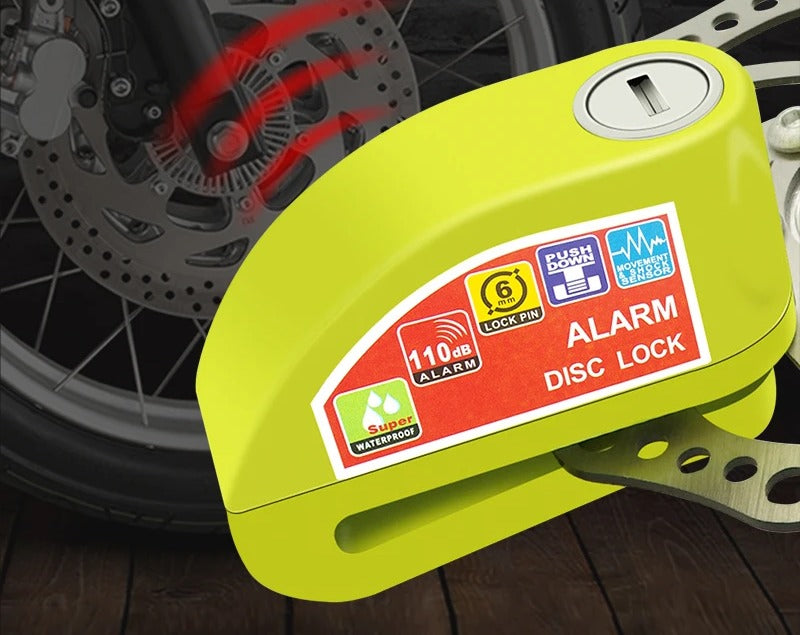
For a motorcycle or scooter parked outside, a disc lock is the everyday layer. It clamps onto the brake disc, so the wheel can't roll far. A version with a siren adds the noise: our Disc Lock Alarm pushes shut on the disc without a key and sounds 110 dB if the bike is shoved or the lock is knocked.
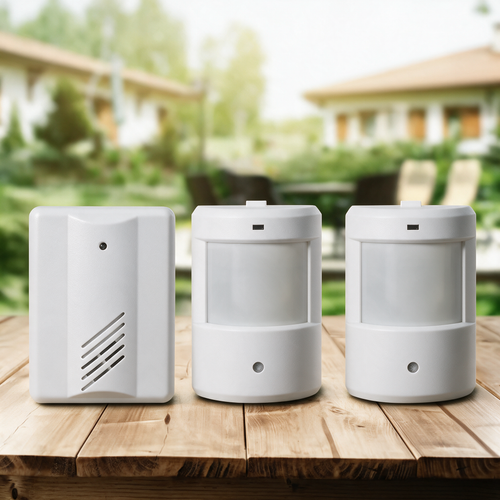
If you'd like warning before anyone reaches the bike at all, a wireless driveway alarm puts a motion sensor by the path and a chime inside the house. It won't lock anything, but it tells you someone is on the drive while you can still do something about it. There's more on where to aim the sensor in our driveway alarm guide.
In an apartment building
Shared spaces are harder, because the room is open to everyone who lives there. That changes the plan a little.
Keep it in your unit if you can
A bike on a wall hook inside your apartment is the simplest fix of all. Check your lease first.
In a shared bike room or parking garage
Lock the frame, not just a wheel, to a fixed rack. A U-lock through the frame and the rear wheel is a solid habit, with a cable for the front wheel. Take quick-release parts like the seat and lights with you. Pick a spot people walk past rather than the far corner.
Locks, and what each one does
- U-lock. Rigid, and the usual pick for tying a bicycle frame to a rack.
- Chain. Heavier, but it reaches around posts, railings and ground anchors. Good for motorcycles and for garages.
- Cable. Light and handy for a front wheel or a helmet, but it shouldn't be the main lock.
- Disc lock. Small enough to carry, clamps the brake disc, and stops the wheel from turning far. Great on motorcycles and scooters, and a useful extra on a disc-brake bicycle.
One habit matters with any disc lock: look at the front wheel before you ride. A bright coiled reminder cable from the lock to the handlebar makes it hard to miss.
Two ten-minute habits
Photograph the bike and its serial number, and keep the receipt with the photos. And keep bike keys and garage remotes in the house, not in a car parked on the drive.
Disc locks, latches and serial numbers
Will the disc lock alarm fit my bike?
It fits a disc brake with a hole the 6 mm pin can pass through and a disc thin enough for the 7 mm slot, so check your disc before you order. It won't work on rim brakes, which have no disc, and returns are open for 30 days if it doesn't fit.
Is a disc lock enough on a motorcycle or a bicycle?
On a motorcycle or scooter it is a strong everyday habit, because the wheel can't roll far with the pin through the disc. A bicycle can simply be picked up, so there it needs a chain or U-lock to something fixed, with the disc lock as the part that makes noise.
Will a slide latch fit my garage door?
It is made for a sectional door, the kind with panels that roll up inside two vertical tracks. It screws to the inside vertical edge of the door with the self-tapping screws supplied, and should only be engaged when the door is manual or the opener is disconnected.
Should I write down my bike's serial number?
Yes. On most bicycles it's stamped under the frame near the pedals; on a motorcycle, keep the VIN with the registration. Photograph it next to the bike and keep the receipt, because a police report or an insurance claim goes faster with proof of what you owned.
The bike on the disc, the garage on the glass
A locked wheel keeps the bike where you left it, and the room around it deserves the same care. A single TremShield Vibration Alarm is $29.99 and presses onto a pane or a door in about a minute. Six come to $99.00, or $16.50 per alarm, which is $80.94 less than buying six one at a time. The six-pack includes two free no-drill window locks, the Home Security Guide arrives as an emailed PDF, shipping is free to the US, Canada, the UK, Australia and New Zealand, and you have 30 days to send it back. Start with the garage window and the side door, then give the rest to the house.
Back to all articles